#ThisWeekinIllustrado – updates from our #GlobalNeighborhood
Here’s our first episode on a new collab project with our Illustrado friends from around the globe.
This Week – corona virus in Hong Kong, Singapore and Bangkok; cozying up Manila; the Riyadh you didn’t expect; cold weather in Hanoi, Toronto and Florida; and art, literature and thoughts on Brexit from Dubai, Ras Al Khaimah and Abu Dhabi.
Want to join our team at This Week in Illustrado? Or simply want to share a peek at your life with our global neighborhood? Just PM us your video via Illustrado Magazine on Facebook.
An Intimate Look Behind Illustrado 100 Most Influential Filipinos of the Gulf
By Rex Venard Bacarra
The buzz from my phone jarred me awake. My heart skipped. The guessing game has begun.
The first time my heart pranced, it was in November. Eyes barely opened, I stretched my arm and lazily frisked my bed several times and felt, finally, the familiar cold and hard metal of modern-day enslavement. The text read-
“We are pleased to inform you that you are part of this year’s selection of Illustrado’s 100 Most Influential Filipinos in the Gulf.” I froze. I shook my head. Now fully awake and with eyes unusually larger this time, I reread it.
It was November of 2016.
In Dubai, November heralds the most hospitable weather of the year – people are merrier, rain is a cause for celebration, and festivities galore. For Filipinos who matter, and those who think they matter, November is a foreshadowing of an event in December that rattles the Gulf’s who’s who. While the weather is welcoming, what is about to come is not for the pretenders and the insincere. Around this time, the Filipino community in Dubai could hear the thunderstorm of agitation long before the rare, first raindrop of winter falls.
Pardon my French, literally and figuratively, but it is Illustrado’s storm-brewing and highly-coveted ‘100 Philippins les plus influents du golfe.’
Illustrado’s 100 Most Influential Filipinos in the Gulf is serious business. It is the only Filipino lifestyle magazine that earned the respect of leaders and trailblazers across all fields: fashion, education, hospitality, construction, trade, media, finance, scientific and technical, healthcare, arts, and recreation. Everybody wants to be in. Nobody wants to be out. It brings out the worst among the hypocrites. It inspires greatness among the genuine.
Illustrado 100 galvanized itself into the consciousness, and the hearts of the Filipinos and this kind of respect is never accidental. Its undue influence mirrors the vision and character of the husband and wife team behind the authoritative magazine. The team, in the wisdom of their selection, has figured out the Excalibur of meaningful choice: that a person’s character is better seen in deed than heard in word. As it is, time will begin to show the cracks of those who are merely acting out. Or that Teflon looks will start to wear out. Consistency in character, after all, is that manna from heaven disliked even by the hungriest of sycophants.
I finally saw the face behind the signature during the photoshoot. Tall, fair, beautiful, prominent eyes that more often welcome and intermittently assess, hair that reveals a lifestyle with every strand in place, and an aura of superior intelligence wizened by years of complex human interaction. “Intimidating. Uppity.” I thought. That thought flew within seconds the moment she hugged me when she saw me as if to teach me a lesson that impressions are just that- impressions. In the age of social media, impression has become a tool for the untruth. Both for those who are looking and those that are being looked at. The former because what he often sees is filtered, and the latter because what she wants to show is a version she feels she lacks. Mine was neither. Lalaine wasn’t filtered. I didn’t feel the lack. Rather, it was a lesson on humility and misjudgment on my part.
She was giving me instructions when my eyes darted to the bespectacled, lean-framed man guiding the photographer. There was something light and delicate about the way he unconsciously caressed his hair that I couldn’t quite grasp. His walk was sprint-like. Lilting, to an extent. Sensing my distraction, she introduced me to him, “Mon, my husband.” “Opposites,” I noted mentally. He was soft-spoken; almost shy-like. Lalaine was extroverted; unquestionably socially confident. Their difference couldn’t be more apparent when he hugged me. It was as if I wanted to be hugged by Lalaine, but I wanted to hug Mon. You get that feeling that Lalaine will protect you, but you want to protect Mon.
But they weren’t opposites. His gentle demeanor belied his disciplined creativity and perfectionism that I saw in Lalaine. When my turn came, he was exacting. Side view. Eyeglasses in between the ring finger and the middle finger. The thumb slightly touching the chin. Not touch. Peck. The index finger on the upper lip. Brows knitting a bit. Eyes looking at the horizon with determination. One, two, three takes. Done.
The result was the best profile I ever had the privilege of being taken.
People don’t just talk. They gossip. It has long been a mystery, mythic even, what criteria they follow in the selection. I asked them the same. When they first selected me in 2016, I had neither the awards nor the tangible recognition, just the video clip they saw of the graduating multicultural students giving me a standing ovation when my name was mentioned by the magna cum laude during his rousing valedictory speech.
“It is not just about the awards and recognition that more often can be bought. It is the impact that one has on the community, and the humility in bearing the intoxicating madness brought about by privileges that go hand in hand with fame.” Or words to that effect as Lalaine waxed lyrical. “We have seen people who were transformed into monsters by fame. People corrupted by illusions of grandeur. They may be included in this year’s 100 Most Influential, but you will not see them again in the next.” Mon chimed.
Awards. Influence. Humility. Like Plato’s celebrated tripartite soul of what makes a great society – Appetite, Courage, and Wisdom – the criteria for 100 Most Influential are tripartite beacons inextricably woven. One can have a multitude of awards, but without humility, it regresses into decoration. Functional, but bereft of meaning. One can be noisy in the social media about the number of their awards and accolades but is actually an empty tinfoil can. An empty vessel, scorned Plato, that always makes the loudest sound, for they that have the least wit are the greatest babblers. One can be humble, but false humility is also a phenomenon often mistaken as genuine, and when humility is exercised falsely, it becomes hypocritical, more often a call for greater attention and excellence is unable to advance because honesty is clouded by humble-bragging. To be able to abstract truth from falsity, and balance this complexity, require knowing when to draw the sword, or be prudent when necessary without hesitation. This, in itself, is art.
It is an art that Mon and Lalaine have mastered.
Truth is, they knew that you don’t really learn from awards and successes sans humility. You learn from the pains of your wounds and the scars of insufficiencies.
I saw them quite a few times. Deeper than the last. The more I get to know them amid radiant laughter and sips of wine, the better I learn about their vision for Filipinos. They wanted to elevate Filipino pride. “Taas noo” voices the Illustrado spirit. They have had enough of the Filipino stereotype as laborers and maids. Building the collective image has become the lifeblood of their visionary partnership, and it grandly translates into the quality of their work: the Illustrado Magazine exudes so much class, quality is exceedingly tasteful, and the content isn’t just well-written, but intermittently profound and mirthful, never banal, sometimes haughty, but always sublime. The topics embody their vision, showcasing the best of Filipinos in a medium that is elegantly world class. It seems to me, the better I get to know Mon and Lalaine, that Illustrado is not just about celebrating Filipino excellence. It is about having a voice in the vibrant utterances of the world’s best by showing who we are in our magnificence. Not inferior, but the best. Not only the ones who innovate but the ones who disrupt. Not just the followers, but the leaders.
Come to think of it, they – the vision, the magazine, they – are like pearls in a sinewy string. Each echoes the virtuous preeminence of the others. Equally.
I find quality in all their endeavors. I once witnessed Lalaine hosting a panel discussion composed of business experts of different nationalities at the Palazzo Versace this year. To say it was a spectacular feat is by no means an exaggeration. Notwithstanding her trademark eloquence and wit, she knew every panel member’s name by heart, their professions, and their achievements. Whereby all the hosts I witnessed in the past would depend on cue cards to remind them, she had none. She carried the exchanges with refinement. I shook my head realizing how elegant it went. Many in the table where I was seated were awed. At that moment, I sensed a collective pride of the right kind.
This preponderance for quality extends to the few they personally handpicked to be part of Illustrado’s core team. “Dr. Rex, Rony of Illustrado here. Here is the schedule…” The first text message I received from the imposing yet impossibly lovable Rony Aquino, the member of the Illustrado team that I have seen and known the longest. Her exceptional management skill earned her the lovable monicker ‘Kapitana,’ perhaps because she talks and acts like one. I find her humble, preferring to work in the background with an eye for order. Many times in parties and events organized by Illustrado that I got the privilege of being invited, she would eat last, she would follow up on people, and she would go around quietly making sure that the guests get to be attended to.
Then there’s Alwee, fashionably understated with a voice that is of a butterfly’s flight: dainty and light. He has a kind and gentle demeanor, but I reckon he is more Ally McBeal than Therese of Lisieux underneath. That is, one who savors in vivid wishful thinking especially in situations where he wants to control but can’t, and what he thinks can often be amusingly bloodthirsty. Relaxed in his ways, but quietly ambitious and capable of making things manifest, he also has the uncanny ability to bring people together much like the Pied Piper of Hamelin, even at such a young age. An interesting persona, that’s for sure; he probably changes his hair color more than Dubai changes its seasons. What attracts me to him, though, is his sense of high art. Exquisite. Discerning. Consistently tasteful.
The young blood completes the team, the equally good-looking Paolo and Antonino. A tree is known by its fruits, we’ve heard. The reverse is also true – the fruits are known by their tree. Both boys are brilliant and creative, strikingly mirroring their parents in brilliance and creativity. I have seen both during photoshoots, engaged brief conversations with them, and their loquaciousness and confidence were admirable. I saw Antonino’s TEDx talk and read Paolo’s articles, and I could just imagine how proud their parents were. Always are. More than their brilliance, it’s their character that impresses me most. To have grown away from the Philippines, I expected them to be unaware of the nuances of values commonly practiced in our motherland, but they retained that respectful attitude, implying that, they, in spite of distance and gap in cultural rootedness, understood the full importance of being Filipino.
Each in the team is contrastive. Volatile even, just as many exploratory minds are. I suspect that the members are chosen based on peculiarities in the name of creativity. A team with exceptionally talented and creative, often emotional, people can easily break down, but it is to their credit that they have broken through instead.
Perhaps because they are sincere; unadulterated by power. When you have a platform respected by accomplished and influential individuals and organizations, it is easy to be overwhelmed by and intoxicated with, the corresponding privileges. Not them. When they launched GVER – Your Friendly Marketplace for Sharing, a platform that allows people to post goods and services to be given for free for people who may find them handy, that speaks volume of their incorruptibility, of their disdain for power, and of hearts shaped for giving. It is a social enterprise built on sharing freely by their arms that keep on extending selflessly.
They are paradoxical. Preferring to live 45 minutes away from the metropolis, tending, zen-like, to the plants and cozying in scenic coastlines, yet they organize the most stylish parties and gatherings known to Filipino expatriates, attracting the fashionable and the heavy-hitters. It is this seemingly violative lifestyle choice that makes them enigmatic to many.
In one of my conversations with them, I could sense pride in what they do. Rightly so. When you have done so much to the community, balancing them with your professional jobs that put food on the table and the pains and hurdles of creating, you cannot help but be proud, not of the condescending type, but one of self-respecting honor.
Yet, I could feel the ripples of exhaustion. When I think of them, and what they continue to do, I see vulnerability that was not there before. It is a vulnerability that doesn’t seem autumnal that will go away when the first rays of Spring greet the horizon. It is a vulnerability that I am afraid will stay, attempting to physically hasten the limitations of being born human and mortal, but it will struggle and fail, to take over a love so rooted in giving and nationalism. I have never questioned their love for Filipinos and, ironically, this love is a burden they will relentlessly carry but without question, ’til they breathe their last.
They have loved long and deep enough to know not to compromise.
It is this uncompromising love that compelled them to gather people who enkindled the spirit and changed the landscape of Filipino identity for the better. Illustrado 100 tells the stories of Filipinos and celebrates their excellence. Stories that will be told over and over again, inspiring generations. This is, I believe, is Mon and Lalaine’s, and Illustrado’s most meaningful legacy.
Professor of Philosophy at the American College of Dubai, Dr. RexVenard Bacarra says of himself – “I may be bad in folding a fitted sheet and horrible in parallel parking. But, I am excellent in chewing the maggots of the philosophical universe. Maybe…” True to form, this modern-day ‘Filosopo Tasio” and multi-awarded community champion shares with us his thoughts on our society today, this time his personal take on Illustrado’s 100 MIFG. Follow Dr. Rex Bacarra on Twitter: @rexbacarra
Finding the Filipino voice across the world! Listd by Illustrado is our platform for all things talent and youth culture – a live facebook talk show that features various artists from various walks of life, Dj’s, Producers, Musicians, Dancers (and more) that continue to raise the standard for global FIlipino talent and creativity. Check out the artists featured in Listd’s third run, sponsored by Cuisinero Uno – Dubai’s hottest tapas and cocktail bar.
Young Sleepyboi – Somethin About Plastic Love
Moe Cabral aka Young Sleepyboi is an electronic musician from Laguna. He specializes in all things vaporwave, ambient and lo fi and has recently expanded into future funk.
Sugarcoating your heartbreak since 2016, former college side band Sleep Alley has emerged into the Philippine indie music scene with youthful highschool vibes and emotional lyrics.
Alisson Shore aka Emmanuel Sambayan is a singer and songwriter based in Manila. His music ranges from LoFi RNB, to chill and alternative RNB, and he is known to have collaborated with many famous artists in the Philippines. The name Alisson comes from the main character of “Alice in wonderland”, and shore comes from his love of the sea.
Joseph Gregory and Celina Pacana are students of UP Diliman with an upbringing in classical music and theatre. Joseph is a producer (as well as being multitalented with many instruments) while Celina pours her heart into music as an RnB vocalist.
Anthony ‘Makavely’ Noche is a rapper, producer and a key figure within Dubai’s Filipino Rap scene. Representing Beatstyler Production 1850 as a self-made brand, he hosts a number of locally based Filipino rappers (as well as producing tracks for them). Makavely represents the OFW side of Pinoy Hip Hop, bringing to light their struggles, stories and hustle.
Nak is a TCK Filipino Rapper based in Chino California. As an introverted rapper who expresses his passion through music, Nak brings his rap to a personal level, telling stories about crucial moments in his life as well as mixing his Filipino culture into the music.
Washere – BRB (one in a hundred million to the power of nine)
John San Juan aka Washere is a 21 year old multi-genre music artist who began producing in 2015. His tracks are a culmination of vibrant, dreamy and child like elements – expressing raw emotion through his own unique style.
Cuisinero Uno is Dubai’s hottest tapas and cocktail bar! Nestled within business bay, Dubai, it is the place to go for upscale and straightforward, yet moreish dishes partnered with ultra-creative cocktails.
Where: 2nd floor, Steigenberger Hotel, Al Abraj St, Business Bay, Dubai.
Open from: 1pm to 12:00am everyday.
Japanism is taking over as we know it! From the pop culture, music and to the food, all of us are obsessed! Everyone says Sushi is the go to food for Japanese cuisine, but what about Ramen? Here’s a list of rules for all you Ramen first timers and veterans (with all the cultural appropriation to go).
Start by sampling the broth:
The broth is the most vital part of the Ramen! Whether you drink straight from the bowl or use a spoon, have it first before trying anything else. This way, you also prepare your appetite.
To slurp or not to slurp?
Slurp of course, as it’s a sign of appreciation! According to Zak from Wokyo, slurping begins from the back of the lip, and cools the noodles and broth upon entering the mouth. Sacrificing a bit of quiet for a better eating experience? Go for it!
Consume while hot:
No one likes cold, soggy noodles, enough said!
Eat fast!
Ramen is generally considered as fast food in Japan, so eat it fast!
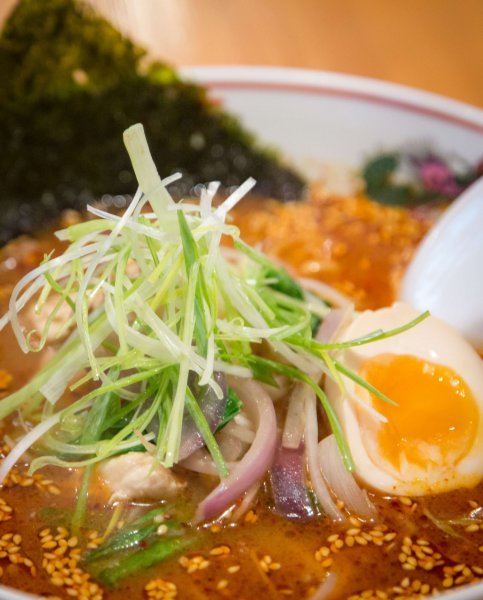
Photo taken by Soul Photography via Brave Agency.
Know what to eat and how to eat it:
Ramen usually has meat, vegetables, and Ni Tamago (Ramen egg). Vegetables are meant to be slurped along with the noodles, meat tastes best when soaked into the broth. As for the the Ni Tamago, consider it as a side dish and have it on its own at anytime.
Hold up on the toppings!
Think of ruining a perfectly good scoop of ice cream with rainbow sprinkles (for the purists out there). You may notice a series of toppings and spices on the counter at some point. Adding seasoning without even trying the noodles on the first time might just discredit the chefs hard work! Besides, you never know what you could be missing out on.
With all that said and done, head on down to our funky favorite noodle bar, Wokyo! Their recent Ramen Festival has made them quite the big hit in Dubai, and they will continue to serve their exclusive Sapporo Miso and Shoyu Ramen to all (rolling in from January 2018). The good vibes, friendly staff and awesome Pan – Asian noodles definitely won’t disappoint!
Don’t forget to take lots of pictures and #wokyo!
Photo taken by Soul Photography via Brave Agency.
Where to find them: Lake Level, Cluster J, JLT, Dubai.
A visual communications student, junior contributor Paolo is an aspiring artist, seeking to make his mark in the world of cinematography and the performance arts. When not dancing in the middle of the night, he constantly questions why things are the way they are, learning more about himself and the people around him.
Find more lifestyle articles here on Illustrado Life.
Filipinos and Racial Discrimination: Are we victims or perpetrators?
By Paolo Benitez
With the current global political climate, we’ve seen a lot more incidences of people acting as figures of hate and backward mentality. The presidency of Donald Trump has given the green light for anti – immigrant sentiment and intolerance, which has reverberated around the world. Hate graffiti and racial slurs have become commonplace on the internet what with developments like the Charlottesville protests and racist violence in the UK post-Brexit last year, among other incidences, fanning the flames of unrest.
A few months ago, a Las Vegas woman’s racist remarks referring to her Filipino neighbor as “orange savages”, has gone viral. Even in Canada, a country known for embracing diversity, anti-Asian graffiti shocked residents in Neepawa, a town in Manitoba. Tagalog teacher Myla Ignacio, a resident of Manitoba said that they were “hurt a bit, and horrified”. On the bright side however, the community has banded together in an effort to stop the spread of hate speech within the area.
As third culture kids, most of us have learned to tolerate, appreciate and integrate with various cultures. Growing up surrounded by a diverse range of people gives us a head start on the road to tolerance, as being different is the norm.
Still, in these times, and even as cultural hybrids, we are not impervious to racial biases. You can either be the attacker or victim, predator or prey, oppressor or oppressed. Based on what you have learned, what you have been taught, and what you have experienced in life, you can have a negative opinion towards someone off the bat, without any reason.
So how do we Pinoys fit into this?
Pinoy Stereotypes
We are particularly proud of being a diverse and globalized nation. We have 11 million Overseas Filipinos scattered all over the world while also having countless ethnic groups back home. Pinoys on the whole are also some of the happiest people on earth. Add to that, we’re also known for being resilient. Unfortunately though, it is undeniable that we still often the targets of prejudice. Some common denominators surface when we are being looked at in a negative way.
For one, Pinoys are generally associated only with the middle to low class – i.e. service workers, domestic helpers, cleaners, and easy women. Hence, in a place like the UAE which is a melting pot of cultures, “Hello mamsir, welcome to Mcdonaaaaalds!” is a pretty common joke to hear. Because Pinoys are mostly an agreeable lot, they are also often mistaken as easy to take advantage of, and as “yes men.” Another popular notion for a lot of people, as well, is that Filipinos will settle for anything.
“Come on, show us that Filipinos don’t belong in the toilet,” Richard Paul Noveno, a Filipino university student in Dubai recalls his experience when being encouraged by non-Filipino peers.
“You don’t wanna work at Mcdonalds?” – is one example of a joke towards Filipinos at my former international high school.
Jesus “Jan” Turla, a resident of Australia describes his job hunting experience – “I was sending out my resume for months and I didn’t get even one interview. It was only when I changed my name to Jan on my resume that I started to get attention. Now it’s true it could just be a coincidence that I only got attention when I changed my name into a western sounding one, but I truly believe systematic racism exists where they don’t consider you just because of your name or what you look like in your LinkedIn profile picture. Sad but true.”
Being the subject of racial discrimination or stereotyping is like being thrown into an open cage and being told that we’re not allowed to go out. Prejudice isn’t good, but not doing anything about is much worse.
Filipinos and Racial Discrimination: Are we victims or perpetrators?
The Flipside: Pinoy Pride
Then there is the reverse side – Pinoy pride, which exists for a reason, and that is for us to be proud of our country and its people. We have a lot of talents, achievements, as well as love, to share with the rest of the world.
However, Pinoy Pride gets the best of us sometimes, as well. We have created our own demons out of it. And sometimes, these demons work against our very own compatriots. Through all the love we uphold our country with, we have also subconsciously created a very specific image of what a Filipino is supposed to be.
As a TCK not fluent in Tagalog and who is not used to typical Pinoy practices like “mano po”, I have also been judged and made to feel inadequate by fellow Pinoys, too. While this may not exactly be on the same serious lines as racism, the lack of understanding and acceptance for Filipinos who grew up differently, also smacks bias.
In the few times that I’ve gone back to the Philippines, I have also noticed that there is a fixation with westerners or light skinned individuals. Mestizos have the upper hand versus ethnic minorities, and being fair is always equated to being rich. Then there is the battle of the bloods, north vs. south, the Tagalogs versus the Bisayans, and how, instead of seeing ourselves us one, our people segregate themselves according to geography.
Making Sense of it All
As shocking as these are to others, what’s more concerning is the fact that these are so deeply embedded in our minds that they are considered “normal.” It is imperative that we rise above both our stereotypes as well as our own biases for the sake of our evolution, especially with the younger generation being prone to emulating what their elders tell them.
But why the younger generations specifically? They’re the most innocent and free-spirited. But, they are also the most programmable generation to exist – millennials and generation Z. We currently live in the most pivotal age of human development, where technology has set the standard and when positive activism is needed more than ever. Jokes and memes run wild on the internet, and they can program our children to think that “certain ways of going about things” are acceptable. Let’s undo our mistakes for their sake.
While the world gets even more agitated with racial unrest, we must endeavor to push towards tolerance and understanding. Let us learn not be spiteful of our own differences as people, as human beings.
A visual communications student, junior contributor Paolo is an aspiring artist, seeking to make his mark in the world of cinematography and the performance arts someday. When not dancing in the living room in the middle of the night, he functions as a perceptive young man, seeking to learn how things are the way they are and providing insight on the various issues that plague his generation.

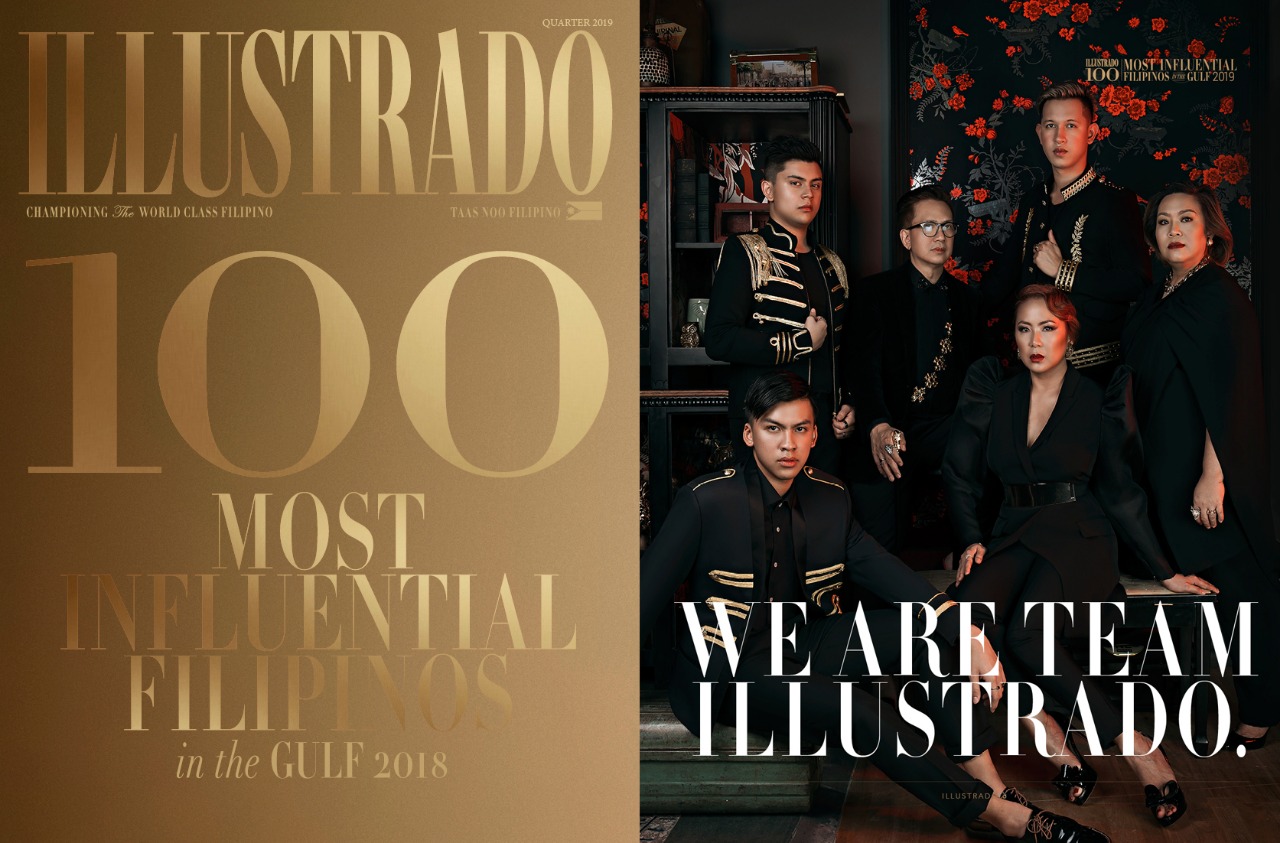
 Illustrado 100 galvanized itself into the consciousness, and the hearts of the Filipinos and this kind of respect is never accidental. Its undue influence mirrors the vision and character of the husband and wife team behind the authoritative magazine. The team, in the wisdom of their selection, has figured out the Excalibur of meaningful choice: that a person’s character is better seen in deed than heard in word. As it is, time will begin to show the cracks of those who are merely acting out. Or that Teflon looks will start to wear out. Consistency in character, after all, is that manna from heaven disliked even by the hungriest of sycophants.
 She was giving me instructions when my eyes darted to the bespectacled, lean-framed man guiding the photographer. There was something light and delicate about the way he unconsciously caressed his hair that I couldn’t quite grasp. His walk was sprint-like. Lilting, to an extent. Sensing my distraction, she introduced me to him, “Mon, my husband.” “Opposites,” I noted mentally. He was soft-spoken; almost shy-like. Lalaine was extroverted; unquestionably socially confident. Their difference couldn’t be more apparent when he hugged me. It was as if I wanted to be hugged by Lalaine, but I wanted to hug Mon. You get that feeling that Lalaine will protect you, but you want to protect Mon.


 The young blood completes the team, the equally good-looking Paolo and Antonino. A tree is known by its fruits, we’ve heard. The reverse is also true – the fruits are known by their tree. Both boys are brilliant and creative, strikingly mirroring their parents in brilliance and creativity. I have seen both during photoshoots, engaged brief conversations with them, and their loquaciousness and confidence were admirable. I saw Antonino’s TEDx talk and read Paolo’s articles, and I could just imagine how proud their parents were. Always are. More than their brilliance, it’s their character that impresses me most. To have grown away from the Philippines, I expected them to be unaware of the nuances of values commonly practiced in our motherland, but they retained that respectful attitude, implying that, they, in spite of distance and gap in cultural rootedness, understood the full importance of being Filipino.
 They are paradoxical. Preferring to live 45 minutes away from the metropolis, tending, zen-like, to the plants and cozying in scenic coastlines, yet they organize the most stylish parties and gatherings known to Filipino expatriates, attracting the fashionable and the heavy-hitters. It is this seemingly violative lifestyle choice that makes them enigmatic to many.