Category: Popular Stories

  • SMEs: What Can Small Business Do to Cope with Covid-19

    SMEs: What Can Small Business Do to Cope with Covid-19

    What Can Small Business Do to Cope with Covid-19?

    By Excel Dyqiangco

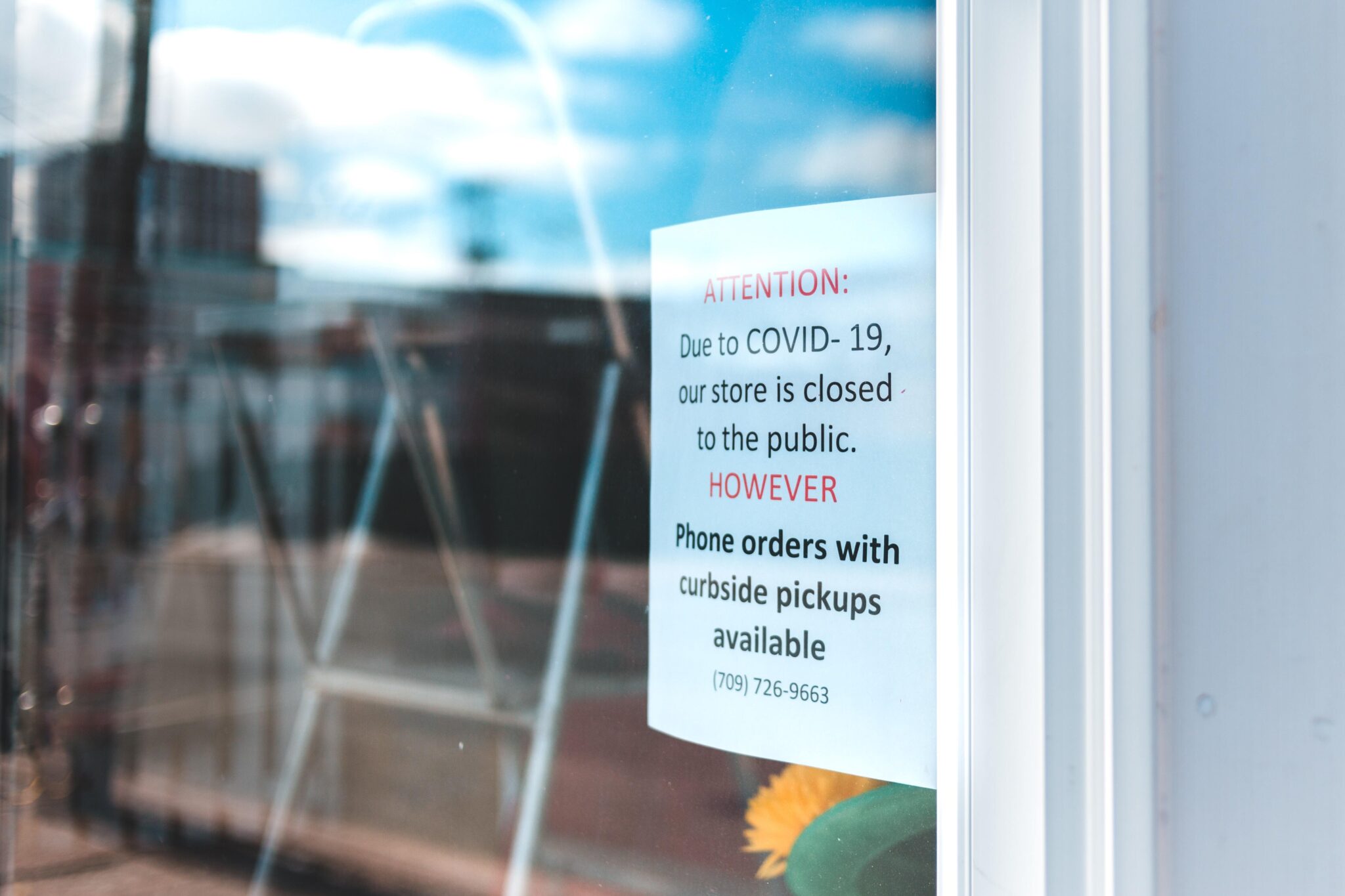
    With the COVID-19 pandemic severely hurting many companies worldwide, small-to-medium enterprises (SMEs), are among the worst hit.  While governments tackle the complicated job of re-opening the markets while cases still continue unabated, the question remains: how can small businesses with limited resources recover? The answer is critical as small businesses account for two-thirds of the globe’s jobs and half of its GDP. In the UAE, this translates to more than 98 percent of the total number of companies operating in the country, with SMEs contributing 52 percent of the non-oil GDP.

    “When this crisis hit, the majority of businesses were concerned about keeping their employees healthy and secure, which means providing them their daily needs,” says corporate law expert Atty. Barney Almazar. “The government has made a directive showing what we can do and what we cannot do, but of course, this is within the prerogative of the employer.”

    So, during this time of crisis, how are SMEs coping in the UAE, and what can entrepreneurs do to rise above the challenges? Illustrado hosted a livestream discussion amongst entrepreneurs and business leaders from a variety of sectors to get valuable insights that SMEs can learn from, and here are the main points.

    Watch the full livestream here: 

    1. PROTECT YOUR PEOPLE AND KEEP IN TOUCH WITH PARTNERS

    a. Take care of the health and welfare of your workforce.

    Ishwar Chugani, Retail Industry Leader, CEO Giordano ME

    “We want to make sure that they are safe and well taken care of,” says Ishwar Chugani, CEO and Managing Director of Giordano Middle East, which operates over 200 stores in 23 countries from their headquarters in Dubai. “At this point in time, I communicate with them, and I have to make sure that everyone is okay. Although expenses continue, we are looking at paid salaries this April – the important thing is we have to make sure that they have enough to live and survive.”

    “I am where I am today because of my people,” says Chugani.  He also cautions entrepreneurs from making drastic decisions in laying off staff, mindful that the markets and businesses are set to eventually re-open. “To get new people and to restart would be more expensive. We just need to focus on getting things done and then restart.”


    Mary Jane Alvero, Group CEO of Prime Group

    Mary Jane Alvero, Group CEO of Prime Group, leading quality and compliance solutions provider in Asia, Middle East, and North Africa, meanwhile, admits that they weren’t affected much in this pandemic because they are into the construction business and laboratory services. However, Alvero says that they have created a centralized emergency response team related to the outbreak. “We believe that in this way, we could protect our customers and at the same time, we could protect our people,” She adds that part of their business continuity plan is to minimize the visitors, test consultants, suppliers, and customers.


    b. Reskill your employees or reassign and redistribute tasks in response to the current market situation.

    Iman Suguitan, CEO Ahsant, & Co Chocolat

    Adopting to the current situation in some cases requires teaching your staff new skills, or reassigning them to handle other functions.  According to Iman Suguitan, Founder and Managing Director of Ahsant Premium Hotel Supplies and Co-Chocolat, “Those people who used to deal with sourcing leather, for example, are now re-deployed to deliver chocolates,” says social entrepreneur Iman Suguitan. “We focus now on enhancing the customer journey, the customer experience like re-skilling. This is important even when the pandemic first blew up in China, So what we did was to keep everyone busy, and I think we are adapting.


    c. Allow your employees to work from home.

    Atty. Barney Almazar, a partner at Gulf Law, says that for both parties to make this current situation work, employers can just make their employees work from home. This is a win-win situation since the businesses would still be earning money while at the same time, providing salaries to their employees.  At the time of writing, in Dubai, private sector companies are allowed to have only 30% of their workforce in offices, the rest have to work from home.

    d. If salary cuts or unpaid leave is unavoidable, do it lawfully.

    Atty Barney Almazar, Gulf Law

    Atty. Almazar says that if paying full salaries for employers is not possible, employees may be asked to go on unpaid leave, or given salary cuts.  He explains, however, that this should be mutually agreed upon.  “The Ministry of Human Resources and Emiratisation (MOHRE) has given a form which they could easily download and have to sign – together with their employer – if they agree on unpaid leave or a temporary reduction of salary,” he says. “In this way, parties are both protected. We also try to advise our clients to have an amicable settlement, but if they can’t agree, then the company has two options: to keep them under the payroll and pay them under the contract without reduction, or they can just let them go. For the employee who has been let go, think of options. If they are let go, they could look for another job when the lockdown is lifted.”


    Albert Tranquilino, Managing Director, Darcey Flowers

    e. Communicate openly with your staff and partners and share challenges.

    “I do believe they are their heart and soul of the company,” says Albert Tranquilino, the Managing Director of Darcey Flowers. “I secure their future. Although we stopped operations, we use this time to be calm and to add some best value to our company. We try to be more creative and innovative, and productive too. I was also able to use this time to speak with my business networks and suppliers just to send my greetings, especially during these trying times.”


    What Can Small Business Do to Cope with Covid-19?

    2. MITIGATE LOSSES AND TAKE ADVANTAGE OF AVAILABLE RELIEF

    a. Take advantage of whatever relief packages are available to help liquidity. Talk to your bank.

    The UAE Central Bank has recently announced a Dh256 billion Targeted Economic Support Scheme (TESS) to equip banks to extend support to private sector companies and individuals affected by the crisis.  Entrepreneurs are advised to talk to their banks to see how they can benefit from the initiative, whether in the form of loans, deferment of payments, or other support.

    “When it comes to renegotiating with the banks, we are classifying the situation of the client,” says Atty. Almazar. “There are those without any default, and that means they have higher chances of having favorable restructuring terms and conditions. However, those who have issues with the banks can also renegotiate. There will just be additional things that we will have to do to prove to the bank that they can cope, considering the situation.”

    b. Check out government stimulus measures that can help reduce the cost of doing business and also simplify processes.

    Among many other measures to ease business in the emirates, the government has also suspended the collection of administrative fines, and for companies with up to 6 employees, there is a reduction of work permit fees. Foreign companies, moreover, can apply a refund up to 50% of the bank guarantees they have paid for each of their employees, so that will be a big help on their cash flows. Those who are in trading have a 20% refund on customs duty paid for goods being sold in the UAE, according to Atty. Almazar.

    The government is also giving extensions in renewing licenses, fines, and penalties, depending on which free zone the company is registered. Sharjah is offering an extension of up to 3 months for fees, and also condone fines at the start of the year. Dubai has several free zones that give a form of discount when license fees are paid in advance, so somehow this will also be beneficial to the cash flow. Other emirates are providing an extension, and the accumulation of fines has also been suspended.

    Edwin Duria, Managing Director of Play Middle East Business Consultancy and Ambassador of Business Network International

    “SMEs can also pay their license fees on installment,” says Atty. Almazar. “The surcharge per installment payment has been waived so this would be very helpful for businesses. They can make a staggered payment.”

    Edwin Duria, Managing Director of Play Middle East Business Consultancy and Ambassador of Business Network International (BNI), adds that despite the lockdown, authorities are working online. “Businesses can renew their license online and work on different structures and promotions,” he says. “All they need to know is to check it. The discount depends on the structure and the activity and that the options depend upon the structure.”


    c. Raise money by selling off non-core assets.

    For companies under tremendous financial pressure, especially those faced with having to lay off employees, Atty. Almazar suggests looking at non-core assets that they have, which they can use to augment their cash flow. He said, “Just last week, we did some asset swap where we sold some of the assets of the companies so that they would be free of debt, and that they would be in a better position.”

    d. Negotiate with landlords and suppliers to get more convenient payment terms/relief provisions.

    At a time when most businesses are under tremendous pressure, it pays to talk candidly with your landlord and suppliers to strike a deal that will allow for business continuity and would help out both parties.  “If you have a difficult time paying, the court can mitigate the situation, lessen the rent or impose that the tenant pays the rent,” says Atty. Almazar. “But that has to be in court.”  He emphasizes that it’s in the best interest of both parties to negotiate and have a mutual agreement that will help and benefit one another.

    With the imminent opening of shops around the emirates, Ishwar Chugani says part of their priorities is to discuss with the shopping malls and various retailers on what they can do for the tenants and what options they can offer, considering that it will take time for consumers to feel comfortable again to go shopping – even if businesses open tomorrow.

    3. PREPARE FOR THE FUTURE AND KEEP AN EYE FOR OPPORTUNITIES

    a. Use this time to learn and plan for recovery – how you will operate when the lockdown is done.

    Mary Jane Alvero, shares, “We have established a business continuity plan that has given us the vision for the next six months. Every week, we regularly review this and see if it needs changes since there are new regulations every day. Even if we already have a short-term plan, we make it a point to update what we are going to do since our projects are related to the government.”

    b. Covid-19 will not go away overnight, and as a result, consumer attitudes and preferences, as well as new consumption models are on the rise.

    Even after the lifting of lockdowns, and as markets reopen slowly, it is understandable that people will be uncomfortable to go out of their homes for fear of getting the virus. Businesses need to learn and adjust to these new circumstances.   As an off-shoot of the crisis, there will be a growing preference for contactless operations, home services, work-from-home, as well as the continued rise in e-commerce.

    “The situation post-COVID will be very different,” says Chugani. “We have to be ready for it. It’s going to be a bit contactless; people will still have a lot of fear going out. People will have a lot of fear about meeting other people. But we are also looking at new business opportunities. We need to have a very different mindset. We have to start and reset based on the new economy.”

    Joan Tuaño, Culinary Business Manager, La Carne Premium Meat

    Joan Tuaño, Culinary Head at their family enterprise La Carne Premium Meat, says business is doing well, with people staying at home and opting for home-cooked meals.  She shares, “We transformed to a delivery-only shop,” she says. “Lucky enough, we have already set up our online store way in advance. We just had to tune out the physical aspect of our store, and we had to just focus on the delivery. Now we deliver across the emirates. Interestingly, we have turned into something beautiful, and now we are managing customer expectations.”

    Iman Suguitan, also emphasizes on the importance of enhancing online channels, “It’s good that we have our online shop for Co Chocolat and that we are also active in our Instagram accounts.”

    c. Keep an eye for new opportunities resulting from the new reality.

    Despite the current crisis and uncertainty in the markets, these entrepreneurs are positive that there are still opportunities for SMEs. Duria, whose company helps in the establishment of businesses in the emirates, shares, “There have been a lot of licenses, especially in the freelance businesses, as well as new companies related to IT, web designing and e-commerce. This is the trending activity because of the lockdown. Visa-wise, we are gathering a lot of info, collaborating with lawyers, monitoring news from the government, and gathering a lot of deep info so that we can spread information not only to my clients but to the community. We are very busy right now doing some collaboration, preparing our relaunching after all the COVID situation is over. We are learning a lot online, and we are using this opportunity to learn, strategize, and collaborate with our network.”

    Alvero, meanwhile, plans to expand her business moving forward.  She adds, “I am positive that whatever is happening now, there will be a lot of opportunities that will come up in the future. More entrepreneurs will come in the future because of this crisis. For our discovery plan, we are also coming up with a new business expansion that will be under the group. We will go to the manufacturing side.”

    4. DETERMINE THE “NEW NORMAL” AND HOW YOUR COMPANY WILL ADAPT OR PIVOT.

    With this current situation, how do SMEs expect to operate in the near future? According to Duria, people will continue to use online technology for even more extensive communication seven after Covid-19. “We have never used Zoom before, but now we are using a lot of that. I believe that we will use this and other methods of online communication regularly for our businesses,” he says. “Transaction-wise, however, I think everything will go back to normal once the government goes back to normal work.”

    For Tuaño, what is happening is a very humbling experience for everyone and has changed a lot of people. She adds that with this crisis, businesses should think more about how to become more sustainable. “Is your business environmentally and socially sustainable?” she asks. “Is what you are doing something that people need for basic living? Are you able to adapt to the needs of the people? We need to go back to the basics. This is the time that creative modeling starts to happen. You can have the time to sell your unique proposition. I think it is going to be about simplicity and quality – less is more.”

    “We have learned a lot from this crisis,” says Alvero. “After analyzing the impact of this crisis, I believe that it is high time that we diversify our businesses. The most important thing about this crisis is that you learn how to give importance to every detail that happens in our personal life, in the business, in our careers, and in the community. In the end, we all have to give back.”

    Atty. Almazar says after the COVID-19 crisis, they still see a lot of remote work, which would stay for around 4 to 7 months after the government has relaxed the measures. According to him, there will be a lot of government spending, and that banks, meanwhile, will be working on helping to restructure industries like the tourism sector, helping it to adjust according to the new needs of the customers.

    “The new norm that we will be seeing is that people will still continue to work on their businesses, but in different ways,” he says. “There will be improvements. For example, now you can notarize your documents through video conferencing. These changes can also be carried on after we have normalized. We get the best things out of this situation, use them and move forward.”

    Suguitan adds, “If you can’t go outside, go inside. This situation is a good time to be quiet and reflect. This is not to create fear but to create a sense of calm that there are more important things than what we used to take pride in before.”

    Watch the full livestream here: 
  • Michael Cinco Stuns the Crowd at Burj Khalifa Runway Show

    Michael Cinco Stuns the Crowd at Burj Khalifa Runway Show

    Written by: Rex Bacarra
    Photography by: Bethoven Filomeno

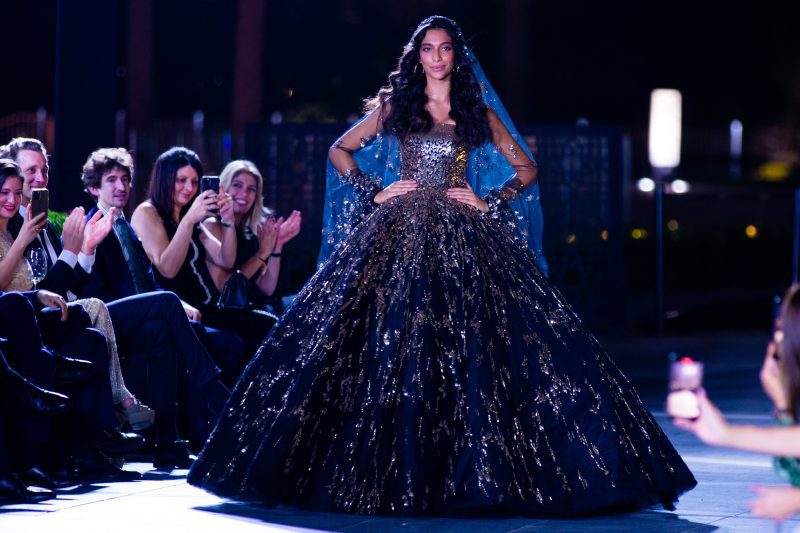
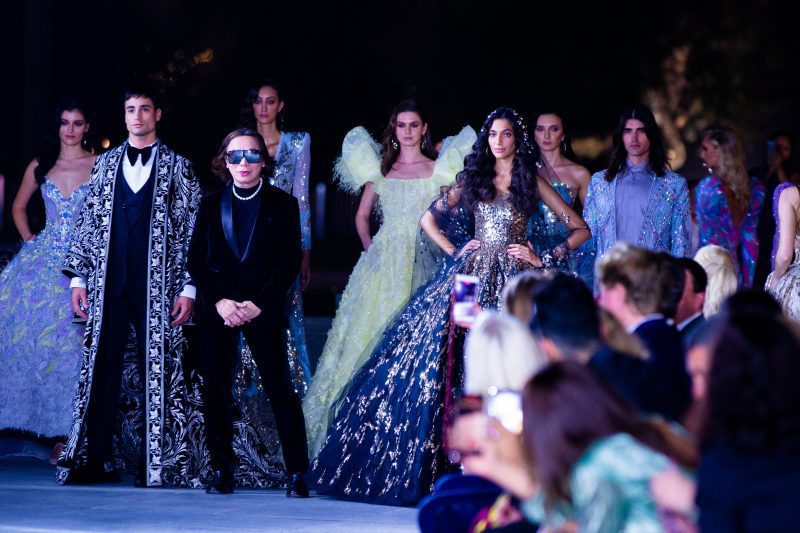
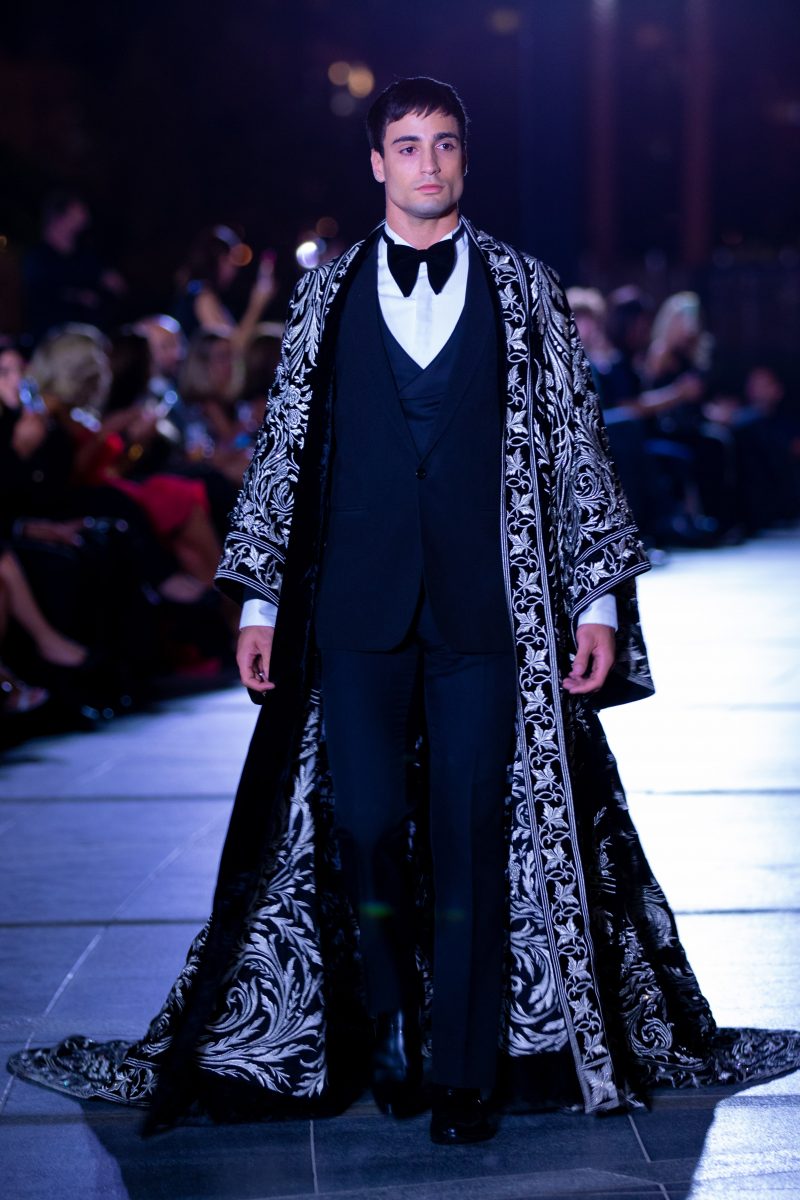
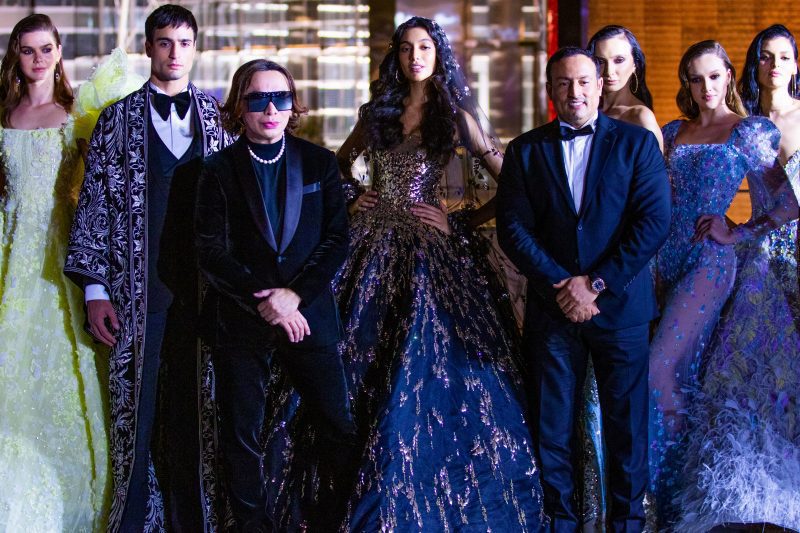
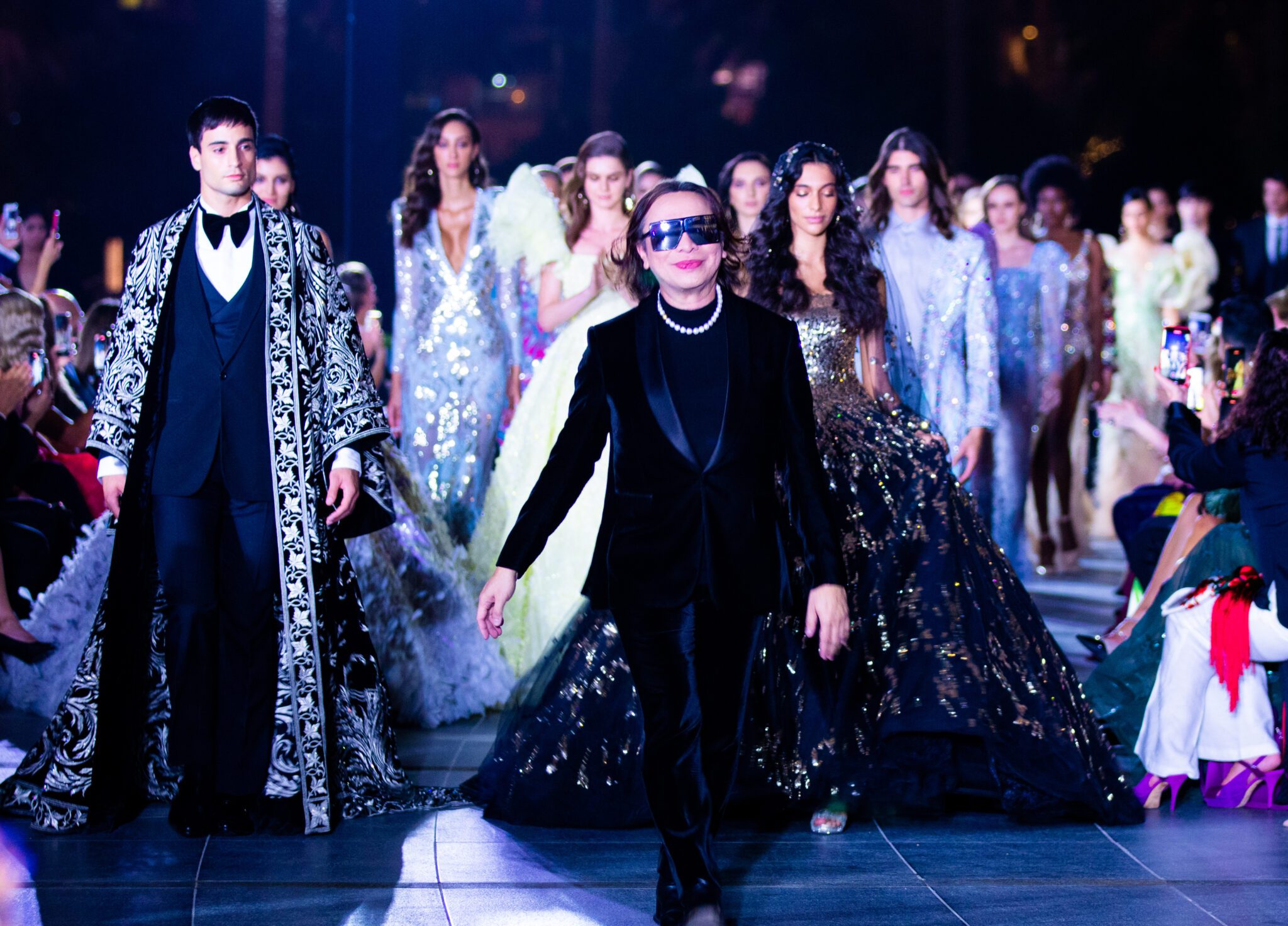
    Stunning the crowd once more, Michael Cinco recently unveiled his new impalpable collection at the Burj Khalifa – inspired by the works of Gustav Klimt. Read on as Rex Bacarra recounts his experience at the extravagant runway show, attended by European Royalty.

    Nobody dares to blink when two icons collide.

    Michael Cinco and the Burj Khalifa. Two icons in a breathtaking moment. One majestically towering over Dubai, confounding the eyes with its facade of silver and crystal glittering as in candlelight, the other proudly towering over the fashion metropolis of the UAE. In the United Arab Emirates, Burj Khalifa is the most visited bucket list find, and the Michael Cinco shows are the most coveted. Both mesmerize, and everybody in the fashion industry knows why.

    It baffles me why it took so long for this moment to happen. Of course, Giorgio Armani made his Dubai debut against the iconic backdrop featuring his Spring 2022 collection and couture pieces from his Armani Privé early this year. Still, one that is decidedly “homegrown” by an artist who started and made his mark in Dubai was waiting to happen until Michael Cinco’s The Impalpable Dreams at the Burj Khalifa happened. This alone is a cause both for celebration and commemoration. In global business, they call it the first-mover advantage. In fashion, just like in science, we may be brave to call it a Copernican revolution. An homage to Copernicus, who led the shift from a geocentric understanding of our known universe to heliocentric. One that starts. One where others are bound to follow. Indeed, not just the first Filipino but the first Dubai-based fashion designer to hold a show against the tallest tower in the world.

    Both the Burj Khalifa and the Michael Cinco brand are in the business of maximalism, a shy away from being ostentatious. Both are by-products of creative imagination when money is no question yet disciplined in aesthetics. There is control to their superlative luxury; this is why even if both are known to be opulent, highly embellished, and expensive, they exude elegance and tasteful sophistication. When fashion has control, like Michale Cinco’s aesthetics, it defines what true elegance is. It doesn’t just make you admire the wearer, but makes you fall in love. Immediately. There are no apprehensive pauses on what to say. There is only beautiful language in an instant.

    The first silhouette appeared a few musical bars after. It signaled a series of more silhouettes in varying degrees of embellishments, of splashes of colors in turquoise, gold, powdery blue, sequined in silver and gold. Then there was the gown with a décolletage collar (or a sweetheart!) which I mentally noted as the ‘first of the fuchsias,’ a phrase I fondly use in this regard as a transitory piece that allows for a fluid transition from cerulean pieces that precede it to mostly indigo after it. A clever choice. In writing, fluidity means using prepositional phrases. In fashion shows, fluidity means creating an equally important, and often stunning, transitional piece that allows the eyes to move along from one theme to another, without jarring the mind. Many designers make the mistake of abruptly intervening an 8-piece theme, for example, when transitioning to another. A designer must never do it, unless pure theater is at the core of its audacious intent to enthrall and shock the audience. The last designer to go against the almost sacred fluid rhythm of transition is Alexander McQueen in his reptilian 2010 Spring-Summer show, where the iconic armadillo shoes were birthed.

    There are the stunningly poetic pieces inspired by the art and life of symbolist Austrian painter, and probably the most famous Vienna Secession movement member, Gustav Klimt, famous for his artwork- Portrait of Adele Bloch-Bauer. Male and female models strutted the colors of Klimt’s golden phase, so-called because of the heavy use of gold leaf. Just like many of Klimt’s highly-sought paintings, the dresses and suits of Michael Cinco were reflective of the artist’s exceptional decorative works. As the artist himself proclaimed, “Probably the ultimate stage of my development of ornament.” They are stunning not just because these particular pieces could be mistaken as a faithful extension of Klimt’s idealism in the threads of fashion, but because the painter’s life to some extent uncannily resembles Michael’s: they are devoted to art, to their families, and both are highly selective.

    Fashion connoisseurs gasped and rose with thunderous applause when Michael Cinco appeared to close the show. The shy demeanor is still there. This self-consciousness is what makes him an enigma to most people, unused to the idea of a world-class designer whose public persona – unassuming and unaffected by the trappings of success – contrasts against his often voluminous, crystal-studied, and breathtakingly expensive gowns.

    My eyes darted from Michael to the Burj Khalifa, and back. The thunderous applause is unable to drown them. Both, indeed, are larger than life. Both, indeed, are mesmerizingly timeless.

    (more…)

  • Pure Filipino: Is there really such a thing?

    Pure Filipino: Is there really such a thing?

    Is there such a thing as a “pure Filipino?”

    By Lalaine Chu-Benitez

    Hot on the heels of Catriona Gray’s win at the Miss Universe 2018 beauty pageant, come the indignant comments from some members of the Filipino community questioning her ethnicity. “She is not pure Filipino.  How can she represent the country?”  The sentiment is not a new one.  Recently, we’ve also seen the same vitriol directed to Kelsey Merritt when she became the “first Filipino model” for Victoria’s Secret.

    In this increasingly globalized world, where 11 million of us live outside the homeland, and where as Filipinos in diaspora, we are often made acutely aware of our ethnicity in contrast to the ‘others’ that surround us, we get a lot of questions pertaining to our identity –

    “What is Filipino?” “What does it mean to be Filipino? “Filipino nga ba talaga?  “Are we being true to ourselves”?

    Even the first settlers in our archipelago, the Negritos, came from somewhere else.  They arrived in rafts from ancient Australia, Melanesia or even Africa – no one is certain, 67,000 years ago. From as far back as our history accounts would allow us to remember, our people, our practices and our traditions have always been an amalgamation of various ethnicities and cultures.

    Filipino-American biologist Dr. Michael Purugganan, who served as the Dean for Science at New York University, Dorothy Schiff Professor of Genomics, and co-director of the Center for Genomics and Systems Biology at NYU Abu Dhabi, explained in his article “What is a Filipino?  Looking at our DNA for answer”, written for GMA News –

    “We are products of what we evolutionary genomicists call genetic admixture, the result of several thousand years of mixing in our island archipelago at the edge of the Pacific.  We were always getting genes from everyone who came to our shores.  We are, in a genetic sense, a truly global people.”

    And that globalized profile continues to advance, at an even faster pace, with how small the world has become.  A tenth of our people live composite lifestyles – partly Filipino, partly something else, across the world, as we have emerged as a palpable global phenomenon in the last two decades.  We have assimilated but have also conquered not only through our mere presence and numbers in various countries, but also through our workforce, our food, our legendary beauties, our fashion, even our ubiquity and level of noise level in social media, not to mention our friendliness.  We have a growing number of TCKs (third culture kids) who live global, while on the flipside, we also have droves of foreigners who made the Philippines as their home.

    So what if we are not “pure”? So what if some of us are a tad fairer, and some haven’t mastered the vernacular? So what if our clothes are worn by foreigners?  So what if some of us feel more at home in other lands than the old country?  Does that make us any less than what we really are?

    Why do we even want to isolate ourselves from the changing evolving world by being so fixated on having a “true culture” (whatever that means) when we have always been a global one?

    Adaptability and evolution is not a bad thing.  It is also exchange – our way of injecting and propagating our heritage, and our ideas to others.  Allowing ourselves to be immersed in the ‘global village’ makes it possible for us to implant our distinct character, our practices, our aesthetics, even our views upon the rest of the world.

    Perhaps, we were always meant to be mixed – a hybrid of sorts.

    And being that hybrid has allowed us to imbibe, and also ascend, just like how our warmth and our smile helps us to quietly ‘take over’ wherever in the world we go.

    Is there anything else more Filipino than that?

    Taas Noo, Filipino!

    ________________________________________________________________________________


    Lalaine Chu Benitez

    Editor-in-Chief and aspiring urban farmer “almost superwoman” Lalaine has been driving Illustrado’s mission to uplift Filipinos in the region for over a decade now.  A former corporate dynamo living in Dubai for more than two decades, she has seen enough to appreciate that the best things in life can’t be bought and that in this day and age, authenticity could be one’s best asset.


    Related articles:

    Third Culture Kids – How Pinoy are they?

    Foreigners who Love the Philippines

    Desert Rose – A Letter to the Filipina in the Middle East


  • Designing Filipino: The Indigenous Architecture of Francisco Manosa

    Designing Filipino: The Indigenous Architecture of Francisco Manosa

    “Three factors make an authentic Filipino architecture,” says award-winning Filipino architect Francisco Mañosa, “Filipino values, Philippine climate and the use of indigenous materials. The point is not to rebuild the bahay kubo and bahay na bato – their time had come and gone – but to learn from them. What is the essence of indigenous architecture? What makes it uniquely Filipino? And how does an architect build modern structures that meet present-day needs and retain allegiance to native values?”

    Designing Filipino: The Indigenous Architecture of Francisco

    Architect and Nationalist

    Considered by industry experts as the most outspoken champion of indigenous Filipino architecture, Mañosa exhorts his fellow Filipinos to infuse their artistry with nationalism: “I design Filipino, nothing else.” A bold and definitive statement indeed, coming from an architect who in 1982 was hailed by Asiaweek as one of the seven visionary architects of Asia.

    “Architecture must be true to itself, to its land and to its people. For the design of the built environment reflects man’s expression of his way of life, his emotional, philosophical, religious, technological and material values in response to his needs and environmental challenges,” he explains.

    “We must believe in ourselves, our capabilities, innovativeness and creativity, and stop imitating alien cultures and architectures. We must believe that in accepting what we are and what we have – both their limitations and potentials – we can finally emerge as equals,” he adds.

    Designing Filipino: The Indigenous Architecture of Francisco

    An Ingenious Portfolio

    A graduate of the University of Santo Tomas, ‘Bobby’ is a member of the National Commission on Culture and Arts, a trustee of the Katutubong Filipino Foundation, and a Fellow of the United Architects of the Philippines. His ingenious designs include the Coconut Palace, Nayong Pilipino – Bicol Region, the Shangri-La Hotel at Mactan, the Pearl Farm Resort in Davao, which garnered the Kalakbay Resort of the Year Award for 1994 and 1995.

    Bobby’s breathtaking design of world-renown Amanpulo Resort in Palawan, has given him three international awards – the Asia-Pacific Interior Design Award for Hotel /Resort Category in 1994, and the prestigious Gallivante’s Award for ‘Best Beach Resort Worldwide’ in 1994 and 1995.

    Designing Filipino: The Indigenous Architecture of Francisco

    Mañosa also had varying influence in the design and construction of 34 churches nationwide, including the Mary the Queen Church at Moonwalk, Paranaque, Our Lady of Edsa Shrine of the 1986 Filipino Revolution, the St. Joseph Parish Church, home of the famed Bamboo Organ of Las Pinas, and many others. He has also designed several structures depicting Philippine architecture for use at tourist trade fairs in Germany, Italy, and other parts of Europe. At the Expo of 1992 in Seville, Spain, his work on the Philippine Pavillion received a commendation for its design and materials. His works can also be seen on the Diplomatic arena, like the Philippine Embassy at Washington D.C. and the Embassy Residence and Chancery in Riyadh, KSA.

    Celebrating the Coconut

    Commissioned by former First Lady Imelda Marcos in 1981, the Coconut Palace was designed by Mañosa as a showpiece for the versatile coconut and its viability as an export. Located at the Cultural Center of the Philippines Complex between the Folk Arts Theatre and the Westin Philippine Plaza, the Coconut Palace is made of several Philippine hardwoods, coconut shells, and a specially engineered coconut lumber conspicuously known as Imelda Madera.

    Designing Filipino: The Indigenous Architecture of Francisco

    The palace is shaped like an octagon, with a salakot roof, a chandelier made of 101 coconut shells, and a dining table inlaid with 40,000 tiny pieces of coconut shells. Highlighted as one of CCP’s most striking structures for its architecture and interiors, the palace celebrates the coconut as the ultimate ‘Tree of Life’. The design echoed everything from the coconut’s roots to its trunk, bark, fruit, flower and shell. There are a total of seven suites, each intended to showcase a distinct cultural group – the Ilocos Room, the Igorot Room, the Tagalog Room, the Visayan Room, the T’Boli Room, the Maranao Room and the Zamboanga Room. In each suite, authentic artifacts and motifs were used for the décor. During the heydays of the Marcos regime, the palace served as a guesthouse for many dignitaries and celebrities, like Libyan leader Muammar Al-Qaddafi, actors Brooke Shields and George Hamilton, among many. This historic landmark has been converted into a museum, with a butterfly garden and an orchidarium.

    The symbol of Filipino freedom

    Our Lady of EDSA Shrine on Ortigas Avenue serves to remind us of our love for freedom and continues to withstand the test of time. The architectural and structural design for the church was undertaken by Mañosa in collaboration with National Artist for Architecture Leandro Locsin and Architect William Coscolluela. The image of Our Lady Queen of Peace was sculpted in bronze by the late artist Virginia-Ty Navarro.

    Designing Filipino: The Indigenous Architecture of Francisco

    Designing Filipino: The Indigenous Architecture of Francisco

    Magnificent mansions made of lowly bamboo

    Manila’s rich and famous commissioned Bobby Manosa to design their mansions in such exclusive enclaves as Forbes Park. Mañosa has since compiled an amazing portfolio of opulent and beautiful mansions. He courageously incorporated bamboo into these architectural works of art – bamboo sidings, bamboo flooring, bamboo paneling, bamboo mosaics, bamboo ceilings, bamboo structural elements and bamboo subfloorings.

    The ingenious ways he used the lowly bamboo was truly a sophisticated art. Mañosa says, “Bamboo is the only plant that can grow fast enough to cope with the growing demand for present and future housing. But unless we apply new found technology and encourage willingness and acceptance by the people, it cannot prove its worth.”

    Related Articles:

    Filipino Artist Eugene Cubillo

     Art Hero Darwin Japat Guevarra