Tag: Business

  • SMEs: What Can Small Business Do to Cope with Covid-19

    SMEs: What Can Small Business Do to Cope with Covid-19

    What Can Small Business Do to Cope with Covid-19?

    By Excel Dyqiangco

    With the COVID-19 pandemic severely hurting many companies worldwide, small-to-medium enterprises (SMEs), are among the worst hit.  While governments tackle the complicated job of re-opening the markets while cases still continue unabated, the question remains: how can small businesses with limited resources recover? The answer is critical as small businesses account for two-thirds of the globe’s jobs and half of its GDP. In the UAE, this translates to more than 98 percent of the total number of companies operating in the country, with SMEs contributing 52 percent of the non-oil GDP.

    “When this crisis hit, the majority of businesses were concerned about keeping their employees healthy and secure, which means providing them their daily needs,” says corporate law expert Atty. Barney Almazar. “The government has made a directive showing what we can do and what we cannot do, but of course, this is within the prerogative of the employer.”

    So, during this time of crisis, how are SMEs coping in the UAE, and what can entrepreneurs do to rise above the challenges? Illustrado hosted a livestream discussion amongst entrepreneurs and business leaders from a variety of sectors to get valuable insights that SMEs can learn from, and here are the main points.

    Watch the full livestream here: 

    1. PROTECT YOUR PEOPLE AND KEEP IN TOUCH WITH PARTNERS

    a. Take care of the health and welfare of your workforce.

    Ishwar Chugani, Retail Industry Leader, CEO Giordano ME

    “We want to make sure that they are safe and well taken care of,” says Ishwar Chugani, CEO and Managing Director of Giordano Middle East, which operates over 200 stores in 23 countries from their headquarters in Dubai. “At this point in time, I communicate with them, and I have to make sure that everyone is okay. Although expenses continue, we are looking at paid salaries this April – the important thing is we have to make sure that they have enough to live and survive.”

    “I am where I am today because of my people,” says Chugani.  He also cautions entrepreneurs from making drastic decisions in laying off staff, mindful that the markets and businesses are set to eventually re-open. “To get new people and to restart would be more expensive. We just need to focus on getting things done and then restart.”


    Mary Jane Alvero, Group CEO of Prime Group

    Mary Jane Alvero, Group CEO of Prime Group, leading quality and compliance solutions provider in Asia, Middle East, and North Africa, meanwhile, admits that they weren’t affected much in this pandemic because they are into the construction business and laboratory services. However, Alvero says that they have created a centralized emergency response team related to the outbreak. “We believe that in this way, we could protect our customers and at the same time, we could protect our people,” She adds that part of their business continuity plan is to minimize the visitors, test consultants, suppliers, and customers.


    b. Reskill your employees or reassign and redistribute tasks in response to the current market situation.

    Iman Suguitan, CEO Ahsant, & Co Chocolat

    Adopting to the current situation in some cases requires teaching your staff new skills, or reassigning them to handle other functions.  According to Iman Suguitan, Founder and Managing Director of Ahsant Premium Hotel Supplies and Co-Chocolat, “Those people who used to deal with sourcing leather, for example, are now re-deployed to deliver chocolates,” says social entrepreneur Iman Suguitan. “We focus now on enhancing the customer journey, the customer experience like re-skilling. This is important even when the pandemic first blew up in China, So what we did was to keep everyone busy, and I think we are adapting.


    c. Allow your employees to work from home.

    Atty. Barney Almazar, a partner at Gulf Law, says that for both parties to make this current situation work, employers can just make their employees work from home. This is a win-win situation since the businesses would still be earning money while at the same time, providing salaries to their employees.  At the time of writing, in Dubai, private sector companies are allowed to have only 30% of their workforce in offices, the rest have to work from home.

    d. If salary cuts or unpaid leave is unavoidable, do it lawfully.

    Atty Barney Almazar, Gulf Law

    Atty. Almazar says that if paying full salaries for employers is not possible, employees may be asked to go on unpaid leave, or given salary cuts.  He explains, however, that this should be mutually agreed upon.  “The Ministry of Human Resources and Emiratisation (MOHRE) has given a form which they could easily download and have to sign – together with their employer – if they agree on unpaid leave or a temporary reduction of salary,” he says. “In this way, parties are both protected. We also try to advise our clients to have an amicable settlement, but if they can’t agree, then the company has two options: to keep them under the payroll and pay them under the contract without reduction, or they can just let them go. For the employee who has been let go, think of options. If they are let go, they could look for another job when the lockdown is lifted.”


    Albert Tranquilino, Managing Director, Darcey Flowers

    e. Communicate openly with your staff and partners and share challenges.

    “I do believe they are their heart and soul of the company,” says Albert Tranquilino, the Managing Director of Darcey Flowers. “I secure their future. Although we stopped operations, we use this time to be calm and to add some best value to our company. We try to be more creative and innovative, and productive too. I was also able to use this time to speak with my business networks and suppliers just to send my greetings, especially during these trying times.”


    What Can Small Business Do to Cope with Covid-19?

    2. MITIGATE LOSSES AND TAKE ADVANTAGE OF AVAILABLE RELIEF

    a. Take advantage of whatever relief packages are available to help liquidity. Talk to your bank.

    The UAE Central Bank has recently announced a Dh256 billion Targeted Economic Support Scheme (TESS) to equip banks to extend support to private sector companies and individuals affected by the crisis.  Entrepreneurs are advised to talk to their banks to see how they can benefit from the initiative, whether in the form of loans, deferment of payments, or other support.

    “When it comes to renegotiating with the banks, we are classifying the situation of the client,” says Atty. Almazar. “There are those without any default, and that means they have higher chances of having favorable restructuring terms and conditions. However, those who have issues with the banks can also renegotiate. There will just be additional things that we will have to do to prove to the bank that they can cope, considering the situation.”

    b. Check out government stimulus measures that can help reduce the cost of doing business and also simplify processes.

    Among many other measures to ease business in the emirates, the government has also suspended the collection of administrative fines, and for companies with up to 6 employees, there is a reduction of work permit fees. Foreign companies, moreover, can apply a refund up to 50% of the bank guarantees they have paid for each of their employees, so that will be a big help on their cash flows. Those who are in trading have a 20% refund on customs duty paid for goods being sold in the UAE, according to Atty. Almazar.

    The government is also giving extensions in renewing licenses, fines, and penalties, depending on which free zone the company is registered. Sharjah is offering an extension of up to 3 months for fees, and also condone fines at the start of the year. Dubai has several free zones that give a form of discount when license fees are paid in advance, so somehow this will also be beneficial to the cash flow. Other emirates are providing an extension, and the accumulation of fines has also been suspended.

    Edwin Duria, Managing Director of Play Middle East Business Consultancy and Ambassador of Business Network International

    “SMEs can also pay their license fees on installment,” says Atty. Almazar. “The surcharge per installment payment has been waived so this would be very helpful for businesses. They can make a staggered payment.”

    Edwin Duria, Managing Director of Play Middle East Business Consultancy and Ambassador of Business Network International (BNI), adds that despite the lockdown, authorities are working online. “Businesses can renew their license online and work on different structures and promotions,” he says. “All they need to know is to check it. The discount depends on the structure and the activity and that the options depend upon the structure.”


    c. Raise money by selling off non-core assets.

    For companies under tremendous financial pressure, especially those faced with having to lay off employees, Atty. Almazar suggests looking at non-core assets that they have, which they can use to augment their cash flow. He said, “Just last week, we did some asset swap where we sold some of the assets of the companies so that they would be free of debt, and that they would be in a better position.”

    d. Negotiate with landlords and suppliers to get more convenient payment terms/relief provisions.

    At a time when most businesses are under tremendous pressure, it pays to talk candidly with your landlord and suppliers to strike a deal that will allow for business continuity and would help out both parties.  “If you have a difficult time paying, the court can mitigate the situation, lessen the rent or impose that the tenant pays the rent,” says Atty. Almazar. “But that has to be in court.”  He emphasizes that it’s in the best interest of both parties to negotiate and have a mutual agreement that will help and benefit one another.

    With the imminent opening of shops around the emirates, Ishwar Chugani says part of their priorities is to discuss with the shopping malls and various retailers on what they can do for the tenants and what options they can offer, considering that it will take time for consumers to feel comfortable again to go shopping – even if businesses open tomorrow.

    3. PREPARE FOR THE FUTURE AND KEEP AN EYE FOR OPPORTUNITIES

    a. Use this time to learn and plan for recovery – how you will operate when the lockdown is done.

    Mary Jane Alvero, shares, “We have established a business continuity plan that has given us the vision for the next six months. Every week, we regularly review this and see if it needs changes since there are new regulations every day. Even if we already have a short-term plan, we make it a point to update what we are going to do since our projects are related to the government.”

    b. Covid-19 will not go away overnight, and as a result, consumer attitudes and preferences, as well as new consumption models are on the rise.

    Even after the lifting of lockdowns, and as markets reopen slowly, it is understandable that people will be uncomfortable to go out of their homes for fear of getting the virus. Businesses need to learn and adjust to these new circumstances.   As an off-shoot of the crisis, there will be a growing preference for contactless operations, home services, work-from-home, as well as the continued rise in e-commerce.

    “The situation post-COVID will be very different,” says Chugani. “We have to be ready for it. It’s going to be a bit contactless; people will still have a lot of fear going out. People will have a lot of fear about meeting other people. But we are also looking at new business opportunities. We need to have a very different mindset. We have to start and reset based on the new economy.”

    Joan Tuaño, Culinary Business Manager, La Carne Premium Meat

    Joan Tuaño, Culinary Head at their family enterprise La Carne Premium Meat, says business is doing well, with people staying at home and opting for home-cooked meals.  She shares, “We transformed to a delivery-only shop,” she says. “Lucky enough, we have already set up our online store way in advance. We just had to tune out the physical aspect of our store, and we had to just focus on the delivery. Now we deliver across the emirates. Interestingly, we have turned into something beautiful, and now we are managing customer expectations.”

    Iman Suguitan, also emphasizes on the importance of enhancing online channels, “It’s good that we have our online shop for Co Chocolat and that we are also active in our Instagram accounts.”

    c. Keep an eye for new opportunities resulting from the new reality.

    Despite the current crisis and uncertainty in the markets, these entrepreneurs are positive that there are still opportunities for SMEs. Duria, whose company helps in the establishment of businesses in the emirates, shares, “There have been a lot of licenses, especially in the freelance businesses, as well as new companies related to IT, web designing and e-commerce. This is the trending activity because of the lockdown. Visa-wise, we are gathering a lot of info, collaborating with lawyers, monitoring news from the government, and gathering a lot of deep info so that we can spread information not only to my clients but to the community. We are very busy right now doing some collaboration, preparing our relaunching after all the COVID situation is over. We are learning a lot online, and we are using this opportunity to learn, strategize, and collaborate with our network.”

    Alvero, meanwhile, plans to expand her business moving forward.  She adds, “I am positive that whatever is happening now, there will be a lot of opportunities that will come up in the future. More entrepreneurs will come in the future because of this crisis. For our discovery plan, we are also coming up with a new business expansion that will be under the group. We will go to the manufacturing side.”

    4. DETERMINE THE “NEW NORMAL” AND HOW YOUR COMPANY WILL ADAPT OR PIVOT.

    With this current situation, how do SMEs expect to operate in the near future? According to Duria, people will continue to use online technology for even more extensive communication seven after Covid-19. “We have never used Zoom before, but now we are using a lot of that. I believe that we will use this and other methods of online communication regularly for our businesses,” he says. “Transaction-wise, however, I think everything will go back to normal once the government goes back to normal work.”

    For Tuaño, what is happening is a very humbling experience for everyone and has changed a lot of people. She adds that with this crisis, businesses should think more about how to become more sustainable. “Is your business environmentally and socially sustainable?” she asks. “Is what you are doing something that people need for basic living? Are you able to adapt to the needs of the people? We need to go back to the basics. This is the time that creative modeling starts to happen. You can have the time to sell your unique proposition. I think it is going to be about simplicity and quality – less is more.”

    “We have learned a lot from this crisis,” says Alvero. “After analyzing the impact of this crisis, I believe that it is high time that we diversify our businesses. The most important thing about this crisis is that you learn how to give importance to every detail that happens in our personal life, in the business, in our careers, and in the community. In the end, we all have to give back.”

    Atty. Almazar says after the COVID-19 crisis, they still see a lot of remote work, which would stay for around 4 to 7 months after the government has relaxed the measures. According to him, there will be a lot of government spending, and that banks, meanwhile, will be working on helping to restructure industries like the tourism sector, helping it to adjust according to the new needs of the customers.

    “The new norm that we will be seeing is that people will still continue to work on their businesses, but in different ways,” he says. “There will be improvements. For example, now you can notarize your documents through video conferencing. These changes can also be carried on after we have normalized. We get the best things out of this situation, use them and move forward.”

    Suguitan adds, “If you can’t go outside, go inside. This situation is a good time to be quiet and reflect. This is not to create fear but to create a sense of calm that there are more important things than what we used to take pride in before.”

    Watch the full livestream here: 

  • Manila listed as one of the world’s top emerging startup ecosystems

    Manila listed as one of the world’s top emerging startup ecosystems

    Manila ranks among world’s top emerging startup ecosystems

    The Philippine startup ecosystem is once again featured in the annual Global Startup Ecosystem Report (GSER) by Startup Genome. In its inaugural ranking of the world’s top 100 emerging ecosystems, Manila is ranked 36th globally.

    The GSER 2020 puts the value of Manila’s startup ecosystem at USD1.6 B, with a total early stage funding of USD102 M over the last two and a half years. It is among the startup ecosystems in their activation phase, together with Busan in Korea, Calgary in Canada, Frankfurt in Germany, and Taipei in Taiwan.

    Department of Trade and Industry (DTI) Secretary Ramon Lopez remarked, “The DTI is committed to sustaining the growth of our thriving startup ecosystem in Manila and the whole country during this pandemic and beyond. We continue to implement enabling policies and strategic support programs for enterprises, particularly as we aggressively promote the digitalization of business operations and the digital transformation of our MSMEs and large enterprises.”

    Among Manila’s strengths as a top emerging ecosystem are its market reach (or the early-stage startup access to customers allowing them to scale and go global), as well as talent and experience (or the access to talent by early-stage startups). These place Manila among the top 20 ecosystems for Bang for Buck and among the top 30 ecosystems for Affordable Talent.

    The GSER 2020 identifies fintech and e-commerce as Manila’s ecosystem sub-sector strengths. Fintech companies account for almost 15% of Manila’s startups, with a transaction value reaching approximately USD10 B in 2019 and is expected to grow by 24% in 2020, while taking into account the expected impact of COVID-19. On the other hand, the e-commerce industry is growing at a CAGR (Compound Annual Growth Rate) of 26.4%, which is one of the fastest rates in Southeast Asia.

    “The proliferation of fintech and e-commerce startups in the country is testament to the abundance of opportunities in the Philippine market. By mutually reinforcing one another, these two sectors are enabling the growth of traditional sellers and buyers despite today’s trying times. Our young, creative, and resourceful pool of talent will keep our ecosystem vibrant and competitive in the years ahead,” said Undersecretary for Competitiveness and Innovation Rafaelita Aldaba.

    In partnership with the Department of Science and Technology and the Department of Information and Communications Technology as lead implementing agencies of the Innovative Startup Act, the DTI will facilitate more collaboration among members of the startup community, support the scaling up of startup enterprises, and foster their global expansion.

    “We strongly believe that Filipino startups can compete globally, especially with the right collaborators. We are constantly looking out for the chances to showcase the solutions and services they can offer to meet market demands and address social needs. We look forward to seeing our startups grabbing the attention of more mentors and investors as we promote them in the world market,” said Export Marketing Bureau (EMB) Director Senen Perlada.

    (more…)

  • From OF to Entrepreneur in the Philippines: Adjusting Your Mindset To Get Closer To Your Dream

    From OF to Entrepreneur in the Philippines: Adjusting Your Mindset To Get Closer To Your Dream

    By Bel Ramirez


    For most Overseas Filipinos, apart from owning a home, having a sustainable business back home that will support the family is the ultimate dream – an aspiration our kababayans want to achieve before they eventually settle back home for good in the Philippines.

    But there are so many questions and fears that linger in our heads that seem to make the journey from OF to entrepreneur a daunting one.  “Will I be able to survive in the world that I left long ago?” “Will I be able to reintegrate?” Or even the simple question – “Will I survive?”  These fears are enough to hold us back from coming home for good.  And that is a bit ironic, especially since “home” should be our comfort zone.

    So how does one overcome this feeling of “alienness” in his/her own homeland?  It’s easy to set-up a business with all the rules written out.  All you have to do is follow.  But it is harder to change our mindsets that have been shaped by staying all those years abroad in foreign land.

    Fret not!  All you need is to utilize whatever you have learned as a resilient OF, apply some flexibility and open-mindedness, and before you know it, you will be adjusting well to life in the Philippines and getting closer to your dream of having your own business back home.  Here are some tips learned from my own tough personal experiences that OFs can benefit from:


    Be observant

    As an OF returnee you have to understand that the country you have left a long time ago has experienced many changes through the years.  So it’s not useful to only be referring to the things you were used to “back in the day.”  Study the new lay of the land.  Get up to speed with how things work.  Observe your surroundings and the people and learn from them.  Find out the new way of doing things.


    Be the people 

    A lot of OFs have a hard time adjusting to the lifestyle back home because their expectations and actions are stuck to the life abroad that they left behind.  If you want to be successful in building a business in the Philippines, you need to make an effort to start acting like you are truly part of the community.  For how will your business serve the people, if you don’t even understand them?


    Be a problem solver

    Look for unique, urgent requirements or anomalies within the community that need resolution and where you can contribute your talent and skills. This is how you can come up with a business, a product and/or a service that, will address existing needs in the market.   OFs are very skillful in finding ways to solve problems, even beyond our professions. We’ve learned to be inventive with our exposure to different cultures and workplaces.  Use this strength and let your ingenuity shine!


    Be an explorer

    OFs are innately adventurous.  Our spirit for challenge has brought us to distant seas. We don’t want to be kept stagnant in one place.  So why not try new ways of addressing market needs back home with inventive new business solutions that would help a lot of kababayans.


    From OF to Entrepreneur in the Philippines: Adjusting Your Mindset To Get Closer To Your Dream


    Be experimental 

    OFs are not afraid to try and fail, and relearn and apply what we have learned, whenever we get a chance. This is a special skill of an OF. Trial and error leads us to success and it’s proven. We just have to be more courageous and not be discouraged by failure, as each one of them is an opportunity to learn that brings us closer to success.


    Be open minded

    Not all business succeed on first attempts. 80% to 90% of startups fail.  So you have to have an open mind and accept whatever happens. By having the right perspective only are we able to move on, start over again and pursue that dream until we make it. But in starting anew, we have to understand what did not work in the first place. Our strong OF will which we developed while working abroad will help us to carry on, despite the failures we may face.


    And lastly, be a doer

    An idea is useless, unless you implement it.  A business plan is nothing until you establish the company and get started.  And being an entrepreneur back home can only become reality if you start working on it today.  Be a doer to get the result that you desire, to achieve the dream that you hold dear. Most of us think that we don’t have enough skills, and get paralyzed by fear.  But those skills exist deep inside us, so we must not be afraid of trying until we get it right.


    Each of us may have different ways of applying these guidelines on adjusting our expat mindset to achieve our dream business back home.  But the most important thing of all is to start doing something to move towards success. There’s no better time but now!


    (more…)

  • Pinoy Entrepreneur – Rebecca Bustamante

    Pinoy Entrepreneur – Rebecca Bustamante


    Rebecca Bustamante

    I grew up in a very poor home in Dasol, Pangasinan with 10 siblings. My childhood life was a very challenging experience because I saw the difficulty of life, from the moment you wake up to when you go to sleep. My mother died when I was just 18 and my father did not work to support us. So at a young age, I was forced to seek work outside the country as a domestic helper to pay off our family’s debts, our house which was used as a collateral for a loan, and to feed my siblings and send them to school.

    I worked for more than 3 years in Singapore alongside studying with an Open University. It was tough, of course, balancing work and studies. But I always thought about my siblings back in the Philippines, and that I always thought about my future goals. I want to transfer to Canada because I know opportunities will be better there for our family.

    After those three years, luckily, I was able to transfer to Canada where I also started as a househelp. Unlike in Singapore, the opportunities in Canada were better. Eventually, I could even become a citizen. So while I was working as a househelp, I did many sideline jobs including selling Saladmaker, and then I was also studying at night. So in the morning, I would do my household chores, and then at night, study. During my day offs, I would then go out and sell. All the profits I had from selling, I would keep as savings. I did not want to spend on anything, even my clothes were all bough second-hand. I wanted to save up so I can start my own business.

    I then started a recruitment agency called High-Q Personnel that helped bring domestic helpers to Canada. I wanted to help our fellow Filipinos. I always thought that if they can come to Canada, they will have better income and they can also provide better lives for their families. I want to inspire them to see that even though you start from the bottom, you can succeed because you are the driver of your own future. No one can drive for you expect you. I am in this future bec I drove myself, I pushed myself.

    I started working again in the Philippines when I was already in Mary Kay Cosmetics and they sent me back because they wanted to start selling in the country. I also worked with the Canadian embassy. In 2005, when my husband lost his job in Canada, we decided to stay here in the Philippines and start our own company, Chalre Associates.

    Chalre Associates started out as a multinational recruitment firm for senior management executive positions. But now, we are more concerned with another type of marketing—marketing the Philippines. I want to make the Philippines a first world country. I see our fellow Filipinos, working hard, but are still suffering. I want to change that. They say it’s a huge goal, but I say, If you don’t know how to shoot for the moon, how will you land among the stars?

    To achieve this goal, we’re regularly holding the Asia CEO Forum and Asia CEO Awards, to give recognition to the Filipinos who are doing a great job and to inspire more to follow their footsteps.

    For more information, you can also check out https://www.rebecca-bustamante.com https://www.asia-ceo.org/ https://www.asia-ceo-awards.org/  


    Why did you become an entrepreneur?

    Then, I just wanted to help my family. But as I gain more experience and see more of the world, I saw the unlimited potential in myself, in all of us, and in the Philippines. ·       


    What odds were stacked against you and how did you overcome them?

    I faced so many challenges but the secret is staying focused on your destination. I left the Philippines without finishing college but I knew that I needed to learn and grow to be able to make it far. So I studied, even during the wee hours of the morning, I read books, I did assignments, I talked to people. I kept learning and growing so I’ll have more opportunities open to me. I also try to focus on what I can do for others, instead of focusing on what others can do for me. Building good relationships is key to succeeding in any field. I try to cultivate relationships that I make, and never forget the learnings and wisdom from the people I meet.


    What is the single biggest thing that allowed you to achieve your dream?

    The most underrated thing: Love. First, it was just love for my family that pushed to go out of the country and work and develop myself. Now, my love for the country is what drives me to keep going, keep organizing forums, keep meeting people, keep marketing the Philippines. I want my kids, the future Filipinos, to live in a country that’s more prosperous and better, and I want my legacy to be that I helped create that country.


    What are your 5 tops tips to starting on growing your own business? Please give 5 points with a bit of description for each one.


    1. Know your purpose in life
      Set goals, small and big, short-term and long-term. When you don’t have goals, you won’t know what your next step in life is.
    2. Do the action
      You can always think about what you can do, but the key is starting it, really doing it. As long as you’re not doing anything, your dreams and goals are nothing. Action will take you where you want to go.
    3. Failure is just a word
      There is no success without wisdom, no wisdom without learning, and no learning without failures. Never give up. You might run into people who will doubt you, you might run into circumstances that make you sad and tired, you might run into businesses and opportunities that won’t work out, but it all helps build you as a person.  
    4. Determination is a must
      Have discipline in whatever you do. Have discipline with the things you eat, have discipline to wake up early and do more today, have the discipline to stick to your plans and goals. If you practice discipline in different aspects of your life, you’ll master discipline even in the hardest tasks.
    5. Love.
      Keep love at the center of everything you do—love for yourself, love for your family, love for your country, and even love for the world. Everything is easier when you do it for love.


    What else do you want to achieve in the future?

    I want to inspire children and give them hope that we are all born lucky. I may be born poor but I was blessed to have been born with a huge family that I can love. I may be born without the usual stuff that people have but I am born with the practicality and the drive to turn things around. We all have something; we just have to change our perspective and see things differently. Focus on what you have, focus on your strengths, and use these to defeat your weaknesses. I want to inspire more people to have this kind of outlook in life.

    And I want to make the Philippines a first world country. We can do that. I believe we can.

    https://web.facebook.com/rbustamante.officialhttps://web.facebook.com/selfmade.rbustamante/

    (more…)

  • Filipino – Founded Startups: Style Genie PH & GVER

    Filipino – Founded Startups: Style Genie PH & GVER

    STYLEGENIE  

    www.stylegenie.ph

    Established Since: 2016

     Founders: Abbie Victorino, Minrie Macapugay and Rione Palacios

    Due to its unrivaled practicality, online shopping is quickly surpassing the need for its traditional counterpart. When it comes to buying fashion, e-commerce is one thing. However, platforms that provide you with specialized styling from the comfort of your own home is a whole other ballgame.

    With FashionTech company StyleGenie, customers are sent an expertly curated collection of clothes that caters to their style preferences. From this, people can try before they buy. The StyleGenie team expresses: “Our mission is to grant style wishes and boost our customer’s confidence through smart and sustainable fashion choices.” How it all works: after signing up on their website and creating a Style Profile, you get to choose a Style Box that has been curated just for you. StyleGenie then delivers the clothes to your doorstep – from the collection, you get to keep and buy what you like, and they’ll pick up the rest.

    StyleGenie was co-founded by CEO Abbie Victorino, Minrie Macapugay (Chief Tech Officer), and Rione Palacios (Chief Curation Officer). Branding expert Rione is a skilled retail executive with strengths in brand management, marketing communications, and fashion styling, while all-round tech expert Minrie is an IT consultant, front end JavaScript developer, and product development head. Together with Abbie, an experienced leader with a proven track record in international fashion buying and e-commerce solutions, the StyleGenie team endeavors to innovate the online shopping experience: “Through Style Genie and its services, we do not only sell clothes, but instead offer styling solutions so people can discover their true personal style, become conscious shoppers, and actively support the sustainable fashion movement. On the other hand, our platform offers our partner brands, especially the local ones, a way to sell their products with the use of data-driven technologies and personalized style-matching.”

    Established in 2016, StyleGenie now has an active client-base of over 30,000 users and 2500 paying customers. Initially starting in the Philippines, the business seeks to expand to Singapore, Jakarta, and Kuala Lumpur later this year. As a company, they have even bagged a couple of awards along the way – StyleGenie received the title of best e-commerce startup from the Philippines at the 2018 ASEAN RiceBowl Startup Awards and was chosen as one of the top 32 Asian startups at the 2019 Jumpstarter startup competition in Hong Kong.

    Seizing every opportunity for growth, this business has been a part of many startup programs. StyleGenie was incubated by the Ideaspace Foundation in 2017, and then the Asian Institute of Management in 2018. It was also accelerated by the 2018 UNCTAD (United Nations Conference of Trade and Development) x Alibaba E-Founder Fellowship Program, as well as the 2019 Simona Accelerator for APAC Women Founders (a collaboration between Digitaraya – a startup accelerator in Jakarta – and Google for startups in Indonesia). Through all these endeavors, Abbie has huge aspirations for StyleGenie: “My vision is to become the first female-founded style tech unicorn from the Philippines.”


    GVER

    www.gver.net

    Established Since: 2017

    Founders: Lalaine & Mon Benitez

    As climate change and the world’s waste problems come to the fore, businesses that provide sustainable solutions lessening people’s environmental impact become more and more important.  Enter Gver – Your Friendly Marketplace for Sharing.  Founded in 2017 Gver presents a novel mode of consumption built on top of sharing.  With the brand pitch – “get stuff for free, just pay for delivery and give away what you don’t need,” the startup differentiates itself from other marketplaces in that the business model is give and take, not buy, sell or trade.

    Founder Lalaine Chu-Benitez shares, “Billions worth of useful goods end up in landfills around the world, while billions more are lying in our closets at home. But while so many of us have too much stuff, more and more are finding it harder to afford things.   By facilitating sharing and removing the pains of the secondhand markets – no selling/negotiating, no meetups and no having to arrange for transport, we give people amazingly cheap, easy and safe access to goods.”

    The platform has currently over 4,000 members and has facilitated the give-away of thousands of items ranging from clothes to books, household items, even entire furniture sets.  2018 marks a new milestone as the brand started collaborating on CSR initiatives with companies to give away old furniture, equipment, and materials. Recent corporate partnership projects include the redistribution of over 150 pcs of second-hand hotel furniture worth an estimated AED25,000 from Jebel Ali Resorts and Hotels to the community, and the release of thousands of ceramicware to benefit restaurants across the city.  Such exercises prove that sharing is a win-win situation for both the companies where storage and disposal of old materials are both time-consuming and costly and for the receiving parties that are able to acquire useful goods conveniently delivered to their doorstep at the most minimal costs.

    Lalaine adds, “In the future, we see Gver side by side the world’s largest marketplaces, not only because it is a great idea whose time has come, but because the world needs this.  We as humans need this type of business to succeed.”


    (more…)

  • Filipino – Founded Startups: Big Data Analytics & Travel

    Filipino – Founded Startups: Big Data Analytics & Travel

    TANGERE APP

    www.tangereapp.com 

    Established Since: January 1, 2018 

    Founder: Martin Xavier Peñaflor

      Filipino - Founded Startups: Big Data Analytics & Travel

    While market data is instrumental to the research and development facet of companies, it is not the most obtainable considering the high price traditional market research companies often charge for it. Undermining this reality is Tangere App. Empowering Small and Medium Enterprises (SME’s), Tangere App provides affordable and real-time market research. For companies that can’t afford the typical PhP1-2 million price, one can have access to the results of nationwide studies that include over 1,800 respondents for as low as PhP70,000. They have also invested in the ‘Rolls-Royce’ of Business Intelligence, Tableau Analytics, to deliver interactive data analytics to their customers based on the results of the market research. Founded by Martin Penaflor, Tangere facilitates the collection of data via mobile application. Based on incentives, respondents can earn points by voting for different survey items available in the app, which in turn can be used to win in raffle draws and for points redemption.

    Filipino - Founded Startups: Big Data Analytics & Travel As the chief architect of Tangere App, Martin was an internationally certified business process consultant for SME’s and Large Enterprises from multiple industries before starting the company together with friends from the Market Research and Data Analytics industries. “Our main goal as a company is to provide the same competitive advantage, formerly enjoyed by large enterprises to SME’s. For our Tangere community, providing an alternative platform for them to express their opinions on key issues in the Philippines and at the same time giving them the chance to win items and redeem points is our main priority,” Martin expresses.

    Officially launched via Google Play Store in May of 2018, Tangere App has grown immensely. The company currently has 70,000 subscribers purely by word of mouth and has graced the number one spot multiple times on the Google Play trending list. Moreover, they have closed deals with various SME’s in the food and manufacturing industries in the Philippines – namely Gerry’s Grill and Pampanga’s Best – and their survey results have been presented all over mainstream media including CNN, Philippines Star, and ABS-CBN news.


    TRIPZEEKER

    www.tripzeeker.com

    Established Since: 2017 

    Founder: Kim Co Lim

    Filipino - Founded Startups: Big Data Analytics & Travel

    Filipino - Founded Startups: Big Data Analytics & Travel These days, finding smart ways to save money has never been easier, thanks to platforms like TripZeeker. This online meta-search engine allows travelers to compare the prices of numerous tours, activities, and attraction passes for where they’re going. When using TripZeeker, all you have to do is search for tours on the website. You’ll then be given a list of all the available tours with prices from the partner websites based on the keyword typed – it’s that simple. Currently, TripZeeker has aggregated over 85,000+ tours from across the globe. The startup was also featured on regional and local media platforms like CNN Philippines, INC. Southeast Asia, Vietnam Finance, TechShake Asia, Today Singapore, and Entrepreneur Asia Pacific.

    Founder of TripZeeker, Kim Co Lim was a former stockbroker at Maybank ATR Kim Eng Securities, and RCBC Securities, Inc. She holds a BS in Management Accounting and has a diploma from the Ateneo Graduate School of Business – having completed a Certified Securities Specialist Course. She is also an Ambassador for the Philippines in the Asia Pacific MSME Trade Coalition (AMTC), and in an NGO based in Singapore. Aside from Kim’s comprehensive background in business, she is a travel aficionado at heart – and with this passion, aims to make TripZeeker the leading travel website in the Philippines and the most significant international tour comparison platform.

    Elaborating on her aspirations as a founder, Kim shares: “I aspire to create a travel-based marketplace that enables travelers to browse, compare and book from millions of travel options related to tours, activities, and packages. And to have the opportunity to reshape harmony in the global travel ecosystem by helping travelers to discover the best travel deals and help local tour operators to have more reach online. Being one of the best travel destinations in Southeast Asia, the Philippines is truly world-class, and we should have our own leading travel website. With the help of people who believe in our vision, it’s not far-fetched.”


    (more…)

  • Filipino Businesses in the Middle East and Beyond: Trading & Distribution

    Filipino Businesses in the Middle East and Beyond: Trading & Distribution

    Meeting Garments Trading LLC

    www.meetingdancewear.com

    Since: 2005

    Founder: Regina Martin-Marauta

    Filipino Businesses in the Middle East and Beyond: Trading & Distribution

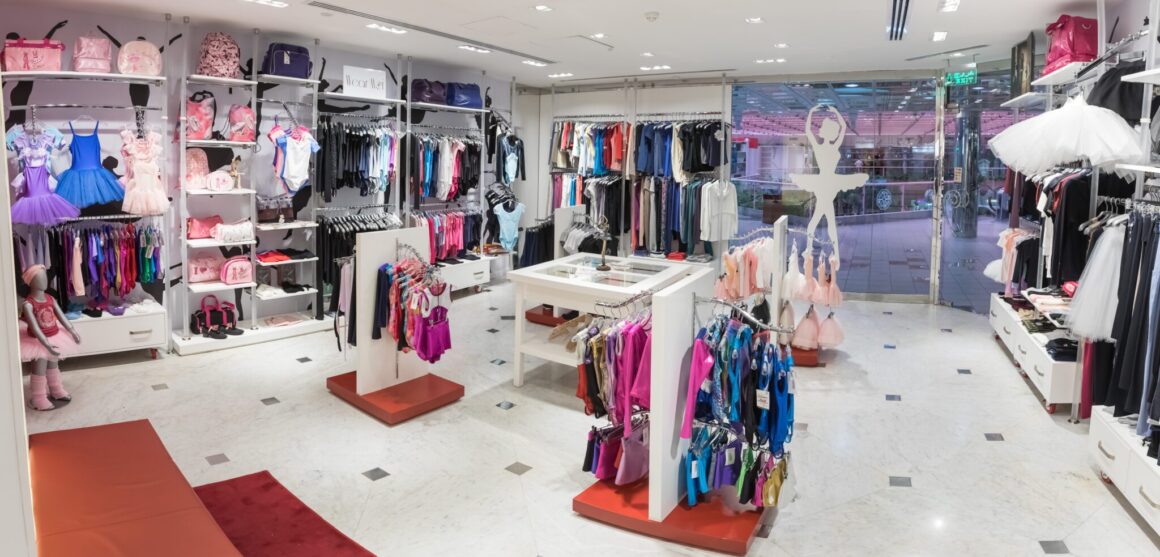
    Meeting Dance and Leisurewear is a one-stop-shop for durable, high-quality clothes, shoes and accessories that caters exclusively to the growing dance community and fitness enthusiasts of the emirates. “We pride ourselves on providing dance and active wear that is both chic and comfortable.” Founder Regina Martin-Marauta shares, as the company has become famous for selling highly sought after gear for jazz, modern and ballroom dancers in the region.  The company’s brands include popular industry names such as Danc-In and Deha from Italy.

    Filipino Businesses in the Middle East and Beyond: Trading & Distribution


    ENTREPINOY FZE

    www.entrepinoyco.com

    Since: 2016

    Founders: Felicito V. Hernandez, Gertrudes Quebral, Hyden Restificar, Samirah Quintilla and Sheryll Bacay Agbing

    Filipino Businesses in the Middle East and Beyond: Trading & Distribution

    Advocating entrepreneurship as a catalyst for positive change has always been at the core of Entrepinoy’s values. Established in 2016, Entrepinoy has facilitated the distribution of many of the Philippines’ socially-responsible high-quality goods to the international market. From exporting and distributing organic rice from Mindanao and other home-grown products like Barako coffee, they have supported many entrepreneurs in the motherland. On empowering local businesses, the founders share “Entrepinoy endeavors to find a solution to a problem and become change agents. We want to help find ways to provide a venue for people to live, create opportunities and unleash potentials.”

    Filipino Businesses in the Middle East and Beyond: Trading & Distribution


    VANTAGE INTERNATIONAL

    www.vantageinternational.com.ph

    Since: 2014

     Founder: Maria Josephine Panagsagan Abina

    Filipino Businesses in the Middle East and Beyond: Trading & Distribution

    Aiming to encourage opportunity and unleash innate potential, Oman-based Vantage International is one of the foremost Filipino product distributors in the region. In following the “Bayanihan” spirit, Vantage International supports and uplifts various local and regional businesses in the Philippines. With over 400,000 business partners across the globe, Vantage has amassed one of the largest online catalogs of affordable Philippine products, quickly growing as they partner with new businesses every day. “We believe that people are our most valuable resource.” Maria Josephine Abina shares. “We believe in the potential of everyone, to rise and build a better life for themselves and their families.”

    Filipino Businesses in the Middle East and Beyond: Trading & Distribution


    (more…)

  • Filipino – Founded Startups: Burket.ph & All Access Work

    Filipino – Founded Startups: Burket.ph & All Access Work

    BURKET.PH

    www.burket.ph

    Established Since: June 2018

    FounderS: Herbert Joei Bactong, Roy Benedict Julian, Jeff Clarenz Turla, Alexander Soriano, Benedicto Manreza, Juan Celso Flores

    Burket.Ph is a business to business social network, marketplace, and SaaS (software-as-a-service) all rolled into a single platform called a Market Network. With ambitions of becoming the next LinkedIn or Facebook for businesses, Burket aids Filipino businesses in discovering more local opportunities through products and services matching – that integrates artificial intelligence, and an easy to use social network interface. “This gives potential buyers a way to look for, and manage new suppliers without going through or searching cluttered directories. As well as this, suppliers will be easily discoverable,” its founders attest. Burket is currently a free service but offers additional features through a fixed monthly subscription. If you are a supplier and deals with other businesses or a buyer and needs new suppliers, Burket is precisely the tool for you.

    Burket’s founders – Herbert Joei Bactong, Roy Benedict Julian, Jeff Clarenz Turla, Alexander Soriano, Benedicto Manreza, Juan Celso Flores – come from various multinational companies including Bank of America, Henkel, BPI, Smart, Hyundai, DB Shenker.  The team members have experience in roles such as technology, marketing, operations, and business management, among others. CEO Herbert was previously the CTO of BPI Securities and President of an IT subsidiary of a group of companies in the Philippines. Their CTO Jeff graduated Magna Cum Laude in Computer Engineering and held many technology and digital marketing roles in Hyundai, while COO Roy held operations and human resource roles from Henkel.

    Despite starting development only last July 2018, and recently launching their Alpha version mid-March 2019, Burket has shown such promising growth. From the first two months, they were able to aggregate 200+ unique companies and over 800 products and services. Coupled with this, their week over week user signups grow at about 12.5%, and an increase of 95% in their site visits is seen monthly. Furthermore, Burket was part of the KMC/Impact Hub Space for Ingenious incubation program in the Philippines and will be an Alpha exhibitor this upcoming RISE conference in Hong Kong.

    Regarding their ultimate aspiration as a business, the founders share: “Our vision is to see Burket become the go-to platform if not the only platform that allows companies to connect and do business in the Philippines. We want to help MSMEs become more discoverable and have more opportunities.”


    COWORKING ALL ACCESS

    www.allaccess.work

    Established Since: March 2019

     Founder: Brandon Joseph 

    Coming on the heels of the rising co-working industry in the UAE is Coworking All Access, a membership-based platform which gives entrepreneurs and freelancers access to various co-working spaces and business centers around the UAE.  “We understand that most entrepreneurs can’t afford to explore all co-working communities and enjoy their personal life beyond work. Hence, we are giving our community access to the best spaces and personal services so they can work hard and build their network while enjoying a much healthier lifestyle,” shares founder Brandon Joseph. The startup expands beyond the idea of typical coworking space services by offering networking and lifestyle perks including access to mentors, curated events, restaurant deals, complimentary gym and yoga classes, salon and spa deals, as well as time off by the pool at 5-star hotels around the city.

    Since launching the website in March, the company has already generated close to 400 signups, as well as a lot of interest from coworking space operators.  Aiming to further differentiate their offering, they are also planning to publish Cowork Magazine ME in August 2019.

    Brandon, who has a robust background on the startup and coworking industry in the region brings with him technical, creative and management skills as well as his network developed through running FUNDXB a series of events popular with Dubai’s young entrepreneur set.  He shares, “We would like to see All Access as a platform that is vital for freelancers, startup entrepreneurs or mobile workers that can provide true work and life harmony.  We envision it to be present not only here in the UAE, but also around the Middle East and in major cities across the globe someday, leveraging on the strong partnerships and supporters of our humble project.”


    (more…)

  • Filipino Businesses in the Middle East and Beyond: Play Middle East, Dagaz Management Consultancy & Prime Group UAE

    Filipino Businesses in the Middle East and Beyond: Play Middle East, Dagaz Management Consultancy & Prime Group UAE

    PLAY MIDDLE EAST

    www.play-mebc.ae

    Since: 2015

    Founder: Edwin Duria

    Filipino Businesses in the Middle East and Beyond: Play Middle East, Dagaz Management Consultancy & Prime Group UAE


    Managing over 250 high profile clients including Samsung, Pearson Education and JC Bamford Excavators Ltd, Play Middle East has maintained an excellent track record in its four years of Business Consultancy. Through founder Edwin Duria, the company has devoted its cause to assisting individuals and entire companies in their licensing ventures – providing registration, renewal, cancellation and amendment services. The company has been accredited through various government organizations in the UAE (DWC, DMCC, RAKEZ and Ajman Free Zone) and across the world – striking business partnerships within the UK, Gibraltar, Singapore, Hong Kong, and Thailand.


    DAGAZ MANAGEMENT CONSULTANCY

    www.dagazhr.harrisonassessments.eu

    Since: 2011

    Founder: Cristina Calaguian

    Filipino Businesses in the Middle East and Beyond: Play Middle East, Dagaz Management Consultancy & Prime Group UAE

    Filipino Businesses in the Middle East and Beyond: Play Middle East, Dagaz Management Consultancy & Prime Group UAESpearheaded by Cristina Calaguian, Dagaz Management Consultancy excels in providing Human Resources consultancy, general business management consultancy, recruitment, events management, publishing and education training services within the MENA region. Through the years, Dagaz has functioned as a gateway for talent into the career world – a devoted supporter of career development and job opportunity, having lent its helping hand to commercial and governmental organizations, along with a handful of individuals and people with determination.


    PRIME GROUP UAE

    www.primegroup.ae

    Since: 2016

    Founders: Abdul Latif Al Gargawi, Salah Ameen Al Awadi, Abdul Majeed Malek, Mary Jane Alvero-Al Mahdi

    Filipino Businesses in the Middle East and Beyond: Play Middle East, Dagaz Management Consultancy & Prime Group UAE

    Founded in 2016 through the collaboration of various industry talents, Prime Group has evolved into a leading authority in quality and compliance solutions providing across Asia and the MENA region. Having over 400 staff members across its group of companies across the Middle East, Prime boasts a highly experienced team of multi-talented individuals capable of managing its wide range of services within the fields of testing, inspection, certification and training.

    Focusing on certification, the group has had a profound impact on the halal food industry, acting as a catalyst and gateway for international halal food to the UAE. “We aim to raise the awareness of exporters on the opportunities within the Halal sector, both regionally and globally and to educate them on the halal system in the UAE.” Co-founder Mary Jane Alvero-Al Mahdi says.

    Since its official launching, Prime has certified over a hundred Philippine exporting companies not only to the UAE, but also the Middle East, Africa, Europe and America – and has worked in tandem with well renown brands across the world such as the San Miguel Food Group, Unilever, Nestle, Goldilocks and even Jollibee.

    Prime’s defining characteristic behind their reputation lies within their exacting service standards, further backed up by their technical expertise and knowledge of the market. The company has been recognized as one of the most outstanding certification bodies by the UAE government through the Sheikh Khalifa Fund for Enterprise Development. “Our reputation is based on a consistent track record of punctual and meticulous service delivery; extremely cost-effective services; a very high level of technical expertise in giving customized solutions; and multiple awards won locally and internationally.” Mary Jane shares. “The end goal of all our businesses is to ensure alignment with the best international standard practices. In doing so, we create an environment of trust.”

    (more…)

  • Filipino – Founded Startups: Denarii Cash, Acudeen and Beamandgo

    Filipino – Founded Startups: Denarii Cash, Acudeen and Beamandgo

    DENARII CASH

    www.denarii.cash

    Established Since: 2017

    Founder: Jon Edward Santillan

    A money transfer application based in the UAE and Saudi Arabia, Denarii Cash enables overseas workers to send money home with absolutely zero fees, and the best exchange rates. Starting with the OFW community in the Gulf, Denarii will soon be providing their services to Indians, Pakistanis, and other nationalities. As an overseas worker, you can download the app and buy credits through ATMs, vouchers, or kiosks. Once the credits are in your account, one can select where to send it to from Denarii’s 10,000 cashpoint partners and major banks in the Philippines and other countries. Upon transfer, both the sender and receiver will receive an SMS once the money is ready for collection.

    As a migrant worker, Jon recognizes the importance of every cent that one earns – and it was from this reality that Denarii was born: “The money we earn is the money that eventually ends up sustaining our relatives back home. Since there are limited remittance options for migrant workers, I felt there was a strong need to help overseas workers send their hard-earned money home with zero fees. Given my expertise in the tech and FinTech industry, I think my ultimate aspiration for founding Denarii Cash is to help them do just that.”

    Since completing the MISK 500 program in Riyadh (a startup accelerator), in 2018, Denarii Cash remitted over 500K USD, and the company is growing by 400% on a month over month basis. Besides also being backed by prominent FinTech investors from the US, UAE, and Saudi Arabia, Denarii has gained even more distinction after taking home first place at the 4th Dubai Smartpreneur Competition (organized by the Dubai Chamber where more than 1000+ applications were screened).  The startup was also accepted at the Muhammad Bin Rashid Initiative Fund in the UAE, organized by the Ministry of Finance in Dubai.


    ACUDEEN

    www.acudeen.com

    Established Since: 2017

    Founder: Magellan Fetalino 


    For the longest time, Small and Medium Enterprises (SMEs) have been facing financial issues without many options to turn to for support. Besides being a secondary priority for many financial institutions, SMEs are often left waiting indefinitely for receivables – and this immensely hinders what they can do to move forward as a company. Dedicating all their efforts to support SMEs, Acudeen has developed technology that renders the financing of alternative assets like receivables more accessible to businesses that need it: “Through us, SMEs no longer need to wait 30-150 days for their receivables to mature before they get paid. They can liquidate these receivables within 3-5 days. What the technology brings to the table is the speed of delivery (of funds) and bridging of trust (automated backroom for risk assessment) with formal funders,” says Founder and CEO Magellan Fetalino.

    Magellan took up a B.S. in Entrepreneurship at the University of Santo Tomas, and Digital Public Relations under Ateneo De Manila University’s PRSP IIDM Program.  He is a graduate founder of Founder Institute and is currently taking up his Masters at the Ateneo Graduate School of Business.  Magellan also completed a business program at the Alibaba Business School.  As a founder, he brings a lot of technical expertise to the table – evident from the projects he has been a part of. He is a partner of Original Pitch Venture Capital, a member of the Board of Trustees of Fintech Alliance Philippines, a Board Director of the Philippine Association for Digital Commerce and Decentralized Industries, a Board Director of Kyopay Technologies in Myanmar, and President of The Global Filipino Investors.

    Understanding and acknowledging the financial struggles SMEs frequently encounter, Magellan ultimately aspires to help fellow business owners feel more secure concerning the future of their companies: “When it comes to access to finance, financial institutions are very liquid – there’s a lot of money to lend. But with years of bad experiences with small and medium enterprises, it became challenging for banks to trust SMEs. This is the reality that our SMEs are facing today. Fortunately, with the new laws, the new initiatives, and the innovations that we have today, one can only wish to finally give an ordinary entrepreneur or proprietor an alternative and more accessible financing to look forward to in the years to come.”

    Acudeen has been providing services since 2017. In their first year of operation, the business closed 100M PHP worth of invoices, and then 500M PHP the following year in 2018. Of this, Magellan attests: “This year, we believe that our ambition of Project 5B PHP of SME invoices can be achieved.  Today, the market has been primed on how receivable discounting works, and easily understands how to utilize us for their businesses. From a push strategy in 2017, we are now reaping the pull effects.” To date, Acudeen is serving more than 1400 SMEs that have registered to sell receivables.


    BEAMANDGO

    www.beamandgo.com

    Established Since: 2015

    Founders: Mariliese Tan, Jonathan E. Chua, and Albert Christian Go

    BeamAndGo is a payment and digital marketplace that provides OFWs with an alternative form of remittance that is convenient, transparent, and sustainable. Usually, money sent back home is used to fund the costs for food, bills, education, or medicine. However, an unfortunate reality is that the OFW’s beneficiaries can sometimes misuse it. For instance, since remittances mainly come in the form of cash, people can take advantage of this by not spending it wisely. With BeamAndGo, all of this is prevented.  An OFW, for example, can purchase a digital supermarket gift certificate that will then be sent to loved ones back home. These digital gift certificates can then be availed of immediately at participating stores. One can even pay for insurance, healthcare, airtime load, and other utilities and useful services via the platform.

    The startup was co-founded by CEO Jonathan E. Chua, Senior VP Albert Christian GO, and Mariliese Tan. Back in 2013, acquainted with the issues OFWs collectively face with remittances, Mariliese came up with the idea for BeamAndGo. Coming from the corporate world, she partnered with Jonathan and Albert to help solve this issue that plagues many households across the Philippines. Jonathan has over twenty-five years of experience as a business leader, technologist, and investor and has been involved in the architecting of next-generation software solutions for a diverse range of companies. Albert brings 12 years of experience in the line of financial technology, corporate communications, and consumer marketing to the table. Together, they have built a successful business that has gained recognition from the likes of Forbes Asia, Bloomberg Asia TV, The Straits Times, CNN Philippines, and Bloomberg Philippines.

    As of today, BeamAndGo has over 180,000 registered users internationally – primarily in Singapore, Hong Kong, Japan, and the Middle East – and partners with numerous brands in the Philippines that all implement their services – 800 supermarket branches, 800 pharmacy branches, 2000 petrol stations, and 2500 convenience stores. The platform even offers door-to-door packages, Jollibee packages, home appliances, and mobile load, and has affiliations with digital wallets, cash pickups, and payment kiosks around the world.

    BeamAndGo’s ultimate aspiration lies in helping OFWs support their families wherever they may be in the world. They too aim to reduce the number of years a migrant worker needs to be away from their home. “This can be achieved by providing migrant workers with the tools to control their remittances, access to ethical loans, and a way to save money and earn interest. Basically, move them from being unbanked to being banked,” the founders share.

    (more…)