Tag: Business

  • Hello, I’m a Freelancer: The Ups and Downs of Being Self-Employed

    Hello, I’m a Freelancer: The Ups and Downs of Being Self-Employed

    By: Kristine Abante


    Hello, I'm a Freelancer: The Ups and Downs of Being Self-Employed


    My freelance career took off at around the same time I pursued a full time career, simply because I wanted to write.

    For more than a decade, I had a bit of both worlds, I was an employee on the daily grind receiving a reliable pay check every month, and I was a part-time freelancer pursuing my other passions on my free time.

    All was well and good until one day, you realize you just want to be able to wake up without the alarm clock telling you that it’s time to go, or have a longer vacation without having to explain to your boss and begging for an NOC.

    And so, after 15 long years of having my one foot out the door, I finally bid goodbye to the old comfort zone, and stepped into the crazy, exciting world of being a full-time freelancer.

    Here are the top things I have learned from becoming a full time freelancer:


    All you need is WiFi

    Forget the Beatles, you can do for periods of time without love, but you can’t as a freelancer, do without WiFi. It is the Holy Grail.

    Technology has completely redefined the way we live, work and play.  With everything becoming more and more accessible on mobile, people now have the option to leave the boring confines of an office cubicle and a work wherever there is a good internet connection – this includes your favorite café, your kitchen, your bed, your hometown, or if you’re lucky enough, by the beach, while you’re getting a tan. Talk about multi-tasking to the extreme!


    Freedom is messy

    Without the time-in punch clock, you also let go of the daily organized routine, and while there is no one forcing you to get up, to be successful at freelancing, you’ve got to have enough self-discipline to get your act together and make the most of your day.

    Keep in mind that your ability to earn is tied to your ability to manage yourself. I mean, technically I can sleep or binge on Netflix all day if I want to, but that wouldn’t be very productive, especially if you have bills to pay.


    Save for the rainy days

    The day you collect a payment from a client is the day you win the lottery.  And like a lottery winner, you might be tempted to splurge. But before you go on a shopping spree, remember the next paycheck or the next big project might not come for a while, so you have to be able to stretch your resources anywhere from 30-90 days.


    You’re the boss (and also the slave)

    There are perks to being your own boss and calling the shots. So far, the best part is that I don’t have to take negativity from anyone but myself. I can, for the most part, choose who I want to work with or what I want to work on, and having that choice means that whatever happens, I have brought it upon myself and therefore have no one else to blame.  At the same time, there is a greater sense of fulfillment whenever you accomplish a task well, or you gain one happy client.


    Give yourself a break

    In terms of vacation days, ironically, I find negotiating with myself a lot harder than with my former boss. As a freelancer, you might have a tendency to work yourself to the max. You always have to bring your work home with you.  Often times, you feel like you should be working even on a Friday, which rarely happened when I had a full time job. Now I am slowly learning to give myself a break. It is also important not to be your own slave.


    Prepare to Hustle

    You will hustle, and you will hustle hard. If you’re the type of person who likes to be in the backseat, or just conveniently go with the flow hide in the corner and just wait for instructions, the freelance life might not be for you.

    No matter how good you are, if you don’t put yourself out there, you are bound to lose. In a marketplace where competition is tough and other service providers are easily accessible, a freelancer needs to be on top of his/her game.  Build, mine and update your network and your portfolio constantly. Go for gold!


    Hello, I'm a Freelancer: The Ups and Downs of Being Self-Employed


    Overall, freelance life is not for the fainthearted, perhaps this is the reason why it took me such a long time to take the leap. Six months in, I would say the risk is well worth the rewards.  Plus nothing beats going to the beach on a weekday after a good client meeting.


    (more…)

  • Filipino – founded startups that are making a difference: Fashion and Beauty

    Filipino – founded startups that are making a difference: Fashion and Beauty

    Style Genie PH

    Bringing style confidence to men and women one box at a time


    Filipino - founded startups that are making a difference: Fashion and Beauty


    stylegenie.ph

    Philippines

    Since August 2016

    Sector: E-Commerce / Retail Services

    Founder: Abbie Victorino


    StyleGenie is a fashiontech company with a mission to empower men and women with confidence through data-driven style services, one box at a time. Their simple subscription methods and customer packages have served many women of all shapes, sizes and ages across the world. As a startup brand entrepreneur, Abbie Victorino has been bootstrapping and using organic marketing for the last 21 months. Within 6 months of field operation, they won their first startup competition, and they now cater to over 2,000 active subscribers and a growing social media presence online.


    Abbie Victorino’s entrepreneurial skills can be traced from her background in e-commerce. She has had 6 years of experience in international fashion buying and e-commerce consultancy and has worked with companies like PLDT-SMART Voyager Innovations, Zalora Philippines and CashCashPinoy. She was also the first Filipina representative at the recent Alibaba eFounders Fellowship Program- Asia Class 1.


    Her dream for StyleGenie is to be the number one fashion tech company in Southeast Asia. “I believe that with the right culture within the team, plus the data that we gather from our loyal subscribers will help drive the success of the company in delivering StyleBoxes across different countries and various categories.”


    Pustura

    Representing Filipino-style in Canada


    Filipino - founded startups that are making a difference: Fashion and Beauty


    lovepustura.com

    Canada

    Since July 2016

    Sector: Clothing line

    Founder: Jenefer Ayunan Padilla and Hanes Marasigan-Anotado


    Named after the Filipino words meaning ‘well dressed’, Pustura is a startup brand that combines uncompromising elegance, comfort and quality. The company which celebrates Filipino style inspirations and craftsmanship was created by Filipino Canadians Jenefer Ayunan Padilla and Hanes Marasigan-Anotado. Pustura currently has five sub categories under its brand, catering to different occasions and audiences from their global online clientele: Royals by Pustura (quality cotton shirts), Pustura Premium (luxe clothing sourced from fine silk), Squad by Pustura (garments catered towards medical professionals), Pustura Design (customized outfits for various black tie occasions), and Street by Pustura (trendy, high quality affordable street wear).  Established in 2016, Pustura is well on its way to making US$3 million in sales by the end of 2018.


    As one of the founders, Jenefer dreams of Pustura fully evolving beyond a series of clothing lines and into that of a fashion school in the future. She currently works towards its creation in Ozamis, Mindanao in the hopes of creating an institution that can offer free fashion education to kids, stay at home moms and more.
    Hanes on the other hand travels back and forth from Canada to the Philippines and works towards elevating Pustura to new heights, utilizing the brand’s potential towards becoming a well-known global brand that all Filipinos would be proud of. She envisions Pustura to be a breeding ground for all the best and most talented creative Filipino minds out there.


    (more…)

  • Filipino – founded startups that are making a difference: Impact

    Filipino – founded startups that are making a difference: Impact

    The startups sector in the Philippines is still very much in its infancy stage, especially in comparison to our Southeast Asian neighbors, especially in China and Singapore where the field is bolstered by government support, advanced technology, as well as available venture capital.   


    As of 2017, The Trade and Industry Department estimates that there were over 300 of these innovative and potentially scalable businesses established in the country.  Interest in entrepreneurship, however, has been growing in recent years with more and more millennials opting to create their own ventures, and while the numbers of investors and incubators are seeing a promising increase.  Interestingly enough, the Philippines’ also hit an important milestone in 2017 with its first ‘unicorn’ – Revolution Precrafted, developers of prefabricated designer homes founded by Robbie Antonio, raising its series B funding valued at over US$1B.


    With all indicators pointing to a promising future, and Filipino entrepreneurs rolling up their sleeves to push out the next big thing, here are 10 Filipino-founded startups from the homeland and elsewhere, which are making a difference in their fields.


    Reefood


    Filipino - founded startups that are making a difference: Impact


    Canada

    Since 2015

    Founder: Dansion Buan

    Sector: Food Waste Reduction

    refood.ca


    In 2015, entrepreneur Dansion Buan Reefood – a provider that helps food vendors redirect surplus food that would have been thrown out to charitable associations in need. Operating from Vancouver, Canada, in the mere span of three years since its launch, Reefood has been able to supply 10,000 meals per day, preventing over 3,000,000 kgs of food from directly entering the waste stream.


    Filipino - founded startups that are making a difference: Impact


    With a track record of participation in several non-profit organizations, Dansion has too worked within numerous business sectors including food, micro finance, tourism, and alternative medicine. Eventually, his business acumen and passion for helping those less fortunate led him to where he stands today.  


    Functioning within a double-sided market, Reefood has been able to benefit both food vendors and charitable organizations in a myriad of ways. However, more than just helping others benefit through their endeavors, Dansion ultimately hopes that the company’s actions will inspire others to carry out goodwill.


    Filipino - founded startups that are making a difference: Impact


    Every single year, roughly one third of food produced globally is either lost or wasted – a fair majority of which is still consumable. It’s been Dansion’s core advocacy to reduce this daunting number to the utmost of his abilities, as well as nourish the lives of those in need.


    Virtualahan


    Filipino - founded startups that are making a difference: Impact


    virtualahan.com

    Philippines

    Since 2015

    Sector: Technology Social Enterprise focused on People with Disabilities 

    Founder: Ryan Gersava 


    Virtualahan is a tech social enterprise that empowers disadvantaged individuals, starting with people with disabilities, indigenous people, and former drug addicts by training them, so that they are equipped with the knowledge to carry out digital work. “We help businesses grow with both our specialization in technology and the human touch,” says founder Ryan Gersava. He further attests: “We provide highly skilled human workforce who can deliver quality output despite their limitations.”


    Filipino - founded startups that are making a difference: Impact


    So far, Virtualahan has successfully trained 161 people, who have had a 74% employment rate in 53 cities nationwide – not to mention positively impacted many others through their community building programs. Amidst their numerous achievements, the most significant testament to their success and commendable endeavors was when they were chosen as the 2017 winner of the Google Business Group Stories contest – bagging a momentous first for the Philippines.


    At only 25 years old, what Ryan has been able to achieve is nothing short of amazing.  As a medical laboratory scientist with extensive training in business, He has prior represented The Philippines at the 20th Youth Assembly at the United Nations in New York as well as the Social Enterprise World Forum in Hong Kong. Ryan is set to attend future global forums regarding pressing international matters relevant to what he stands for.


    Filipino - founded startups that are making a difference: Impact
    Having accomplished so much already, the goal remains unfettered for Ryan: “The dream is to create an ecosystem for disadvantaged people to thrive and become leaders of our society in our effort to contribute to building the future of work where no one is left behind. We believe that we can be a force for positive change, capable of moving both our clients’ business and our social mission to create tangible impact.”


    GVER – your friendly marketplace for sharing


    Filipino - founded startups that are making a difference: Impact


    gver.net

    United Arab Emirates

    Since September 2017

    Founders:  Lalaine Chu-Benitez & Mon Benitez

    Sector:  E-Commerce


    “Life has become so hard these days. With the global rise of the cost of living, people find it hard to afford their needs, let alone their wants.  We want to give people the alternative of shopping for free, just pay for delivery, utilizing unwanted reusable goods which often end up in landfills, while removing the pains of dealing in second hand markets,” shares Founder Lalaine Chu-Benitez of their early stage startup Gver – Your Friendly Marketplace for sharing.


    She adds, “Our aim is to give the world an alternative to consumption that’s not only good for the wallet and the heart, but also the planet, by building a thriving global business based on sharing which will serve both individuals and companies; offer not only products, but also services; and that will also allow people to give and take from beyond their local communities.”


    Gver, a peer-to-peer platform is a marketplace where people can give-away items which they don’t need to those who want it.   Members can also receive items for free. All they have to do is make a request and once it is approved, pay for a nominal delivery charge.  “Most of us have some stuff just gathering dust in our closets. And not all of us want to sell in the second hand markets or meet-up with strangers.  Gver solves that issue as it makes getting rid of stuff and acquiring new stuff cheap and easy. We just simplified the equation. Why give? Because giving is good, and when you give, you will also receive,” says Lalaine.


    Since its soft launch in September 2017, the platform has already 2,500 members and has facilitated the giving-away of hundreds of items ranging from designer bags and clothes, to household goods, baby items, furniture, as well as books, CDs and sporting equipment. Currently serving the UAE, the platform is also set to cover the Philippines shortly.  Soon, members will also be able to give and receive free services. In July, Gver is also set to exhibit at Rise Hong Kong, Asia’s biggest tech conference which will showcase some of the world’s most promising startups.


    (more…)

  • Filipino – founded startups that are making a difference – Software

    Filipino – founded startups that are making a difference – Software

    The startups sector in the Philippines is still very much in its infancy stage, especially in comparison to our Southeast Asian neighbors, especially in China and Singapore where the field is bolstered by government support, advanced technology, as well as available venture capital.   


    As of 2017, The Trade and Industry Department estimates that there were over 300 of these innovative and potentially scalable businesses established in the country.  Interest in entrepreneurship, however, has been growing in recent years with more and more millennials opting to create their own ventures, and while the numbers of investors and incubators are seeing a promising increase.  Interestingly enough, the Philippines’ also hit an important milestone in 2017 with its first ‘unicorn’ – Revolution Precrafted, developers of prefabricated designer homes founded by Robbie Antonio, raising its series B funding valued at over US$1B.


    With all indicators pointing to a promising future, and Filipino entrepreneurs rolling up their sleeves to push out the next big thing, here are 10 Filipino-founded startups from the homeland and elsewhere, which are making a difference in their fields.


    Software: Ingenuity


    Filipino - founded startups that are making a difference - Software


    Philippines

    Since 2010

    Founder: John Naranjo
    Sector: Software/Outsourcing/BPO
    ingenuity.ph

    “I named the company ‘Ingenuity’ because if there’s one positive word most associated with us worldwide it is that, ‘the Filipino’s ingenuity’”, says John Naranjo, Founder and CEO.


    Filipino - founded startups that are making a difference - Software


    According to him, “By leveraging the use of technology, Ingenuity aspires to make a difference – for ourselves, for our customers, and for the world. We make this happen in several ways — by building software that makes an impact in the community, and doing stuff that will put the Philippines in the global tech scene; by empowering businesses to leverage technology to deliver a competitive edge; and by encouraging and training kids to take up programming or computer science and equipping them with skills that will make them more successful and relevant in the digital age.”


    Filipino - founded startups that are making a difference - Software
    Ingenuity is an award-winning homegrown software company engaged in providing software outsourcing services, technology consulting, and enterprise solutions to clients worldwide. The company partners with startups, creative agencies, and established businesses to create defining solutions that transform brands, grow businesses, and make people’s lives better.  John shares, “Our mission is to create great software that makes a difference – for ourselves, for our customers, and for the world.”


    Since the company’s founding in 2010, they have already successfully delivered over 100 projects mainly for the international market. For the Philippines, they have developed an enterprise-ready cloud-based solution we named ‘Flyt’ to empower local SMEs to leverage technology to make their businesses more competitive. Since its launch in 2018, Ingenuity has already helped over 10 businesses with multiple stores and franchisees “go digital”.


    John, who was exposed to programming by his dad at the age of 13, and then later on became an electronics engineer passionate about how technology can improve lives, says that his education has always inculcated within him the values of hardwork and using one’s talents to give back to the community.  Hence, he founded Ingenuity with the mission to build software that makes a difference and that will put the Philippines in the global tech scene.


    (more…)

  • It’s what I do: Paul Anthony Alaras & Jardine Ong

    It’s what I do: Paul Anthony Alaras & Jardine Ong

    Paul Anthony C. Alaras

    Implementation Specialist- Digital

    Optimum Media Direction


    It's what I do: Paul Anthony Alaras & Jardine Ong


    Paul Anthony arrived in Dubai in September 2015 and worked as the training officer and coordinator at the Asian Institute of Journalism and Communication (AIJC) and program assistant in the Educational Sector of the Philippines National Commission for UNESCO (PH NatCom).


    In October 2015, Paul started working for Optimum Media Direction (OMD) as one of the implementation specialists for digital campaigns. He handles the agency’s Lower Gulf accounts, with clients mostly from Qatar and Kuwait. He collaborates with his team to ensure all clients’ campaigns and ads go live on time, regularly monitoring their progress to ensure everything is on track.


    “The typical day in the life of a media executive is quite fast-paced. Every day, you must learn to juggle different needs and expectations, dealing with everyone’s requests promptly and making sure that everything will be managed properly.


    “I can say that after almost three years here in Dubai, I’ve grown a lot, both personally and professionally from my experiences. I am very fortunate to work in such a welcoming and instructive environment, operating alongside colleagues and management who have become like my second family. I always strive to be positive when faced with a new challenge to overcome, and strongly believe in having an optimistic approach both to work and to life.”


    “My message to my fellow Overseas Filipino Workers (OFW) is that we all need to be passionate about what we do and believe we can always be better. Being passionate is much more than just liking our job. It is knowing that no matter how busy or ‘full on’ the job gets, we won’t stop doing it, just because the road gets bumpy. It’s about feeling fulfilled and accomplished. Being passionate is about understanding that not every day will be a perfect day, and accepting that at times we will fail, but we won’t quit. We are happiest when we are pursuing our passions. Love your work and it will love you back!”


    Jardine Ong

    Head of Learning and Development for:

    An international luxury hotel group

    A Group of Companies operating in the F&B, Insurance

    and Automotive Industries.  


    It's what I do: Paul Anthony Alaras & Jardine Ong


    I started off my career as a Consultant for an HR and Training Consultancy firm in 2006 when I relocated. I was later on promoted to Senior Consultant, where I was spearheading HR and Training Projects for prestigious organizations around the country.


    A day in my work life

    My day is spent conducting training workshops for employees to create new skills and enhance specific competencies related to the fields of customer service, sales, communications, leadership and management. I also host coaching sessions for individuals. My current role also requires me to travel to other countries in the GCC (like KSA, Kuwait, Bahrain, Oman, Qatar, etc.) in order to conduct different tasks. 


    Your message to Filipinos out there

    I have full admiration for all of us here, away from the comfort of what is familiar and competing in the global environment. It’s not a surprise that we could thrive in any industry and in any country because of the type of work we can produce. We have always been known for our strong work ethics, so let’s keep it up.


    (more…)

  • Filipino – Founded Startups that are making a difference: Community

    Filipino – Founded Startups that are making a difference: Community

    The startups sector in the Philippines is still very much in its infancy stage, especially in comparison to our Southeast Asian neighbors, especially in China and Singapore where the field is bolstered by government support, advanced technology, as well as available venture capital.

    As of 2017, The Trade and Industry Department estimates that there were over 300 of these innovative and potentially scalable businesses established in the country.  Interest in entrepreneurship, however, has been growing in recent years with more and more millennials opting to create their own ventures, and while the numbers of investors and incubators are seeing a promising increase.  Interestingly enough, the Philippines’ also hit an important milestone in 2017 with its first ‘unicorn’ – Revolution Precrafted, developers of prefabricated designer homes founded by Robbie Antonio, raising its series B funding valued at over US$1B.

    With all indicators pointing to a promising future, and Filipino entrepreneurs rolling up their sleeves to push out the next big thing, here are 10 Filipino-founded startups from the homeland and elsewhere, which are making a difference in their fields.

    Taxumo Inc.

    Giving Filipinos much-needed tax assistance service.


    Taxumo.com

    Philippines

    Since 2016

    Sector: Tax Preparation Services

    Founder: Ej Arboleda


    Dealing with taxes can be quite the headache – especially atop an overwhelming schedule. In the pursuit of solving said inconvenience, Taxumo was born.


    Spearheaded by Ej Arboleda, Taxumo is an end-to-end web-based tax assistance platform that allows Philippine based freelancers, SMEs & self-employed licensed professionals to file and track their tax requirements. In a matter of minutes, taxes can be filed and paid online anytime and anywhere on computer or mobile device. Ej elaborates: By simply entering one’s income and expense in the app, tax dues are calculated real-time and tax forms are auto-generated and auto-filled. With a click of a button, taxes are filed online. The app also auto-generates accounting entries for easy transfer to one’s manual books of accounts.”


    Since the business’ inception in 2016, Taxumo has accumulated over 4,000 users, and has collected more than PHP 1.2 million worth of taxes since 2017. Moreover, the business was actually the first startup to be included in the Philippine Board of Investment’s Investment Priority Plan.


    EJ Arboleda is backed with twelve years of experience managing Enterprise Resource Planning Software systems, and four years of innovation experience as Chief Technology Officer at a WPP Digital Advertising Agency.


    As for their main goals as a brand, EJ Arboleda shares: “We aspire to empower SMEs and make their lives and business operations easier. By helping SMEs, we help this ecosystem grow and thus create real inclusive growth. Ultimately, the vision is to help 100 million Filipinos to become empowered entrepreneurs and better taxpayers.”


    Souqpinoy.com

    Easing the lives of Overseas Filipinos in the UAE and beyond.


    Filipino - founded startups that are making a difference: community


    United Arab Emirates

    Since 2016

    Sector: E-Commerce / Events

    Founder: Enrique H. Yamzon
    Originally initiated to aid Overseas Filipinos in the region, souqpinoy.com is an online ecommerce platform that allows customers to shop in the UAE, and send the goods directly to their homes back in the Philippines. Just recently, the ability to pay utility bills and multiple other bills back home was implemented on their website. “Through our business, our goal is to provide OFs around the world with ease in supporting their families,” says founder Enrique Yamzon.


    In less than two years, Souq Pinoy was has earned over 20,000 registered users. Through the success of their ‘souqpinoy.com Slim Down Challenge’, a social media based reality competition, they have also garnered audience interest from more than a dozen other countries.  Whilst services are currently available only in the UAE, souqpinoy.com aims to expand throughout the Middle East region, as well as Asia Pacific, where millions of Filipino-expats are based.


    Filipino - founded startups that are making a difference: community


    Founder Enrique is a seasoned real estate expert in UAE, with his experience in the industry spanning over twelve years. He is now the general manager at Al Seeb Real Estate Development, a prestigious group in the region.


    With plans of future business expansion, Enrique voices that the motivator behind his future corporate endeavors lies in the desire for his fellow countrymen to succeed: “I would like to encourage Filipinos globally to continuously strive – learn and always set the standard above the common level. As a Filipino, our people have continuously earned respect as we are gifted with talent, skills and an innate dedication for what we do. Let us keep ourselves equipped with knowledge, knowledge that will set us above everyone.”


    Kumu – Philippines

    Connecting Filipinos around the world on a more creative level


    kumu.ph

    Philippines

    Since 2018

    Sector: Media/Technology

    Founder: Roland Ros


    “To change the conversation on storytelling and creativity for Filipinos,” is precisely what founder Roland Ros seeks to do with Kumu – a new livestreaming platform where Filipinos can connect globally.


    Despite being armed with a background in performance marketing and advertising technology, Roland’s unwavering love for the Philippines has led him to use his talent for the benefit of his fellow countrymen. Having garnered over 10,000 users in the beta testing stage, Roland attests: “Our mission is to build stronger communities for the global Pinoy, whilst building a technology foundation that will develop a solid digital ecosystem and economy.”


    Looking to officially launch very soon, Roland shares: “We are currently refining our product by listening to the feedback of our users.  Once we have achieved “must have” status with our community, through a sophisticated set of key performance metrics that we use as a benchmark, we will proceed to move forward with a big public launch.”


    Roland endeavors to inspire a new breed of Filipino purpose driven leaders, as well as self-sustaining content creators. Kumu can be downloaded from Google Play and App Store.


    (more…)

  • It’s What I Do: Milanie Sanchez Regalado

    It’s What I Do: Milanie Sanchez Regalado

    Milanie Sanchez Regalado 

    Freelance News Presenter/ Reporter –

    Arabian Radio Network,

    UAE Correspondent – ABS-CBN The Filipino Channel

    Dubai, UAE


    It's What I Do: Milanie Sanchez Regalado


    My job

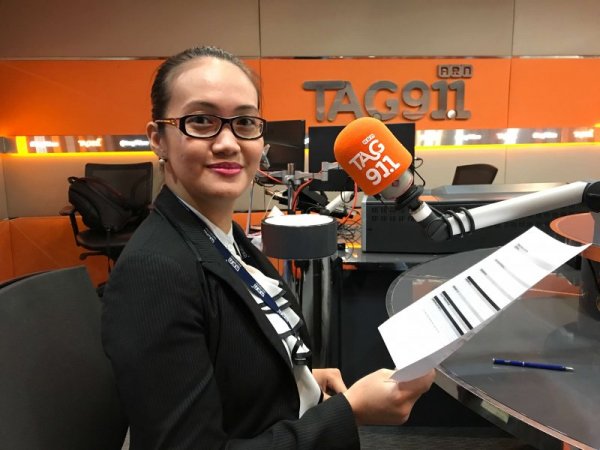
    I work as a freelance news presenter/ reporter at Arabian Radio Network where I regularly write news copies and conduct interviews in both English and Tagalog.  I also present hourly newscasts for the first and leading Filipino radio station in the UAE, Tag 91.1. I also have the opportunity of conversing with the radio jocks, when we give advice to listeners, voice our opinions on various topics, be light and funny and even sing on air!


    I also report on TV as a UAE Correspondent of ABS-CBN’s The Filipino Channel, where I cover people and events in Dubai and Abu Dhabi.  The job entails shooting videos, interviewing people, writing scripts and doing voice overs.


    It's What I Do: Milanie Sanchez Regalado


    My typical working day

    My job starts when most people are still in slumber. I usually come to work around 3:30 am and start writing local and international English news copies, then discuss with fellow news presenters (of other stations under ARN such as Dubai Eye, Dubai 92, Virgin, City, etc.) which stories should be used and which ones should be highlighted as leads. I then proceed in writing my Tagalog bulletins; newscasts on the early shift run from 5am until 10am, and in between. I go down to Tag studio for my live teases and chats with the radio jocks. I also upload news stories and photos on the ARN News Centre app, which can also be accessed on the ARN News Centre Facebook page and Twitter account.


    Being in my workplace every day uplifts me as writing and reporting are already in my veins. I feel more energetic and grateful for every commendation, appreciative and corrective comments from bosses, colleagues, listeners and viewers.


    It's What I Do: Milanie Sanchez Regalado


    My message to Filipinos

    Aim high but never let your ambitions ruin your character. Use your profession, whenever possible, to serve and help people in need.


    _______________________________________________________________________________________

    Read more articles on Illustrado Life.

  • Angas Pinas: Beauty Entrepreneur Riza Sripetchvandee

    Angas Pinas: Beauty Entrepreneur Riza Sripetchvandee

    Golden Girl:  Beauty Entrepreneur Riza Sripetchvandee

    By: Eunice Barbara C. Novio


    When Gold Bar was launched at Galleria Mall on Al Wasl Road in Jumeirah, Dubai on March 14, 2016, a stunning woman walked across the room. All eyes were focused on her.  Her fresh looks and gait would remind you of a model. Unfortunately, she is not but she could have been. Standing around 5’4, slim, with clear skin, straight hair and cat-like walk, Riza Sripetchvandee, 51, a Filipina married to a Thai national is not just another beautiful woman. She is an entrepreneur, a mother, wife, daughter, and a beauty guru.   


    Strong women


    Raised in San Jose, Occidental Mindoro, a coastal idyllic town, Riza spent much of her time aiming for academic awards. Instead of going out on the beach or at the municipal plaza. Riza spent much of her time with her grandmother, Caridad Rodil, than with girls her age.  “I would remember my long talks with my grandmother whilst she was cooking and I was watching her.  We went for many walks together, mostly going to the cinema on foot,” Riza recalls.


    At a young age, Riza was fascinated by strong women, particularly her grandmother, former British Prime Minister Margaret Thatcher, and Mother Teresa of Calcutta.  “My grandmother was the epitome of selflessness, grace, beauty and wisdom which had a great influence in my life.  I could not remember being restricted in my actions, perhaps because then there was not much distractions that are so rampant these days. My mother did not feature prominently in my early life.  She was always there but at a distance,” Riza explains.


    Riza also adds that her admiration for strong women was the reason why she took industrial engineering, a course dominated by men at that time


    “Sawadee kha”


    While attending Adamson University in Manila, Riza met her would- be husband, Sukit, a Thai national. After getting married in the Philippines the couple moved to Bangkok in 1986.  In Bangkok, she took Master of Science in Computer Information Systems at Assumption University.


    Thirty-one years ago, Riza shares that she struggled in getting around because the Thais could hardly speak English.  “Life in Thailand in general is much more comfortable than in the Philippines.  To start with, prices of food and general commodities are cheaper and more accessible.  Salaries are higher and taxes are lower,” Riza explains.


    Five years after settling in in Thailand, she was employed as an English teacher like most Filipinos. After graduate school, she worked at Standard Chartered Bank, Caltex and Shell Refineries, and Ericsson.


    Discovering business acumen


    “My last job in the corporate world was as a Business Development Consultant. It gave me an opportunity to develop business models which gave me my first insight on how to establish my own business,” Riza says.


    Her interest in business started when her two kids, Kristiana and Jerome, were born. In 2001, she founded Bromsgrove International School, a British Boarding School in Bangkok affiliated with Bromsgrove School in England.   The school opened its doors in 2002 and now in its 15th year of operations.  “I wanted to provide the best English education for Kristiana and Jerome who were then 7 and 5 years old. I have a British business partner in this. Bromgrove provides British Curriculum education for pupils from 2-18 years old,” Riza explains.


    In 2012, Riza and her husband ventured into property development and established the The Hub Properties. The company are into condominium projects in Bangkok and Chiangmai in the north of Thailand.


    When her daughter, Kristiana graduated from University of Warwick in the UK, they established Gold Bar Naturals in 2014.  The company is offering organic hair and skin care solutions, and perfumes which are now distributed globally.


    Focusing on Beauty


    Thailand is known for its beauty products. Getting porcelain like skin and youthful looks obsessed many Thai women and men, often resorting to heavy chemically laden products to ensure fast results.  Although there are natural and organic resources for personal care products these are expensive.


    Riza was introduced to the use of organic products by her daughter Kristiana who has had her own share of skin problems.  Having been educated in the UK from an early age up until graduating from Warwick University, Kristiana has observed the gaining popularity of using vegan, cruelty-free and chemical free products.  After returning to Thailand, the mother and daughter team decided to introduce these products with the aim of making them accessible to more people.


    The main products focus on anti-ageing using gold as the main ingredient.  The name ‘gold bar’ came to Riza in a dream.  She dreamt she saw a large cross.  As she was staring at it, flowers started flying out of the cross and filled the whole area.  The flowers then turned to gold bars.  Hence the concept of making organic soaps all shaped like gold bars.  “So you see, it was a gift from God’, she says.


    Gold Bar has since added perfumes in their collection after the founders obtained perfumery qualifications from the UK.  “Gold Bar products are a result of what we would like to see out there in the market.  We aim to make our products accessible to more people by providing good quality, provides aromatherapy which is equally important and at a more affordable price,” Riza explains.


    A beautiful woman


    “A woman must look after herself especially as she gets past the age of 40.  Of course, the earlier the better.  To me, a woman must look clean, well-dressed and well-mannered to look beautiful,” Riza believes.


    Even during bad hair days or when looking good is a challenge, Riza has her own days too. To look good she advices everyone to have enough to eat and not over-indulge, get a good sleep every night and exercise.  Riza swims and runs to keep herself fit. Equally important is personal hygiene – using only natural and organic products.  All these ensure ‘looking good, for good!”


    Riza believes that there is no limit to what a person can do if someone put his/her heart and mind into it.  “Be happy with who you are and what you have become.  Age is just a number, beat the odds. Never neglect yourself.  Growing old is mandatory, looking old is optional,” Riza ends.


    ________________________________________________________________________________

    Find more Angas Pinas articles on Illustrado Life.

  • The Power of Collaboration: Sharing Economy in the Philippines

    The Power of Collaboration: Sharing Economy in the Philippines

    By Antonino Benitez


    The power of collaboration: sharing economy in the philippines


    With the continued rise of online businesses, like Uber and Airbnb, which play a major part in the global ‘Sharing Economy’ arena, protests against these collaborative platforms are increasing on an international scale – and the Philippines is part of the picture.


    Back home, groups have expressed their negative sentiments against Uber and Grab. Considering the popularity of these companies and their wide usage (due to simple accessibility only requiring a device and internet connection), they have posed a threat to the traditional transport sector in the Philippines. To halt companies from gaining further traction, taxi drivers around the nation have recently allied to form DUMPER (Drivers Unite for Mass Progress and Equal Rights) blaming Uber and Grab for the substantial decline in the profitability of the taxi industry.


    But the question is, are companies like Uber and Grab, and the sharing economy in general, really bad? Or has the new business model which has given consumers unparalleled service options, just brought an unfamiliar challenge to the old businesses as we know it?


    What is the Sharing Economy?


    Alongside many progressive concepts that have come into existence over the past few years, ‘Sharing Economy’ as a new way of generating business, has become rather prevalent; proposing new ideas on what we consume, and how we do so. Garnering skepticism from a number of sectors, the system has been scrutinized for its disruptive innovation (affecting traditional businesses), as well as for the actual term ‘sharing economy’. Also referred to as a ‘collaborative consumptive’ economy, in essence, it is rooted in the idea of sharing or renting out underutilized goods and services on a  platform (usually facilitated by a website or an app), rather than buying from a central authority.  Airbnb and Taskrabbit are among the  many successful businesses within this field.


    The power of collaboration: sharing economy in the philippines
     

    As mainstream companies continue to resist the idea, consumers, on the other hand, have countered with mainly optimism, as they benefit from the new opportunities such businesses create. Unlike traditional enterprises, where only two sides gain from a single transaction (the business and the consumer), the sharing economy allows three sides to profit – the business, the consumer and the brand partner.  A brand partner may gain employment, or receive revenue by providing their assets for usage.  True enough, companies such as Airbnb and Uber have given self-employment and entrepreneurial options to many individuals across the globe.


     Collaborative Consumption in the Philippines


    The Philippines, according to a 2014 study conducted by Nielsen was ranked 4th in the top 5 populations worldwide prepared to participate in the sharing economy.  Despite the fact that economic giants like China make the Philippines’ sharing economy seem quite marginal in comparison, there exists a multitude of collaborative businesses, which may not necessarily be a household name for us Overseas Filipinos, but are quite ubiquitous in the lives of many Filipinos back home.


    The power of collaboration: sharing economy in the philippines Grab: grab.com

    Leveraging the growing demand for a convenient transportation alternative in the Philippines, Grab (an initiative started in 2012, originally in Malaysia) has quickly branched out across South-East Asia, and is now known as the ‘Uber’ of the region.


    The power of collaboration: sharing economy in the philippines Tralulu: tralulu.com

    For those seeking a truly immersive travel experience, Tralulu promises its customers authentic adventures, with local independent tour guides. Through this digital booking platform, visitors get to connect with the people, cultures, traditions, and languages in a variety of Southeast Asian destinations.


    The power of collaboration: sharing economy in the philippines Good Meal Hunting: goodmealhuntingblog.wordpress.com

    With many passionate foodies scattered all over the Philippines, Good Meal Hunting  has been empowering Manila-based home cooks and entrepreneurs for more than a decade, through delivering their authentic dishes to those who crave a hearty serving of Filipino comfort food, or who have a palate for international cuisine.


    The power of collaboration: sharing economy in the philippines Sulit: sulit.ph

    Sulit PH is a 100% Filipino-owned and operated online marketplace that enables users to sell their secondhand belongings, as well as buy items for a substantially lower price. The platform also provides Filipino businesses with an online storefront, so they can benefit from more exposure and an alternative revenue stream.


    The power of collaboration: sharing economy in the philippines


    Hey Kuya

    Growing up, our ‘Kuyas’ were always there to offer a hand. Based on  this simple premise, Hey Kuya provides services via sms.  Users can simply text their ‘Kuyas’, requesting for any type  of help. Whether booking a reservation for 2 at a restaurant, or sending your friend something special, Kuya’s got your back 24/7.


    The power of collaboration: sharing economy in the philippines


    Tripid Philippines

    Carpooling has become more and more appealing to people because it is both practical and environmentally-friendly. The service is easy to coordinate – that is if you know the people you’re riding with, and if you’re in the same area. Tripid Philippines is an app that connects drivers and passengers heading the same way, from any place in the country.


    The power of collaboration: sharing economy in the philippines iVolunteer Philippines: www.ivolunteer.com.ph

    This organization particularly thrives on the notion of voluntarism, with the intention of helping the less fortunate. Although not operating within the conventions of the traditional business model, not having any monetary transactions, this company gives an alternative interpretation to the sharing economy – instead labelling it as an ecosystem. As suggested by their slogan ‘Every Filipino a Hero’, their simple and largely accessible online platform allows anyone living in the Philippines to provide aid, whether small or big, by connecting users to a network of volunteering opportunities.


    Sharing Economy: Boon or Bane?


    Indeed, the notion of a sharing economy has been frowned upon for its alleged flaws by some sectors. For one, some claim that businesses participating in this new model  sector abuse the word ‘sharing’ because, ultimately, it is still a profit-driven exercise. Some have also questioned the ethics of such companies, since they are not regulated by an official government body, and therefore do not have the checks and balances that traditional companies have to comply with according to the law.


    The power of collaboration: sharing economy in the philippines


    On the other hand, majority welcome the idea of the whole collaborative experience. In fact, studies carried out by Nielsen suggest that the South-East Asian populace is the most-receptive globally towards the idea with only 22% unwilling to share or rent out their assets (whereas, globally the figure is 32% ). The act of sharing or renting out assets that remain idle in homes is also seen as a positive sustainable move in the long run, lessening the production of waste. This also resonates with the world’s generation of millennials who favor more minimalistic lifestyles, preferring temporary service to ownership, as confirmed by a study conducted by Harris: “78% of millennials would rather choose to spend money on an experience, rather than pay and own something desirable.”


    The sharing economy is also favorable for emerging economies, such as the Philippines, for its power to facilitate entrepreneurship, especially since only 7.3% of the population from ages 18-64 are current owners/managers of an established business, according to a census by the Global Entrepreneurship Model in 2015. Companies in the sharing economy not only make it easier for people to be their own boss, but also lessen the risk to establishing modest revenue streams. It is because of platforms like Airbnb that people have the freedom to work flexibly, whilst getting easy access to key resources to enter an active market.


    Finally, there is the underrated upside of fostering a sense of community with your peers – something that might look minor in the grand scheme of things, but certainly a positive contributor to a mindset of international cooperation in the future.


    In the eyes of many, the sharing economy has many favorable characteristics that cater to both the needs of the public and the future. However, one can argue that the system is not entirely perfect yet, as most world governments remain unsure of their stance on the situation. With several interpretations of this modern cooperative model to come, the future will be the ultimate test to its success.

    ________________________________________________________________________________

    Antonino Benitez

    Junior contributor Antonino is a straight-A student whose hair often gets him into trouble. A quirky character, well-versed in both the academics and the arts, he never strays away from his individuality. As he (not so) secretly fulfills his dream of becoming an astronaut, Antonino continues to walk through life hungry for new knowledge and in search of all things epic.

    Read more on Illustrado Life.

  • It’s What I Do: Ernesto Oliquiano, John Gilbert Flores

    It’s What I Do: Ernesto Oliquiano, John Gilbert Flores

    It's What I Do: Ernesto Oliquiano, John Gilbert FloresARCH. ERNESTO R. OLIQUIANO IV, UAP, INT’L ASSOC. AIA 

    Senior Interior Design Architect, U+A Architects

    Dubai, UAE

    My job

    I work for an international design firm which offers comprehensive design solutions in architecture, interior design, engineering, planning and landscaping. I started my Middle East career in 2004 at 23 years old with Dewan Architects in Riyadh, KSA, where I worked on projects for the Saudi Royal Family, Ministry of Foreign Affairs and some hospitality brands. This allowed me to travel to countries like Kuwait, Bahrain, Qatar, Kazakhstan, Iraq, UAE and Oman. In 2009, I moved to the UAE and started a career with LWD Architects, Clifton Interiors, DWP – Design Worldwide Partnership – JLT, Damac Properties and finally U+A Architects. I was part of numerous award winning projects and developments. Recently, my team handed over the Al Habtoor Polo Club & Resort – St. Regis Hotel in Dubailand.  Currently I am with a team tasked to deliver Deyaar Millenium Hotel in Al Barsha, Emaar South in DWC and the Swiss International Scientific School in Al Jadaf for both Architectural and Interior Design works.


    My work day

    My work day normally starts with a cup of coffee, a pile of shop drawings and paper works to review. After that is the routine site walk to oversee progress, anticipate and solve site issues before they escalate. During the week, I can be at two sites in a day and do the same thing. The real challenge at work is keeping an eye on the details at the execution stage. A normal person would see a wall just as it is, while I would look at a wall as blockworks and accessories, rough-ins, pre-plaster, plaster and render, final finish, skirting and cornice, which have to be inspected one by one during application.

     

    Message to Filipinos

    Filipinos are known to be hard working and for being highly talented individuals. Don’t just keep it that way. Don’t just settle for a senior position, to be the best employee or the trusted assistant. Aim for CEO position, to be the best employer and have a trusted assistant. Get rid of the idea that your career abroad is temporary, and that at the end of your contract you will come home and return. Returning as a CEO of your own business empire abroad would be better than returning as an expat. Never settle for less and always aim for the top, but don’t forget to look back.  My late father Ernesto F. Oliquiano once told me, if you want to be on top, you should aim over that top. At least when you missed, you still hit the top.


    It's What I Do: Ernesto Oliquiano, John Gilbert FloresJOHN GILBERT FLORES

    Head of HR – Tiberius Holding Limited

    DIP, Dubai, UAE


    My job

    I work for a group of companies engaged in pharmaceuticals, FMCG as well as the manufacture of building materials.  I lead our organization’s Human Resources & Development teams, providing services and advice on HR development and HR transactional services. My roles are talent acquisition, learning & development, performance management, organizational development, leadership development and employee total rewards management.
    I have more than 20 years of experience as an HR professional and have a strong expertise in employee development programs.  I am responsible for managing the yearly HR budget and employee development activities to maintain and improve overall staff morale. I joined the company in 2012, and established a comprehensive employee learning and development program, awards and recognition, performance management system as well as introduced several HR policies and procedures.


    My work day

    My typical day starts with meeting and briefing with my staff. We do this to keep track of all the activities for the week. I usually check each single thing that we need to accomplish and what is expected of me and my team. HR is a helping profession, and thus we treat each employee in our organization with utmost care and respect. From a simple salary certificate requests, to complex coordination of health insurances, I see to it that my team and I efficiently deliver. I also act as business partner to the C Levels executive in our organization. My main role is to assist them in planning and developing our existing workforce.


    Message to Filipinos

    Put God first in everything that you do. Secondly, continue to learn to improve your craft.

    ________________________________________________________________________________

    Read more it’s what I do articles on Illustrado Life