Tag: Filipinos abroad

  • Filipino Trinidad and Tobago: My Pinoy Life in Port of Spain

    Filipino Trinidad and Tobago: My Pinoy Life in Port of Spain

    Filipino Trinidad and Tobago: My Pinoy Life in Port of Spain

    In the birthplace of steelpan, calypso, soca and limbo, JOEY BUO shares with us her carnival of a Pinoy Life in Trinidad & Tobago.

    Can you recount briefly why you moved there?

    I have been living in the Port of Spain, Trinidad and Tobago since April 15, 2007. I moved here for professional career development, and advancement, in search of the proverbial “greener pastures.”

    Tell us something about your host city/country

    Trinidad and Tobago is an archipelagic state in the southern Caribbean, lying off the coast of northeastern Venezuela and south of Grenada in the Lesser Antilles. It shares maritime boundaries with other nations, including Barbados to the northeast, Guyana to the southeast and Venezuela to the south and west. It consists of two main islands, Trinidad and Tobago. Trinidad is the larger of the two islands. It is home to 96% of the total population of the country. They have a population of 1.5 million which is composed of African, Indian ethnicity. Other ethnicities include Chinese, Syrian, Portuguese, and Lebanese.

    The terrain of the island is a mixture of mountains and plains. The country’s economy is strongly influenced by the petroleum industry and tourism.  Trinidad and Tobago is considered a key financial centre in the region and is  ranked 69th in the top high income economies of the world.

    The diverse cultural and religious background allows for many festivities and ceremonies throughout the year. The country has only two kinds of season: the sunny and the rainy season.

    What do you there do for a living?

    I work as a nurse in a government hospital. Filipino nurses were recruited by the government starting 2005 in order to solve the short staffing problems in their government hospitals.

    The Filipino Community Association of Trinidad & Tobago (FCATT) has approximately 300 members. It is a Filipino organization organized to help co-Filipinos who are victims of unfair labor practices and conduct fund raising activities. They have their annual activities such as the Independence Day Filipino Party, Family Day, and Christmas Party. The most recent activity is the Basketball League. Now, they are conducting the FCATT membership campaign. Every Filipino is invited to join the association with the goal of helping each other.

    Tell us about your life there.

    At first it was difficult to adjust because we nurses were told to go out together as one group and to stay away from dangerous bandit-prone places. But after getting used to the place, we learned to go out on our own; exploring the city, finding the nearest marketplace, and the Roman Catholic Church to attend mass.  I also became familiar with how to commute to the distant malls and find the nearest post office.

    Some Asian and Chinese restaurants serve food which are somewhat similar to Philippine delicacies like siopao, which they call here as “pau.”

    I spend my leisure time jogging at the Savannah as early as 5am or late in the afternoon, past 4pm. I also joined a dance school which teaches waltz, bounce, rumba, salsa, and other Latin dances.  My friends and I sometimes spend time at the mall, watch a movie, or go island hopping to the neighboring islands to unwind from work. I also visit the National Library here and take time to read their interesting books and magazines. There, I can also borrow DVD movies for three days.

    What I like best about Trinidad & Tobago is that there are many opportunities for professional advancement offered by the government. Skills training, such as computer literacy programs and educational programs on how to be a successful entrepreneur provided by the government are all over the newspapers. Another good thing I admire most in about this country is the free education for all the citizens.

    On the other side of all that, the alarming crime rate is one of the things that I don’t like about my host country.

    Your message to Filipinos across the globe –

    My message for all OF’s is let’s avoid judging each other and destroying each other’s lives. Let us instead give our time to our own individual improvement so that we won’t have time to criticize our fellowmen. Let’s all continuously observe and keep the positive values of our Filipino culture alive and live a peaceful, united and harmonious life.


  • Filipino UK: My Pinoy Life in Essex

    Filipino UK: My Pinoy Life in Essex

    Filipino UK: My Pinoy Life in Essex Marvelin Madridejos

    Since when have you been staying there? Can you recount briefly why you moved there?

    I have moved here in June 2005. I was based in Singapore previously, but was also involved in the Taiwan High Speed Project in Taiwan for four years. After the project finished, I went back to the Philippines to take a breather and to consider my next move. After a few months, I decided to go to England because I was always fascinated with the country, especially every time I saw English movies like Four Weddings and a Funeral, Notting Hill and the Full Monty – I have always wondered what it was like living here. I packed my luggage and headed here and told myself that this would be my next destination.


    Tell us something about your place?

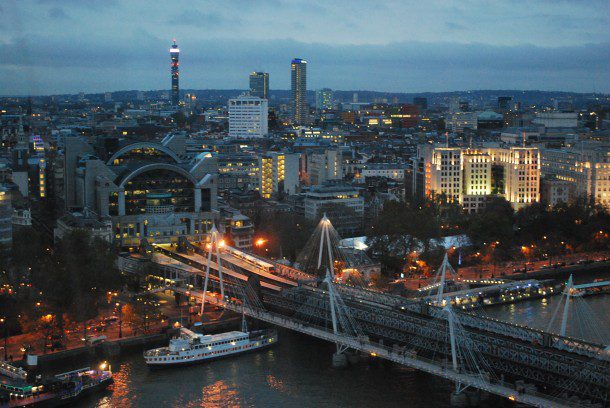
    I am currently living in the Southeast of England, the county of Essex. It is excellent for road and train transport links, with commutable access to shops, the town centre and central London. There are three main National Train Stations nearby where commuters take a thirty minute train ride to London.

    My location is very close to Basildon Town Centre with travel time by car of approximately five minutes and on foot by about 10-15 minutes.  This town center is filled with small shops and restaurants, and two major retailers Marks and Spencer and Debenhams. There are also two large supermarkets, and a few shops for computers and other electronics. It is complete with amenities, parish churches and post offices. There are also various primary and secondary schools nearby. From what I’ve heard, Basildon also hosts the biggest car boot sale in the UK where you could find a lot of cheap second hand items in good quality, even antiques that sometimes, people sell very cheap without even knowing the real value to find out that they actually cost thousands of pounds.

    The surrounding district is not densely populated, hence, there are many green areas surrounding the vicinity. This provides a healthy and safer environment of fresh air, low noise, and less traffic compared with many population centres. Moreover, the natural surroundings provide greater opportunity for relaxation and recreation outside work and school hours.

    What do you do for a living?

    I am working in London as Senior Cost Consultant (which is equivalent to a Cost Engineer in America or the Philippines) in one of the biggest engineering and consulting firms here in the UK.

    Is there a Filipino community there?

    Where I live, there is a Filipino community here but I am not a quite active member, to be honest. I do attend Filipino gatherings when convenient and when my schedule permits. Most of the Filipinos here are nurses.
    Tell us about your life there?

    My life here in the UK is actually not so different from my previous life, probably because I have already met a lot of people from different walks of life. I have adjusted very well and very fast – I guess that’s what Filipinos are known for. I have made some friends at work and through other acquaintances. It’s a typical nine to five for me from Mondays to Fridays in the office in front of the computer and drawings and other papers, meetings or discussions. I think English people love to talk – it’s the one thing one would notice after living here for some time.
    What cultural practices/behaviors have you acquired from your host country?

    I have developed the habit if drinking a lot of teas, especially English tea which I was not very keen about when I was in the Philippines or any other part of the world. And every Christmas I always make sure that I have a least a bite of the popular Christmas pudding and English roasted chicken. One thing that I like here is the country’s richness in arts and culture, and I have learned to appreciate the works of European artists like John Constable, Vincent Van Gogh, Claude Monet, Pablo Picasso and many others. I have also started collecting some antiques – a very popular hobby here in England, and I now appreciate theatre more and have watched a few plays. Unfortunately when I came here, Miss Saigon had long gone so I was not able to see our own Filipino artists performing in the capital.

  • Filipino China: My Pinoy Life in Beijing

    Filipino China: My Pinoy Life in Beijing

    Filipino China: My Pinoy Life in Beijing

    Felicity Tan: Living out of a suitcase

    While others have email signatures that read: sent from my Blackberry Wireless or iPhone, Felicity Tan’s email signature reads: “Sent from the road”- literally. As a journalist, 26-year old Felicity is constantly on the go; moving from one country to another. She has spent the last couple of years traveling and living in various cities around the world and actually had a hard time pinpointing a city to fill in the sentence “My Pinoy Life in ___.”

    She finally decided to settle for “My Pinoy Life living out of a suitcase”.

    Your City

    Currently, Beijing, China is “home.” I moved here on Feb 7, 2011. Before this, I was living in The Hague, Netherlands in 2010.

    Can you recount briefly why you moved there?

    I moved here to take on a job as a news anchor for China Central Television’s English news service, which was re-launched in 2010, with the view of becoming the authoritative international news channel for Asian affairs.

    I’ve been living out of a suitcase since I went off to university in Boston back in 2005. I guess you can say I’ve been “on the road” since. I spent time working/living/studying in Paris, Washington, DC, London, Chicago, back home in Manila, then The Hague and now Beijing. I’ve visited about 20 countries and nearly 100 cities for work and play. I’m about to hit the six-year anniversary of my nomadic lifestyle. Maybe I’ll cross the Gobi on horseback to celebrate.

    Tell us something about your host city.

    Every day is an adventure in Beijing. I’ve had so many (mis)adventures literally since the moment I arrived here. Sometimes it makes me laugh, other times I want to hurl a panda out the window (no actual pandas were hurt in the making of this article about my Pinoy life abroad).

    Beijing is one of the most dynamic cities I’ve been in; I don’t think I’ll run out of things to do. This place is enormous. It is certainly a 24-hour city. There is a significant expat community and not a day passes by that I have not made a new friend. The traffic is bad like Manila, so is the pollution, kaya siguro hindi pa ako nagkakasakit kasi sanay na ako! Foreigners are known to get sick in their first few weeks.

    It’s the dead of winter, so it’s very dry and quite blustery; it’s been snowing recently but I think it’s beautiful under a thin blanket. That said, nobody moves to Beijing for the weather or the air quality. Maybe the food. The kinds of people. The one-of-a-kind culture. The language. The history. The vibe of living in one of the fastest-growing cities in the planet, which is at the same time, for better or worse, stuck in its past. Beijing is a living, breathing contradiction. I love that.

    Is there a Filipino community there?

    I’m not the type to actively seek out other Filipinos where I live. I believe in a truly globalized world where nationality or race should not matter. You’ve got to be blind to the color of one’s skin or the color of one’s passport. That said, I do love meeting other Filipinos and learning about their experiences, and it is such a joy to be able to speak Tagalog where no one else can understand you. It’s like a secret language – it’s fantastic. I have not met true-blue Pinoys yet in Beijing, but everywhere else I’ve lived I’ve always had a makeshift Pinoy support community.

    In The Hague, it was a different story, the Filipino community there is very well-established and you can’t avoid them, even if you are not Filipino! My best buddies at the U.N. were Filipino, I lived with my extended families in Chicago and Washington, my college roommate was a good friend from high school in Manila, and you just meet so many young professional Filipinos in London. And it always feels like home. Maybe I was most detached from Filipino-ness in Paris. But I do miss the food! Aside from Washington, D.C. and Chicago, there weren’t a lot of places to get real Pinoy food. I can always count on Cebu Dried Mangoes and adobo, which are always a hit with my foreign friends.

    One cannot generalize how Filipinos are treated. Here in China, no one cares. I’ve never felt discriminated against, and they’re always amused when I say I’m ‘Feilubin ren ,’ which is “Filipino” in Chinese;  Feilibin (Philippines) and ren (person), but maybe because I’m singkit. I normally travel with a US passport so I don’t get into any trouble at immigration.)

    But when traveling with Filipino friends, I notice they are questioned at immigration far longer than most, even if they’ve been residents in the host country for so long. I think that is unfair. I myself had to wait a month for my student visa to a certain European country to be processed, as opposed to two working days, because the consulate found out I was also a citizen of the Philippines.

    Outside of that, I’ve never really seen much discrimination against Filipinos – perhaps isolated incidents. But in general, I think the world is starting to see that we do have a lot to offer. I once had an American boss who told me that he found it very inspiring to watch the Filipinas in his community, who start offmahinhin, spread their wings. “And I’m not just talking fluffy angel wings,” he told me. “I’m talking eagle wings.”Nothing truer has been said.

    Tell us about your life there.

    I’m still settling in. It’s been difficult because of the language barrier, but I have a rapidly expanding network of friends who have all been in the same boat, so they have been a tremendous help. I’ve been spending an equal amount of time at work, getting settled in terms of residency requirements and other necessities, and meeting new people. The Beijing party scene quite rivals Manila’s, I have to say. Then during the day time, since I work atypical hours, I just explore the city and am always on the lookout for new places to eat. The best thing about being here is the diversity of options so I’m never bored. It’s just a pain to get around because the subways are always full and while taking this taxi is cheap, it’s not always convenient because of the size of this very populous city.

    What cultural practices/behaviors have you acquired from your host countries?

    I pick up something here and there from wherever I’ve lived, usually from the language. I instinctively say “coucou” instead of “hello” now. It’s French, but I picked it up while I was at the UN in Holland.

    Ideologically, perhaps the US left the most impact on me because I was there the longest. Being in such a liberal democracy, which is also paradoxically incredibly conservative, has opened my eyes to new ideas like the fact that there are so many philosophies, and  one is not particularly “more right” than another.This kind of mindset makes settling in to new environments much easier for me, especially with all the moving I do. Weirdly enough, this is probably more a Dutch mindset, but I learned it being in America. Shows you how global this world really is!

    In any case, that does not guarantee I am Zen all the time. Certain local mannerisms do try my patience, but most of the time I just go with the flow. I am very Filipino when it comes to dealing with people; my foreign friends need to get used to me making beso all the time. And when it comes to birthday blowouts, I always lose. Because as a Filipino, when it’s your birthday, it’s your treat. But in every other country I am in, when it’s someone’s birthday, it’s your treat, so parati akong lugi!

    Your message to Filipinos across the globe –

    There’s something special in the Filipino spirit that makes Pinoys successful in whatever they set their hearts and minds to. So if you’re dreaming of doing something, go for it! No one’s stopping you but you. For those of you already out there, you make me proud, truly. So many Filipinos have done far more than I can even dream to accomplish, and my foreign friends are doubly impressed because they understand that Filipinos aren’t lucky; to get where we are, we have to fight to beat the odds. If that’s not exceptional, I don’t know what is.

  • Filipino Uganda: My Pinoy Life in Kampala

    Filipino Uganda: My Pinoy Life in Kampala

    Filipino Uganda: My Pinoy Life in Kampala

    Raised by missionary parents in India and Thailand, the values of altruism and volunteerism were ingrained in NYX MARTINEZ at an early age. It comes as no surprise that Nyx grew up and pursued a similar path.


    The 29-year old Filipina reflects on the three years she spent in Kampala, Uganda as a full time volunteer and the lessons of love and brotherhood that continue to influence her until today.

    Since when have you been staying there?  Can you recount briefly why you moved there?

    I lived in Uganda from 2002-2005 as a full time volunteer. I worked with Radioactive Productions, a recording studio that produced inspirational radio programs for listeners around East Africa Another objective of the program was to highlight good local talent by giving them a platform.

    We also organized aid distribution to IDP (Internally Displaced Persons) and refugee camps, orphanages and hospitals. As project coordinator, I helped organize a few projects that got artists (or anyone willing) involved with humanitarian and outreach programs on the ground level.

    Tell us something about your host city and country?

    Uganda is very special. The weather is perfect! It’s hot enough to dry your laundry in the morning, and cool enough at night to need a wrap or scarf when you go out. It’s not humid or extra dry like in Kenya. Uganda is also the source of the Nile River; this means the land is very fertile, and extremely lush. However, the degree of poverty is also overwhelming. And there are still tribal wars and disputes in some regions.

    You’ve probably heard about Idi Amin in the late 70’s, the president of Uganda who seized power in a military coup in 1971. Known as the “Butcher of Uganda”, hundreds of thousands of his opponents were either killed or imprisoned during his 8 year dictatorship. Everyone seems to associate Uganda with him. But the Ugandan people, in general, are some of the kindest, sincerest, and humblest I have ever met. They are also lots of fun, and on the whole, they are not overly materialistic or judgmental.

    One time, I came home from a short vacation in South Africa, and our cook looked at me and beamed, “Nyx! You have gotten fat!” I was stunned at her reaction, and a little embarrassed. Then she continued: ‘And you will get fatter, and fatter, and fatter!” The smile on her face told me that was a good thing. I later learned that she really was giving me a genuine compliment! In this part of the world, the rule is: the bigger the better! That’s an example of a different kind of culture there.

    What do you there do for a living?

    My work as a volunteer was full-time, but I also dabbled in writing and painting. I held one solo and two joint art

    exhibits, all to raise awareness about the plight of the people I was trying to help at the time — like forgotten tribes and child soldiers. To earn extra cash, I did face painting at kids’ parties, sold portraits, and taught art at the International School of Kampala during the summer break.

    Is there a Filipino community there?

    Back then, the Filipino community was relatively small. During one of our Christmas parties, we were about 50, including kids. You didn’t see many of them around, but the Filipinos I did know were either with NGO’s, charity groups, or were exchange students. It was strange being one of the only Asians in the entire country. You stuck out like a coconut tree!

    I had a housemate at the time who was Japanese; she jogged every day around the city. People couldn’t tell the difference between us two Asians.

    Ugandans are so welcoming — they were all very interested in what it was like in Asia, and in my home-country, the Philippines. Little children would often touch my straight hair, amazed, and ask; “Were you born this way?”

    Tell us about your life there.

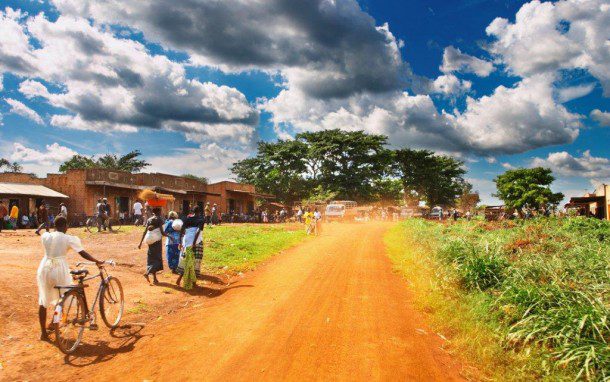
    I lived together with other volunteers with global backgrounds, so it was easy to adjust. From the first day I landed at the airport, I found that it was no problem settling in and making friends. We often had no electricity, so people spent more time eating and drinking together in the evenings, just hanging out.

    Nights were quieter; no huge clubs. But one popular place was the Karaoke joint at the only mall in town, whose Karaoke system was a ‘Magic-Sing’ microphone from the Philippines (complete with all the popular Pinoy Karaoke favorites!). Every week, that place would be packed, and the usual few Pinoys would be rocking the microphone! Ugandans love music and dancing just as much as we do!

    On the weekends, we would often hang out by the lake, or go camping by the white water rapids. The braver ones would bungee or ride the rafts. I really loved that Uganda was a place where you could do a lot of outdoor activities. You had this feeling that you were right in the middle of the wilderness, but it was incredibly calm as well. We didn’t have many luxuries, especially when it came to transporation. We got around by hitch-hiking or car pooling.

    Oh, let me tell you about transportation! The taxi’s are called boda-bodas, and they are little motorbikes, driven all over – everywhere! At the time, the roads were full of potholes, and these things would go zooming by. When riding them, I would pray so hard! We had a lot of adventures in Uganda; a lot of crazy fun.  I once went on a safari, we pitched a tent down by the river, and you could hear the warthogs and hippos just footsteps outside your tent. And you knew there were lions out there, too. That was wild!

    Your message/greeting to Filipinos across the globe

    No matter where in the world you find yourself, you can contribute positive things. You can be in the poorest country, or the richest villa — it doesn’t matter. Surround yourself with good, dependable friends, network well, keep in touch with people, and build deep, lasting relationships.

    If you’re feeling a little homesick where you are, try to reach out to someone who isn’t as well off as you, or perhaps other foreigners or expats who may be missing their homeland, too. Try to attend social gatherings and events so you can get to know your neighborhood, as you need a good support system when you are living in a faraway country. Be a friend and family to others. You’ll be surprised at what you receive when you give of yourself, and give from your heart. You’ll expand the borders of your own home and see your life start to flourish in amazing ways.

    Any other information you would like to share with other Pinoys around the world?

    The three years I spent as a volunteer in Uganda weren’t easy, and being away from my family for so long became taxing at times. But what I experienced there—both the heartaches and the happiness—are treasures I wouldn’t trade.

    Living in that country taught me to appreciate life and the blessings that were given me to share. It taught me that there was more to life, and more to this world we live in. I learned that it was often the little things that matter.

    I met some amazing people there who were giving so much of themselves. Like one girl, Mandy, who was a German artist—she lived and worked in a home for mentally handicapped children, on the outskirts of the city; she had committed her life to being there.

    She’s still there doing wonderful work. You could see and feel that it was a special love that drew her to country and made her stay, and her love for the kids surpassed the need to have any luxuries. From people like her, I learned that when you focus your energy and efforts outwards to those around you, your life takes on a new meaning, and you can survive even the hardest of situations, or the loneliest of places, because of the passion that keeps you there.

    Sometimes we get so caught up in ourselves and our personal problems, we forget that happiness and joy can come from simple things. We need to cherish our life and the love that we are capable of giving.  When we start being grateful for the small things, that’s when we realize that we indeed have a lot to be thankful for.

    In 2005, Nyx moved back to the Philippines, where she hosted Travel TV Shows with Living Asia Channel for 3 years. She started the FunDayTion, a project to help terminally-ill kids. (www.ourlifefoundation.wordpress.com). In 2009, she relocated to Europe, where she got married in Denmark, lived in Italy and gave birth in Germany. Nyx is now Features Editor of Mabuhay, the Inflight Travel + Lifestyle magazine of Philippine Airlines. Visit her at www.nyxmartinez.com

  • Filipino Slovenia: My Pinoy Life in Izola

    Filipino Slovenia: My Pinoy Life in Izola

    Filipino Slovenia: My Pinoy Life in Izola

    GIA RAMA

    Since when have you been staying there?  Can you recount briefly why you moved there?

    I am Gia Rama, a mother of one and the wife of a Slovenian engineer.  I remember meeting my husband in Cebu, Philippines. He was there on a project working as a commissioning engineer for one of the TransCo substations in Mandaue City where I was previously working as a secretary to the District 2 Department. That’s where it all started – the meeting of two hearts, and of two different worlds.

    My husband won my heart in so many ways. But moving with him after we got married, to a country which I never heard about was not an easy thing to do. I heard about ex-Yugoslavia and the neighboring countries but Slovenia? I never knew it existed.

    Tell us something about your host country and your life there.

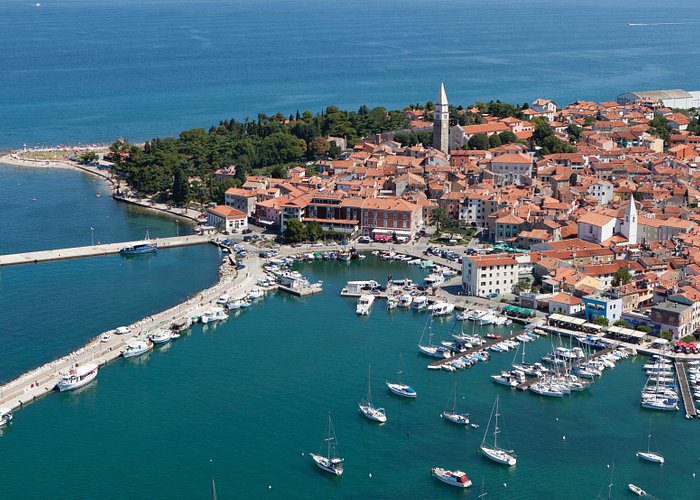
    Slovenia is famous for their limestone caves, rivers, castles, and they have the biggest ski jump in the world. Other than this, the country is also famous for their wine. They make homemade wine which I enjoy so much.  Wine is always present in every house and in every celebration. The locals love get-together parties. Even sharing a cup of coffee with the family is important to them. They have close family ties like we do. Well, that’s what I see with my husband’s family. They love being together. Slovenians, however, don’t show their emotions too much. They themselves admit that they are quite cold. Some of them give you a certain reaction or look that makes you feel bad and small. But then again, it’s cultural and it’s just a matter of getting used to.

    As for me, I have somehow accepted their ways, and now I love it here.  Although first, it was very hard. I arrived at the worst season – winter! For a tropical girl like me, arriving in winter was terrible. It was gloomy and cold. The worst thing was, I was home sick. I wanted to go back to the airport and get the first flight back to the Philippines.  But of course, I did not. I took a risk and gave it a try. The first few months were not easy. People were looking at me strangely. I did not have friends, no work and no social life – nothing! I remember crying because I felt so alienated. I met some Filipinas after a while and it got a bit better. But then I still felt sad. My husband was not around so much. He was travelling and working around the world – something I had to accept.

    But it was not all tears for us. It was interesting for me too. Winter meant snow! Yes! Snow! The first time I saw and felt snow, I was so amazed how it came down slowly from up there and it seemed like the world was so silent. But then again, this silence just made me lonely again. I was missing my family in the Philippines so much. I still do. So ok, the seasons changed and with the season, my feelings and emotions changed too. As I slowly felt the warmth of summer, I felt lighter. I started to go out and meet more people.

    What do you there do for a living and how do you keep busy?

    In May 2008 I got employed as a secretary in an engineering firm called CCE, d.o.o.  From that time, my life got busier, and of course, I was very happy about the fact that I was also earning. In the same year my son Grant, started elementary school. So I had to do double time working in the office, taking care of the house and helping my child with his studies. I am also into dancing lessons, and had the opportunity to perform for an audience.  I was also in a multi-cultural fashion show which was held in Izola. It was composed of women and children of different races. We had to present our national costumes and displayed our dishes which were open for free tasting. I also joined the 10 kilometer marathon just last year.  I am quite sure that I am not the only Filipina enjoying these opportunities.

    Is there a Filipino community there?

    This year, I was elected as President of the Filipino community here in Slovenia, another responsibility which I gladly accepted. There are about 80 Filipinos here. We gather once or twice a year for the Independence Day celebration and Christmas party. We have no major projects yet, but I feel that we will get there someday. Last year, our community here has done our part in helping the victims of the typhoon Ondoy. We have sent used items or clothing. Unfortunately, acknowledgement never reached us. I do not mean to make it sound like we lack attention or we need the world to know that we have helped. But my aim was for Slovenia, especially the Filipino community here, to be made known to the whole world. Slovenia exists… we exist here.

    Filipinos are far more vibrant and warm than the people here. Naturally, we are the open and friendly ones. People like us here. But of course, racism can’t ever be denied. But then again, generally, we are well-accepted and respected.  Most of all, they love our beauty; they love the tropical and exotic look that we have, our color. This is the very reason why I like getting a tan even if I am already dark.  In the summer, we go out and take advantage of the sun. We go to the beach almost every weekend. There are even times when we make use of the little time we have after work. But Slovenia is not famous for their beaches. We cross the border and go to Croatia to enjoy clean and clear waters.

    Your message/greeting to Filipinos across the globe


    Greetings to all Filipinos all over the world! Here’s wishing you good health and happines with your loved ones. Like all others, the Filipinos here are also working to make their lives better and, of course, with the intention to help those they have left back home. Let us all work together and make this happen without stepping on someone else’s rights. Let us respect each other, no matter the differences of jobs that we have. We are all brothers and sisters in the eyes of God. Let us act this way.

  • Filipino Kazakhstan: My Pinoy Life in Almaty

    Filipino Kazakhstan: My Pinoy Life in Almaty

    Filipino Kazakhstan: My Pinoy Life in Almaty

    Take a peek at the lives of the Filipinos around the world. Read on as Juliette Casabal reveals her life in Kazakhstan.

    Tell us something about your host city and country.

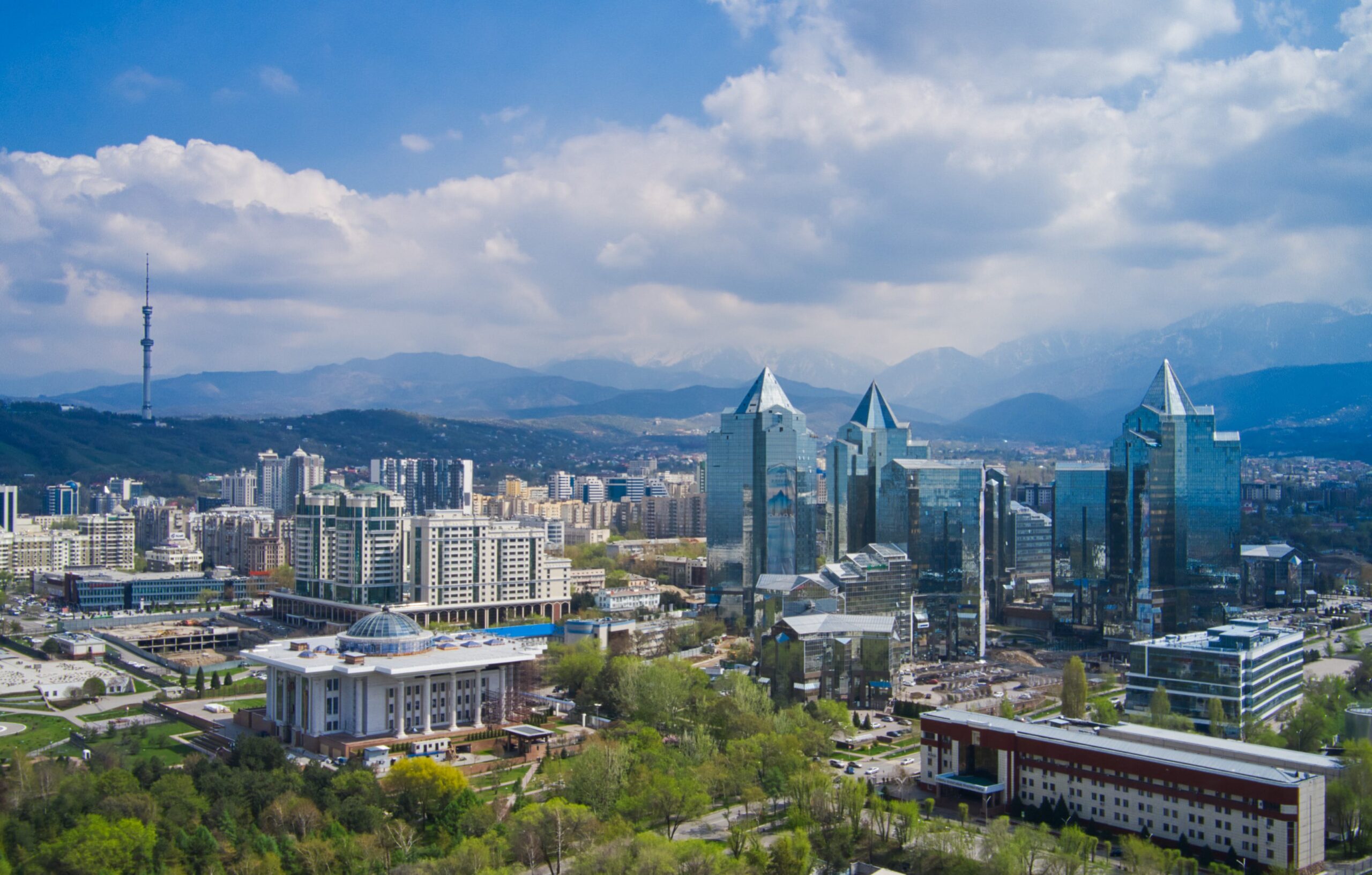
    Almaty is the largest city in Kazakhstan, a Central Asian country bordered by Russia and China.  The city has a population of 1,348,500 (as of 1 September 2008), which represents nine percent of the country’s population.  It used to be the capital of Kazakhstan and still remains the major commercial center in the country. One of the most famous buildings in this city, Kazakhstan International Hotel, where I work currently, is considered as the icon of tourism in Kazakhstan.

    This country has some of the most beautiful mountains I have ever seen and has a lot of places for those who love nature tripping.  People here spend a lot of their time outdoors during the summer in the many parks that dot the city.  Almaty is also known for ski resorts and has one of the biggest ice skating rinks in Central Asia. Unlike what most people think, Kazakhstan is safe and modern, and is in fact very European when it comes to the standard of living, lifestyle, fashion, etc.  The city is teeming with typical urban activity and has a lot of nice restaurants, bars, cultural places and a great night life too.

    Weatherwise, there are four seasons here which represents extreme conditions sometimes. Summer in July can be as hot as 40 degrees centigrade while during winter, when we have snow, the temperature can be as low as -12, even -50 degrees centigrade.

    Since when have you been staying there? Can you recount briefly why you moved there?

    I moved to Almaty in November of 2007 and took a post offered by the Intercontinental Hotel-Almaty. Presently, I work for Kazakhstan International Hotel which owns several hotels around Central Asia.

    What do you there do for a living?

    I just recently got promoted to Senior Operations Manager reporting directly to the General Manager. The company hired me to train all the Food and Beverage personnel and to open three restaurants around the country. I have just opened The Noodles, an Oriental/American concept bar and restaurant which is the first of its kind in Kazakhstan (as this is the first time that a global brand Gloria Jeans Coffee merged with a local brand). I run the entire daily operations and collaborate with the executive chef about the menu and design promotions.

    Is there a Filipino community there?

    Yes there is a Filipino community here and it’s called Pinoy-Almaty. We are about 65 Filipinos here in the city, although I believe that there are about 3,000 to 4,000 Filipinos working in Kazakhstan, and they have good professions.  In Almaty, Filipinos are mainly consultants, engineers, auditors, lawyers, though there are those few who work in domestic services.  Still, even the Filipinos here in domestic services get paid well – from US$500 to US$1,000.

    Since most of the Filipinos here are busy in their respective jobs, unfortunately, it is only on during Christmas that we are able to get together.

    Tell us about your life there.

    For some reason, I always get mistaken for a local – a Korean Kazakh, they say.  Since it is very multicultural here – although locals are all called “Kazakhs”, they come from different cultures (i.e. Russian Kazakh, Ukrainian Kazakh, Mongolian Kazakh, Korean Kazakh, etc.), so there is a lot of diversity not only with the way people look but also their traditions.

    My life here in Almaty is purely work, since I also live in the same hotel where my job is. I consider my occupation as my social life as well.  I have long hours, and spend most of time at work, in fact up to 12 midnight.  Luckily, I have the kind of work and workplace where friends can visit me, so I can mix business and pleasure.  My friends would come to dine and drink in our outlet, and I get to chat and sit with them from time to time while I’m working.

    During whatever free time I have, I love taking walks around the city and spending time just sitting and relaxing with friends at local cafés.

    What cultural practices/behaviors have you acquired from your host country?

    None really.  I must say that the people here are very similar to us Filipinos.  Although their lifestyle is very European and they are quite liberal, when it comes to family, they are very much like Pinoys.  They have very strong family ties and values and spend their weekends together.  Even their weddings are similar to ours – they too have the same practice as “pamanhikan.”

    I love the Kazakhs.  They are very friendly, warm and soft spoken people, and yet mysterious for me at the same time. The only thing I hate here is the winter.  Sometimes, the extreme cold is just too much for me to take.

    Your greeting to Filipinos across the globe.

    Always remember that you are a Pinoy and that you are exceptional because of your personality. As Pinoys, we are naturally sensible people and that’s what makes us global.