Author: admin

  • Michael Cinco: Of Million Peso Dresses and the Impalpable Dream

    Michael Cinco: Of Million Peso Dresses and the Impalpable Dream

    By Lalaine Chu-Benitez  –  Photo by Eros Goze

    If there’s anybody who should be credited for bringing in much-deserved attention to UAE-based Filipino designers within the unforgiving and sharply-taloned fashion industry in the Philippines, it is Michael Cinco. The celebrated designer has undoubtedly ignited megawatt interest with the voracious media, style and celeb circle in the country.

    But is there something beyond the drama on Philippine Fashion Week runway, the covers in Manila glossies, TV and red carpet couture moments with the Manila stars du jour?

    A closer look reveals that there is more to La Cinco than the hype and the million peso dress.

    It’s been three years since we’ve last sat with the designer for an exclusive interview – at a time when he was just dreaming about staging his own fashion show.  Fast forward to January 2011 and Michael Cinco has already made his mark not only in the emirates, where he is a respected designer, but also elsewhere.

    So far, he has already staged two amazing shows in the last two years’ Dubai Fashion Week, where he received rave reviews and the People’s Choice Award in 2010. He has also presented his elegant pieces, not to mention a never before seen line of ultra-glamorous swimwear at the Miami Fashion Week in 2009.

    This year, he’s making his American TV debut in a big reality show which airs in March. Of this, he says, “It is truly an honor to be handpicked to do the clothes and appear alongside famous names in fashion in one of the world’s most watched reality TV programs. It just so happens that I am effortlessly ‘in’…” he adds cheekily.

    All this while running a top tier couture house in Dubai with an illustrious clientele, which has now come to include, not only the elite and royals of the region, but also celebrities and socialites from the US, Europe and the Philippines.  Just recently, Michael created a fabulous wedding dress for New York socialite Samantha Sarcinella who married Nascar superstar Kyle Busch in Chicago. The couple who is doing reality series “Riding Shotgun” for ESPN and Style Network in the US, also made the designer a part of the show.

    Michael says, “In retrospect, I would certainly like to think that I have achieved what I set to do in the last three years, and more. Life’s good. I may sound clichéd, but hard work is the key. And it just paid off naturally. And as I make it a point to compete only with myself professionally, I am not burdened with highlights or lowlights in my career. I consider them all blessings.”

    And what about back home where he had two critically acclaimed shows at the Philippine Fashion Week and conquered the industry’s interest by storm?  Fashion watchers would wonder why there is a need to go back to the Philippines when the designer is already wildly successful here and is beginning to spread his wings into the international market.

    “It was with a raised eyebrow that I had to continually contend with the stereotypical impression on Filipino designers in the Middle East, every time I would go home,” Michael shares. “The misconceptions were hurtful if not degrading – especially when we are tagged as ‘OFW designer.’ “ Somehow, something’s got to give,” he furthers.  But in hindsight now, what I did was really no herculean task, inasmuch as I love my country and would gladly initiate motivating further my compatriots and help in the upliftment of the fashion industry. If we can shine in the international fashion arena then we might as well dazzle the Philippines,” he concluded thoughtfully.


    Through the years, and through highlight upon highlight, Michael’s work remains consistent and true to form.  While his contemporaries’ works are known for their pomp and pageantry, and broad strokes on design, his works have a definitive look of precision and luxurious glamour punctuated by sleekness and modernity that can only be described as, well – Michael Cinco.

    Although he defies boundaries, the designer’s signature sense of style is undeniable. He remarks, “It’s a tragedy to be bound by parameters or be limited to sets of values, more so for a fashion designer. And in that context, I only seek out for what appeals to my sense of aesthetics. Needless to say, my works speak for themselves, impalpably.”

    As for his creations, he is very specific, and makes no apologies for the kind of women his dresses are made for, “You will know a Michael Cinco stands out effortlessly for its seamless quality and precise attention to details. The Michael Cinco woman is tastefully done. She is a woman in her own terms.  She is moneyed and she knows exactly what she wants. She may not be born into royalty but she better be married into it. This attitude makes a Michael Cinco piece stand-out.”

    With all that he has achieved in the last couple of years, the designer considers 2011 as a significant year in his flourishing career. He shares, “I am looking forward to 2011 as my banner year of the moment. I’m doing fabulous gowns and wedding dresses for clients here and abroad. I’m currently collaborating with a big fashion brand in the Philippines that will be launched in October – in the same league of Lanvin and H&M.”

    He continues, “A major solo show in Manila is also in the pipeline but all details are still confidential. An offer from a big bridal boutique in Europe and the US to supply couture wedding dresses is also part of my major plans for 2011.”  The designer concludes, “Finally, maybe couture accessories for this year will be launched also. I love spontaneity and its surprises, but if you insist, 2011 is my banner year like I care to know what that means, hahaha!” Michael bursts into infectious laughter.

    He’s already got the artistic recognition, commercial success and the high-profile future projects, not to mention validation from his peers, yet the designer is not one to rest on his laurels. Michael says that he is still in pursuit of his impalpable dreams.

    He explains, “It’s like gazing at the rainbow as a child and wanting so much to touch it you want to go to where it ended in the horizon, and yet you know you can’t. But as you grow older, you realize that there’s more to the rainbow than just touching it. And then again, there are other dreams to pursue…”


  • Scrapbook – Jeff Vergara & Marc Guittap

    Scrapbook – Jeff Vergara & Marc Guittap

    JEFF VERGARA Jeff had no idea he would eventually end up as a serious photographer when he first handled his dad’s Polaroid and Nikon film as a child. This Computer Engineering graduate discovered digital photography in 1999, when he was tasked to take product shots using Sony Mavica, the first commercial electronic camera that stores images on a diskette. He learned the rudimentary basics of photography through self-study and long internet surfing sessions. Although Jeff’s work is more on graphic and web development than photography, he became serious with his passion for taking photos in late 2004. Over the years he has experimented with different techniques; usually mixing graphic design skills and inspiration from the masters of the craft. He has done numerous projects for company events, individual assignments, weddings and exhibits, and won a number of photo competitions. Lately, Jeff has focused more on portraiture, street and landscape photography which are his favorites. In 2007, he co-founded the Mideast Snipers (www.mesnipers.com), an online photography organization with a vast number of members with whom he shares his photography knowledge.  Jeff is also an avid blogger. He writes his online journal, “The Dubai Chronicles” (www.dubaichronicles.com) which features his photographic adventures and stories of daily life in Dubai. MARC GUITTAP Marc says his photography is – “first and foremost, an exploration.” An architect by profession, he dabbled with the camera to study light, views, angles and, most importantly to capture beauty. His love affair with the lens started with the need to put together a decent reconnaissance report as part of design requirements.  From there, he found himself slowly veering towards more creative pursuits. Marc’s collection of photographs runs the gamut of gritty documentary shots to polished architectural snaps to portraiture. All of them, however, are borne out of the necessity to understand beauty and express it without a single utterance. He says, “I believe that the latter are better left to the beholder- beauty is, after all, universally understood though its expressions and interpretations are utterly varied.” Currently, Marc professes that his over active shutter finger is an apprentice to his vivid imagination. He enjoys sharing his work and receiving constructive criticism from his peers in the field.
  • Filipino Martial Arts: A Return to Being Maharlika

    Text By Flordeliz Samonte, Photo Courtesy of Lester Ledesma


    Awed by the moves of Matt Damon in Bourne Identity? Lapu Lapu, the Datu of Mactan and the First Filipino Hero and his stronghold of Kali warriors, defeated Ferdinand Magellan in 1521 with the same fighting skills which have worked their way into Hollywood movies today. The story has been heard several times but the role of the Filipino Martial Arts (FMA) has been kept in the sidelines waiting for another warrior to take up the art once again.

    FMA known to many in various names like Arnis, Escrima or Kali is a warrior art which is now being rediscovered by Filipinos. Known by different systems as varied as the 7,107 islands of the Philippines, FMA is a complete package. Before Spanish conquerors came to the archipelago, Filipinos already had their own fighting system used as defense during tribal wars. During the Spanish regime, it was banned, giving rise to the popular use of the rattan stick as a weapon. Driven to secrecy, FMA was secretly passed down from father to son and Kali movements were disguised as folk dances such as tinikling, maglalatik and sakuting.

    BRIDGING THE GAP

    In Singapore, I was one of those who gathered for the Philippine Independence Day 2009 celebrations where a demonstration of our native martial arts was held. Guro Fred Evrard, a Frenchman, awed and inspired the Filipino crowd with FMA fighting skills which he touted as “the best.”

    Guro Fred and his wife Katulong Guro Lila, founded Kali Majapahit, a school focused on teaching FMA and “Hilot.” They have traveled the world for four years learning different martial arts before settling in Singapore to establish their third school; the first being in Tahiti and another in the Philippines. The school’s curriculum is influenced by Kali Sikaran founded by Punong Guro Jeff Espinos and the Inayan Eskrima founded by Mangisursuro Mike Inay.  The two masters who have mentored Guro Fred.

    Kali is practical and efficient, and this is the main reason why people are attracted to the art explains Kadua Guro Ben Boeglin of Kali Majapahit.  From a technical point of view, FMA is a complete martial art which uses sticks, punches, knives, or other weapons. Kali Majapahit is significant in promoting Philippine culture through FMA. “Four years ago, there was no FMA in Singapore and people were looking for something more. Today, we have 150 students and there are now three clubs doing FMA in Singapore,” he added.

    Twenty percent of their students are Filipinos. “We tell them Hilot the healing system is very powerful and your [Filipino] martial art is very good. They realize other people are interested so they get interested. Even though it’s not ours, we promote it because we believe in it. It has to continue being taught because it would be sad if it is lost. We have to spread it so people will know how rich it is.”

    The US Army, Police Force as well as the Philippine Military and Police are well trained in the art. Some learn it for self defense, others for personal growth and coordination but to Filipinos like Kathleen Hazel Lacsina and her daughters, Isabelle (12) and Aira (11) it is to stay connected to their country while in Singapore.

    Kathleen, a Landscape Architect, was surprised there is an FMA.  They enrolled in the school which offers the first FMA for kids program. “Parang natutuwa ka na maging Pinoy kasi sikat tayo. My kids are more disciplined and inspired to do better in their schooling. It’s an opportunity for them to be conscious about their culture. They see that Filipinos are something special,” says Kathleen.

    In Singapore, the school serves as a welcome connection to Filipinos and their country with the school teaching much the same styles as the masters in order to continue the tradition. “The only thing that changed is the structure because there are different systems, tools and weapons. So Guro Fred organized it in a curriculum that makes sense, which is easy to learn and has structure. So people can come in at any point in time without being lost and the martial art is efficient and easy to learn. It’s always evolving.” As Guro Fred has stated once, the role of foreign instructors is to remind the masters of FMA that the world is interested in FMA and that its time for them to open up.

    AWAKENING THE FMA

    “FMA is more than just a sport and a combat skill, FMA has been an arena of learning and understanding of the bravery of our ancestors, their ingenuity and unyielding spirit to protect their family, community and their motherland. An important part of our history and a very part of me,” sums up John Leyson, a 37 year-old Magtuturo of FMA at the FMA School Dugong Maharlika (noble descent) in Manila. They practice the Kapampangan system of Grandmaster Bart Figueroa and the Otsotiros System of Grandmaster Pepito Robas and the Sikaran system of Grandmaster Melliton Geronimo.

    His Master, Oscar Raymond T. Molina, a 32 year-old has been skilled in the art since childhood. At the age of 13, he turned to FMA for a higher purpose “I wanted to learn about a great nation which forgot that it was great. I wanted to learn FMA, because I wanted to be part of a legacy of nobility, of honor, of sacrifice and love of country.” Unfortunately, he shares the same discontent that there is a need to bring FMA to Filipinos, “I believe Brazilian Ju-jitsu is popular in the country today. But FMA is slowly experiencing an increase of followers, because of the Hollywood films today which are FMA.”

    “The Chinese have their Win Chun, the West has boxing and the Indonesians have Silat, FMA has Panuntukan-Filipino Boxing. Koreans have Taekwondo, the Japanese their Karate, and the Chinese their Wushu, FMA has Sikaran- Filipino Foot Fighting. If the Greeks have Greco-Roman Wrestling, the Brazilians their Gracie Ju-jitsu, FMA has its Dumog- Filipino Wrestling. Aside from the popular stick fighting,” explained Master Oscar.

    As the journey of our nation has not yet ended, there are still lessons to be learned, “It is important to learn about Martial Arts especially our own because it will teach us that it is not about killing but about living. We should learn FMA in the right perspective that this deadly martial art was practiced by noble Filipinos in defending the honor of a nation. It was used by warriors who would die to protect the banks of an archipelago. We are all Maharlikas, wherever we go in the world, we as a people should carry ourselves in a noble manner.” Master Oscar is one in propagating FMA sending out his students as ambassadors of FMA.

    It is true, that discovering FMA is discovering yourself as a Filipino. It is a journey back to our roots, a long history of a proud nation and its people. It is time to make FMA global and the Arnis Law declaring Arnis as the national sport is a start. After all, we are of warrior blood and its something we should be proud of. As John says, “FMA is part of my being. It is there, it just has to be “awakened.”

  • I  LOVE NY: Wandering ‘Round Manhattan

    I LOVE NY: Wandering ‘Round Manhattan

    Text and Photos by Al Manlangit

    Gotham. The Big Apple. The City of Towers. The World’s Financial Capital. The City That Never Sleeps. These and more describe only one city – New York. It sounds like all hype but once you land at JFK Airport and your taxi gets stuck in a forest of skyscrapers in the middle of Manhattan, you realize that it’s all for real.

    Finding a decently-priced hotel downtown is an expensive proposition so we ended up at the Holiday Inn in Queens where a small room, breakfast excluded, two blocks away from the subway station which was seven stops from Times Square cost us US$160, plus tax. Steep but at least we could see the upper portion of the Empire State building from our window!

    Though New York is divided into five boroughs, we concentrated on Manhattan only where the major sites were. Since this was my second visit, I acted as tour guide and the first stop were the museums. So many to choose from but because we couldn’t cram all in one visit, we concentrated on just a handful. Devoted to science, the American Museum of Natural History near Central Park has as its big draw – the Hall of Dinosaurs which displayed real fossils (not casts). Attached to it, the Hayden Planetarium was a gem and I had to drag my two boys away for they wanted to stay there the whole day!

    Next was the Solomon Guggenheim Museum, Frank Lloyd Wright’s inverted-ziggurat masterpiece whose spiraling ramp made it an instant hit when it was built in 1959. It houses abstract collections of Chagall and Kandinsky among others but I was more interested in the building itself. We then made a quick stop in MoMA (Museum of Modern Art) to view Van Gogh’s “Starry Night” plus several Rodins and Picassos before proceeding to the Metropolitan Museum of Art on 5th Avenue. It is a huge place and rightly so with so many works on display from a staggering collection of Egyptian, Greek and Roman art down to its awesome European and American paintings. If I had one whole day free to spend in this city, this would be the place. But we had to move to  the Intrepid Sea, Air and Space Museum by the Hudson River. Exploring this former aircraft carrier converted into a museum was pretty exhilarating specially going through the planes on the flight deck and hangars below. It was all the more interesting to know that this ship saw action and played an important role in the Japanese Navy’s defeat in the Battle of Leyte Gulf in WWII.

    Sprawling Central Park is the playground for New Yorkers. Here you can play football, jog, bike, skate or just lie on the grass staring at the skyscrapers in the distance. This 800-acre green island in the middle of the concrete jungle has expansive fields labeled as Sheep’s Lawn, Great Lawn and Shakespeare Garden complete with landscaped footpaths and ponds filled with swans. There is even a big lake in the northern part where you can go boating in summer or ice skating in winter. We started our walk from one corner on 72nd Street called “Imagine” which featured a mosaic in memory of John Lennon commemorating his life and music. The Dakota mansion where he lived and was gunned down was just a stone’s throw away. We walked down a couple of blocks enjoying the scenery and the sound of birds chirping, and watched people playing touch football, walking their dogs, flying kites or picnicking. Then we sat on one of the numerous rocky outcroppings to rest and eat our hotdogs bought from a nearby stall. It was one of those rare and beautiful afternoons before dusk when one could peacefully contemplate the world go by.

    From the southern corner of Central Park where 5th Avenue meets 59th Street, serious high-end shopping begins. Starting with FAO Schwarz, there’s Bergdorf, Van Cleef & Arpels, LV, Prada, Fendi, Tiffany, Gucci, Ferragamo, Harry Winston, Cartier, Versace, Kenneth Cole, Saks Fifth Ave. and the NBA Store. Mind you, these aren’t small branches but anchor stores that have everything you could dream of from their catalogue. While the wife enjoyed her window shopping, I got intrigued by the interiors and design concepts they had to offer so that by the time we reached St. Patrick’s Cathedral, we had to take a break and rest our overloaded sensory organs as well as our weary feet. So after a brief spell inside the church’s cool and quiet surroundings, we stopped at a nearby deli.

  • Filipino Slovenia: My Pinoy Life in Izola

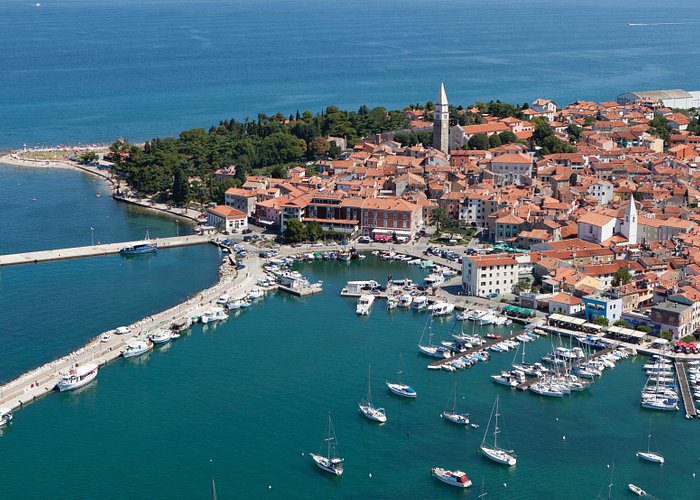
    Filipino Slovenia: My Pinoy Life in Izola

    Filipino Slovenia: My Pinoy Life in Izola

    GIA RAMA

    Since when have you been staying there?  Can you recount briefly why you moved there?

    I am Gia Rama, a mother of one and the wife of a Slovenian engineer.  I remember meeting my husband in Cebu, Philippines. He was there on a project working as a commissioning engineer for one of the TransCo substations in Mandaue City where I was previously working as a secretary to the District 2 Department. That’s where it all started – the meeting of two hearts, and of two different worlds.

    My husband won my heart in so many ways. But moving with him after we got married, to a country which I never heard about was not an easy thing to do. I heard about ex-Yugoslavia and the neighboring countries but Slovenia? I never knew it existed.

    Tell us something about your host country and your life there.

    Slovenia is famous for their limestone caves, rivers, castles, and they have the biggest ski jump in the world. Other than this, the country is also famous for their wine. They make homemade wine which I enjoy so much.  Wine is always present in every house and in every celebration. The locals love get-together parties. Even sharing a cup of coffee with the family is important to them. They have close family ties like we do. Well, that’s what I see with my husband’s family. They love being together. Slovenians, however, don’t show their emotions too much. They themselves admit that they are quite cold. Some of them give you a certain reaction or look that makes you feel bad and small. But then again, it’s cultural and it’s just a matter of getting used to.

    As for me, I have somehow accepted their ways, and now I love it here.  Although first, it was very hard. I arrived at the worst season – winter! For a tropical girl like me, arriving in winter was terrible. It was gloomy and cold. The worst thing was, I was home sick. I wanted to go back to the airport and get the first flight back to the Philippines.  But of course, I did not. I took a risk and gave it a try. The first few months were not easy. People were looking at me strangely. I did not have friends, no work and no social life – nothing! I remember crying because I felt so alienated. I met some Filipinas after a while and it got a bit better. But then I still felt sad. My husband was not around so much. He was travelling and working around the world – something I had to accept.

    But it was not all tears for us. It was interesting for me too. Winter meant snow! Yes! Snow! The first time I saw and felt snow, I was so amazed how it came down slowly from up there and it seemed like the world was so silent. But then again, this silence just made me lonely again. I was missing my family in the Philippines so much. I still do. So ok, the seasons changed and with the season, my feelings and emotions changed too. As I slowly felt the warmth of summer, I felt lighter. I started to go out and meet more people.

    What do you there do for a living and how do you keep busy?

    In May 2008 I got employed as a secretary in an engineering firm called CCE, d.o.o.  From that time, my life got busier, and of course, I was very happy about the fact that I was also earning. In the same year my son Grant, started elementary school. So I had to do double time working in the office, taking care of the house and helping my child with his studies. I am also into dancing lessons, and had the opportunity to perform for an audience.  I was also in a multi-cultural fashion show which was held in Izola. It was composed of women and children of different races. We had to present our national costumes and displayed our dishes which were open for free tasting. I also joined the 10 kilometer marathon just last year.  I am quite sure that I am not the only Filipina enjoying these opportunities.

    Is there a Filipino community there?

    This year, I was elected as President of the Filipino community here in Slovenia, another responsibility which I gladly accepted. There are about 80 Filipinos here. We gather once or twice a year for the Independence Day celebration and Christmas party. We have no major projects yet, but I feel that we will get there someday. Last year, our community here has done our part in helping the victims of the typhoon Ondoy. We have sent used items or clothing. Unfortunately, acknowledgement never reached us. I do not mean to make it sound like we lack attention or we need the world to know that we have helped. But my aim was for Slovenia, especially the Filipino community here, to be made known to the whole world. Slovenia exists… we exist here.

    Filipinos are far more vibrant and warm than the people here. Naturally, we are the open and friendly ones. People like us here. But of course, racism can’t ever be denied. But then again, generally, we are well-accepted and respected.  Most of all, they love our beauty; they love the tropical and exotic look that we have, our color. This is the very reason why I like getting a tan even if I am already dark.  In the summer, we go out and take advantage of the sun. We go to the beach almost every weekend. There are even times when we make use of the little time we have after work. But Slovenia is not famous for their beaches. We cross the border and go to Croatia to enjoy clean and clear waters.

    Your message/greeting to Filipinos across the globe


    Greetings to all Filipinos all over the world! Here’s wishing you good health and happines with your loved ones. Like all others, the Filipinos here are also working to make their lives better and, of course, with the intention to help those they have left back home. Let us all work together and make this happen without stepping on someone else’s rights. Let us respect each other, no matter the differences of jobs that we have. We are all brothers and sisters in the eyes of God. Let us act this way.

  • Medardo Cadiz: Rising above the downturns

    By Sherry Tenorio

    Armed with a strong global design perspective and commendable professionalism, Architect Medardo Cadiz led his firm to almost four decades of continued international success.  His perceptive strategies have been shaped by experiences gained in the 80s construction bubble in the United States (US), the late 90s Asian crisis and the recent global economic downturn. In an exclusive interview with Illustrado, he reveals deep-rooted discipline and practical philosophies that allowed him to break foreign ground.

    The Cadiz family moved to the US in the wake of Martial Law.  The shift, however, did not come difficult to Medardo, who lived in the US as an exchange student in 1969, two years before the family settled in Michigan. He recalls, “The move was a turning point that defined what I wanted to do in the future. In the Philippines, it was difficult to learn the art of being independent. In the US, I learned to do everything on my own.”

    After securing an Architecture degree from the University of Michigan, Medardo worked in various firms across the US. His global exposure started when he joined the renowned Design International – where his first international assignment took him to Jakarta.  It was then that he realized the importance of having a global perspective.  He also saw the opportunity in retail planning and the growing niche in mixed-use developments, for which there was a lot of demand in Asia and the Middle East.

    His subsequent decision to focus on Asia was a perceptive move since the states was already suffering from slowdown. So, using his more than ten years of global practice and his new found expertise, Medardo established Cadiz International in Singapore.

    Cadiz describes his company as “a boutique design firm that only deals with concepts, which come at the forefront of every design.”  He explains, “In every project, we prepare and generate a lot of different designs that will be the basis for the local architects. We tell the story, we conceive the idea – how it will all look, how it will all work with the community – and for us to make a good job we have to make a lot of research. We visit the place learn the culture the people, its politics, and, most of all, the market fundamentals. We talk to real estate agents, researchers, and work with people to understand the demographics and how the market will evolve in the years to come.”

  • Magallanes, Sorsogon: Paradise Undiscovered

    Magallanes, Sorsogon: Paradise Undiscovered

    Magallanes, Sorsogon: Paradise Undiscovered

    By Christopher Elden B. Hilotin

    Olena Kulikova, a Russian visitor, described it as a “beautiful place on earth.”

    After emerging from a dive into one of its marine reserves protected by local laws, Boylan Preston, a Peace Corps volunteer from Ann Arbor, Michigan, a professional diver exclaimed: “You are sitting on a gold mine here!”  Tess Ladisla, a teacher from a neighboring town, described its unspoiled spots as “heavenly.”

    Welcome to my Magallanes, a place where the sun, sea, nature and adventure are all rolled into one.

    Magallanes, Sorsogon: Paradise Undiscovered
    Photo credit: Nico Balonzo

    But where in the world is it?  This tierra incognita sits at the mouth of Sorsogon Bay along the Ticao Pass where the Pacific Ocean and the South China Sea meet. Magallanes, one of the 15 towns of Sorsogon province, the world’s whale shark capital, is located at the southernmost tip of the island of Luzon.

    Kulikova visited Magallanes last year with her Ukrainian husband Andrey Shevchuk. Their friend Genesis Berdin, a native of Magallanes, showed them around. The visit has left a lasting impression on the couple who raved on Facebook about their short holiday.  “I liked the local fresh food – fish and pili nuts,” said Olena, who believes they were the first couple from the former USSR to visit the town. “My friends in Kiev heard our many stories about Magallanes so they also want to visit the Philippines,” said the mother of two.

    Did their local hosts tell them about the armed rebels in the hills of Magallanes? Were they not scared? “Ha-ha. We knew about it. But we were not afraid,” said Olena. She even designed the packaging of a sardines manufacturer based in Magallanes and visited kids who were part of a local church in Santa Elena village.

    Adventure Travel

    One can never have the easiest road to reach the place. Unlike the other towns of the Sorsogon Province, Magallanes is relatively isolated by land access. “But definitely, going to Magallanes is a great adventure,” said Pinoy Traveler, a blogger who featured the town in one of his articles.

    A visitor has to travel 48 kilometers from the Sorsogon City, the provincial capital, passing through two towns and a meandering road that snakes around Mounts Juban and Bintacan. As the winding road spirals up, one can see breathtaking views of Mt. Bulusan on one side. A few meters more and one sees Sorsogon Bay on the other.  The rest of the road is just lush tropical rainforest dotted by small villages and their local schools and their community churches.

    Beauty and Bounty

    Historically, this town occupies an important part in the Spanish colonial history. Archaeological diggings confirmed that it was where the first Christian mass in Luzon was celebrated in 1569, and where the great galleons for the Manila-Acapulco trade were built.

    Today, Magallanes is a visitor-friendly town popular for its fresh and dried fish, where locals go out of their way to make your stay enjoyable, and a paradise yet to be discovered.  It has two islands – Bagatao and Tinacos blessed with both nature’s beauty and bounty. Many of its springs are still unknown even to the locals.

    Magallanes, Sorsogon: Paradise Undiscovered
    Photo credit: Santi Sia

    There is Pitong Busay Falls, in Barangay Pili – a 3km walk from the main road into the middle of the forest and Buro-Baroto falls and springs – which can be found on the mountain trails of Siuton. In Tula-Tula Sur, there are still unnamed natural springs that offer great fun for adventure seekers.  There is also the Malijao springs, just off the Magallanes-Juban road and Bucal-Bucalan Resort – the mother of all springs in Magallanes, where the waters are filtered by Mr Bintacan.


    Sun and Sea Adventures

    Magallanes offers long stretches of white sand beaches with clear waters – a divers’ haven for free. The beach from Aguada Sur stretches several kilometers up to Biton. Good places to go are the beaches near the “bucana” where the Gibalon river meets the sea and the beach along Ginangra and Biton. Visit Halabang Baybay, the long beach in Behia village, Bagatao Island, a short distance from historical marker for the “Astillero de Bagatao” (the Spanish-era galleon building site), located on top of a hill overlooking the sea, as well as Tinacos Island – an uninhabited island, if frolicking in the sea and running on the beach “au naturel” is your thing.  Malawmauan Island is another uninhabited island where you can enjoy the sea and sun uninhibitedly. Though not a part of Magallanes, it is easily accessible from Bagatao.

    A visit to Magallanes can only be complete with these “must-do’s” –

    Swim with the Butandings – A few minutes ride by outrigger boat from Magallanes is the playground of the “butanding” (whale shark) near the neighboring town of Donsol, across the bay. Tourists from around the world come here to see and swim with these gentle giants.

    Dive to see the rich marine life– A short boat ride away from the town’s little-unused pier takes divers to Barangay Biga and Parolang Saday (small light house). The coral reefs and marine life below this protected site is a carnival show under the sea.

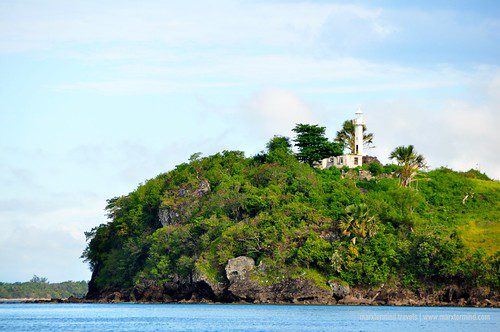
    Visit the Parola– The Parola, a lighthouse built in the Spanish era, now runs on solar power. In the era of GPS, this metal lighthouse fabricated in Belgium in the 1880s, sill serves as the sentinel of the sea along the Ticao and Burias Passes. Few such light houses still exist in the Philippine archipelago.

    A visit to this lighthouse offers great views of the Sorsogon Bay and the South China Sea. The unspoiled white beach near the light house is a great place to enjoy, just don’t forget your snorkel or diving gear. This place is ideal for real nature lovers. There are no resorts or huts at the moment but the local government is currently building visitors’ accommodation.

    Have a sunset party – A view of the majestic sunset can be seen from any vantage point from the beaches of Aguada Sur stretching all the way to Biton village.

    Take a trip to Our Lady of Lourdes – Among Catholic devotees, there’s a grotto overlooking the town that also offers magnificent views of two volcanoes – Mounts Mayon and Bulusan. The steps up the grotto follow the number of Rosary beads.

    All these adventures won’t burn a hole in your wallet. For island hoppers, the cost of petrol or diesel to hire a private outrigger boat for one day is US$30, including the boat man’s fee.

    Getting there:

    Emirates Airline operates 14 weekly flights from Dubai, while Etihad Airways operates daily flights from Abu Dhabi to Manila. Magallanes, Sorsogon is 638 kilometers south-east of Manila. No-frills airline Cebu Pacific and Philippine Airlines operate several daily flights to Legaspi City, home of Mayon Volcano. From Legaspi, Magallanes is a two-hour drive by car (private vehicles can be hired from Legaspi). An under-construction airport in Bulan town is 45 minutes by car from Magallanes, via the Siuton-Bulan Road.

    Magallanes, Sorsogon: Paradise Undiscovered
    Photo credit: Nico Balonzo

    Where to Stay:

    SSC Hostel, Aguada Norte – from US$5 per person per night for a bed in a dormitory-type shared air conditioned(AC) room.  Tel. +63929-2968181

    Touch of Grace Hostel, Aguada Norte – from US$32 per AC room. Tel. +63921-5485750

    Three Sisters Lodge, Central – from US$5 per night for a bed in a regular room, US$21 per night for an AC room; Tel. +639088645474

    Fernando’s Hotel, Sorsogon City – US$150 per person for an adventure tour for three days two nights.  www.fernandoshotel.com

    Hotel Venezia, Washington Drive, Legaspi City (22 miles from Sorsogon) – from US$58 per night, bed and breakfast.

    For more details, contact Joel Carrascal, Municipal Tourism Officer at Tel. +63-926-6150975

    Note: Credit cards are only accepted in major establishments in Sorsogon and Legaspi.

  • Scrapbook – Arian Marcos, Melissa Guevarra & Randy Ramos Recio

    A platform for budding creative talent – this time featuring Dubai-based photographers Arian Marcos, Randy Ramos Recio and Melissa Guevarra.

    Arian Marcos who has always been an artist since he was a kid, got into photography in 2008 taking classes and immersing himself in the works of his icons.  His persistence to excel in his newfound passion won him awards which include the First Place in the 2nd Annual Scott Kelby Photowalk – Dubai. He has also conducted workshops on Off-Camera Flash Photography and Photo Retouching for a local photo club in Dubai. As a photographer, Arian’s style is contemporary, and he is keen on experimenting with textures and contrasts. He combines this with his expertise in post-processing to further enhance the play of light and intensify the visual appeal and emotional impact of his images.  His works include still and moving images which cover portraiture, fashion and beauty, landscape, interiors, architecture and events. Arian lives in Dubai with his wife Karen, where he works for a railway systems construction company.  He is an avid fan of basketball, good coffee and leche flan.

    Randy Recio is a pureblooded Batangueño based in Dubai, who works as a company trainer for DHL Express-UAE.  He is a street photographer at heart and much of his best works stem from unexpected moments captured by his trusty camera while enjoying an early morning or late afternoon walk.   Randy’s subjects are mostly landscapes and portraits, composed with a photojournalistic flavor. He is an active member of UAE-based photography association Overseas Pinoy Professional Photographers’ Society (OPPPS) and was once featured here in Illustrado Scrapbook with his image of Filipina bossa singer Sitti Navarro.

    Melissa Guevarra’s revolves around three main things – family, painting and photography.  Mentored during her early years by Art Association of the Philippines (AAP) officers Danilo Santiago, an Art Professor at the University of Santo Tomas and Vic Dabao, Melissa has always been interested in the creative field since her childhood.  Being married to artist Darwin “Japat” Guevarra has further inspired Melissa to delve deeper into her art and eventually fall in love with photography.   This full time homemaker and full time artist, works from home creating paintings and miniatures with her husband.

  • Scrapbook – Harry Cruz, Jack Morales, Richard Martinez, Mario Cardenas & Jude Cruz

    A platform for budding Filipino creative talent. Illustrado highlights the works of UAE-based photographers Harry Cruz, Jack Morales, Richard Martinez, Mario Cardenas and Jude Cruz.

    A native of Lingayen, Pangasinan, Jude Tadeo Cruz is a Philippine registered Electronics and Communication Engineer who currently works for one of the UAE’s Telecom Operators. Jude’s work entails travels to different islands and places where he sees beautiful sceneries. The desire to capture such picture-perfect landscapes inspired him to develop a passion for photography which he developed with much enthusiasm by attending workshops, learning from reading materials and exchanging information with co-enthusiasts in the UAE capital. These days, Jude spends much of his weekends shooting fashion, events, weddings, portraits, sports as well as corporate assignments. He also functions as one of the advisers of the Filipino photography club Shootercada based in Abu Dhabi.

    University of Santo Tomas graduate, Architect Mario Cardenas might have just taken up photography late last year, but already list an impressive roster of awards from competitions in the country, even at such an early stage in his hobby. His achievements to date include – Yasalam Image Competition by Flash Production (sole winner), 8th Environmental Awareness Photo Competition by Lightform and Dubai Municipality (2nd place) and the most recognized competition he has won so far, was the 5th Emirates Photography Competition – Al Dhafra in the Photographer’s Eyes, organized by Abu Dhabi Authority of Culture and Heritage (ADACH) and supervised by The Abu Dhabi International Association of Photography (3rd Place).  Never to rest on his laurels, Mario is still striving to learn and hone the craft that he has grown to love.

    Fine Arts major in Advertising graduate Richard Martinez got his first break into the world of photography when he was taken under the wing of Bern Mejias a prominent member of the Wedding and Portrait Photographers of the Philippines (WPPP).  A freelance graphic designer then, Richard was given the chance to try his hand on capturing distinctive images on camera, specifically photographing nuptials.  Several years down the road, he has developed his skills and his passion for other types of photography, specifically fashion, for which he says he is truly hooked on. Richard moved to the UAE in 2008 to work as a Photographer for a media production company – All4Media Dubai Studio City. Some of the recent projects that he has had the privilege to work in include – the Hydra Executive Reality Show, The Circle Conference 2009, Abu Dhabi Adventure Challenge and UFC 112.  He currently works for the Abu Dhabi Department of Municipality Affairs (DMA) as Photographer and Graphic Designer.

    Jack Morales is a Dubai-based accountant (CPA) whose dream has always been to become an artist.   Jack has a natural talent for sketching and has always been drawn to photography.  A further introduction to the latter, through a “photo addict” friend who enrolled him in a basic photography course in 2008, gave Jack even deeper appreciation for the art and made his learning experience more exciting. It was then that he realized how difficult it is to capture the beauty that surrounds us, as well as the moment we all want to remember, and that subsequently transformed his regard for photography from an ordinary hobby to an extraordinary art. Since then, Jack has eagerly gained techniques and tricks to capture interesting photos. He also sharpens his skills by learning from the works of renowned photographers like Jiri Subrt, Justin Grant, Helmut Newton, Marc Adamus, which he looks up to help sharpen my skills.

    Harry Cruz is a Dubai based freelance photographer who specializes in weddings, fashion/portraits and landscapes. Photography was once just a hobby to him until he learned to see all moments, places and everything around him as something worth capturing. Harry took his photography to the next level two years ago, participating in a local Filipino photography club, attending prominent workshops with renowned photographers, as well as local seminars provided by Dubai based Filipino photographers. With his efforts paying off, Harry has won several awards – one for travel photography in the National Newspaper, as well as the 3rd prize in the 8th Environmental Awareness Photography Competition sponsored by Dubai Municipality.  Harry is a Certified Public Accountant from the Colegio de San Juan de Letran in the Philippines, and works for a leading German Software company in the emirate.

  • Setting up a Business in the Philippines

    By Bernadette Reyes

    Prospective investors may be overwhelmed at first as the list found on websites about how to put up a business in the Philippines runs long. In fact, in a survey conducted by the World Bank, the Philippine government has an 11-step procedure to putting up a business operation whereas in other Asian countries businesses have to comply with only two major steps. However, the government is trying to shift gears by simplifying the procedure in order to lure in more people to put up their own business in the country.

    The first step among the basic requirement is to register a business name. A Sole Proprietorship or a business structure owned by an individual only needs to apply for a Business Name and be registered with the Department of Trade and Industry- National Capital Region (DTI-NCR). In the provinces, application may be filed with the extension offices of the DTI. For partnership or those businesses owned by two or more partners a business name should also be registered with the DTI. However, a partnership with more than PHP3,000 capital must register with Securities and Exchange Commission (SEC). Corporations on the other hand are required to register at the SEC.

    Application fee for business name registration is pegged at PHP315 for single proprietorship and PHP515 for partnerships and corporations. Business name registration fee and filing fee are charged PHP300 and PHP500, respectively.

    After these general registration requirements have been met, securing permits and utility connections are next in line. Tax Identification Number (TIN) should be obtained at the Bureau of Internal Revenue (BIR). Upon securing your TIN, you may proceed with obtaining a business permit to operate from the City Hall/Municipal Offices in the localities where the business will be set up. For businesses located in Metro Manila, locational clearances/business permits are necessary and should be obtained from the Metro Manila Development Authority (MMDA). Note that securing permits in cities and municipalities is considered as the hardest part in the business application process.  Once the permit to operate has been secured, a business employer must get a number from the Social Security System (SSS) office.

    To cap the list, apply for water services from the Maynilad Water Company or Manila Water Company for firms located in Metro Manila and Local Water Utilities Administration (LWUA) for firms located outside Metro Manila. Also apply for electric and telephone services connection and you are ready to get the ball rolling. Meralco provides electricity connection for the most part of the country. The Philippine Long Distance Telephone Co. (PLDT), Bayantel, Digitel, Smart and Globelines are some of the well-known companies providing telephone connection services.

    Once these requirements have been met, business owners just have to comply with reportorial requirements, pay tax dues regularly and renew expired contracts and permits to keep the business.

    While the steps in setting up a business in the Philippines are not easy as ABC, the Philippine government is putting conscious effort to provide leeways and and short-cut the procedures to encourage investments. It has recently allowed post registration requirements wherein businesses may start operation as soon as it has secured the permit to operate but with the commitment to accomplish other requirements in the next two months in order to continue doing business. While the government has become lenient in allowing this type of set-up, it monitors strict compliance of the post registration requirements. Failure of any business to comply with the other requirements would also mean forfeiture of the permit to operate and therefore the business must be closed down. This type of set up is available in some of the key cities in the Philippines including Quezon City, Manila and Makati.

    The government has also identified Economic Zones or ecozones which are being developed as independent community with minimum government interference. It administers its own economic, financial, industrial, and tourism development without help from the national government. Ecozones provide adequate facilities to establish linkages with surrounding communities and other entities within the community. As an incentive, companies in the Special Economic Zones are subject to only 5% overall tax rates.

    According to DTI, businesses involved in trading such as retail stores are the easiest to get the process done. However, those which involve the use of hazardous chemicals are the hardest to put up, as these type of businesses would require special permits from various agencies such as the Department of Health (DOH) and Department of Environment and Natural Resources (DENR).

    For businesses involved in export will need clearances and permits prior to every shipment. While this may seem arduous especially for those with frequent shipments, the government encourages this type of business venture since the Philippines is the most strategic location for firms that want access to the large ASEAN market and its vast trade opportunities. The Philippines has enhanced and primed up various areas for investors and offers a dynamic consumer market accustomed to an array of product choices created by a competitive domestic economy.

    But more than the setting up profitable businesses, doing business in the Philippines will further contribute to economic development. The Philippine government is providing an environment conducive to entrepreneurship and micro, small and medium enterprises (SMEs) in the country. In fact, the SME sector has been the backbone of the local economy and served as an important ingredient in the economic and export success of such economies as Japan, Hong Kong and Taiwan. In the Philippines, SME comprises about 99.6% of all registered firms nationwide, employs 69.9% of the labor force, and contributes 32% to the economy.

    So the next time you contemplate on setting up a business in the Philippines, consider that on top of generating profits, your decision could help improve the economy, generate more jobs for the unemployed and  ultimately help in alleviating poverty.