119 years of Independence on the 12th of June 2017. When we think about independence, freedom and liberation, what always comes to mind is breaking free from major forces that subjugate us – from the Spanish conquistadores who took our country as their own for over 400 years, to martial law and oppressive past regimes that curtailed the freedom and growth of our nation.
Liberation seems like such a big word that we rarely ever think of it as something personal, internal and related to our day-to-day existence. When in actuality, there are also things within us that paralyze us and hold us back from growing, not only as individuals, but also as a nation.
If you are tuned in to social media for the last year and half, you might have noticed that something else has captured the Philippines. It’s neither a world power nor an opportunistic neighbor from across the shores; instead, there is this creeping destructive force that seems to have quietly laid siege to the collective Filipino psyche.
It would seem that overnight, we have been taken over by social media trolls, ranters and hooligans; purveyors of fake news – both individuals and what once were thought of as respected media outlets, as well as groups dedicated to cause unrest and instability. Every single day, our newsfeeds are dominated by Pinoys versus Pinoys – the “yellow cult” versus the “dutertards”, the “decent” versus the “vulgar,” the “intellectuals” versus the “incompetents,” and the “know-it-alls” versus the “troll-‘em-alls.” There’s an online brawl over everything and anything, from our president, to our government, to our beauty queens, to copycat advertising campaigns, even over obscure popularity contests on the internet, and yes, we even fight about “unli rice” these days!
We’ve always been nervous about China usurping our sovereign rights. What we haven’t realized is that our real and very present oppressor is in fact the “warring mentality” that has become so pervasive among us Filipinos that it runs from the top echelons of power down to the street level “masa.” Whether we are aware of it or not, the fact that we can’t seem to agree with one another (or agree to disagree) or be able to participate in productive discourse, and how we seem to love denigrating each other for all the world to see, has become a hindrance to moving things ahead in our country to serve the common good.
Perhaps, you might think that it’s a small thing. Maybe for you, it’s even something to laugh about. Surely, swearing at a fellow Pinoy or trolling a post you didn’t agree with are nothing compared to our country’s humongous problems – drugs, Marawi, Metro Manila traffic and deep-rooted corruption to name a few, that desperately need to be solved. But consider this. Wouldn’t it be good if we can all be part of positive change by building on things we can control ourselves – starting from our mindset and the way we communicate with fellow Filipinos?
We can’t fix all our country’s problems with mere niceties and the proverbial joining of hands. But we can start looking into solutions when we can talk productively with each other. Furthermore, it’s high time to stop ranting. Instead of just complaining about our country and about each other, how about actually doing something productive? You want something better? Go do something about it. Finally, if you can’t be part of the solution, at the very least, don’t be part of the destruction.
It’s time to liberate ourselves from our new oppressors. Ditch the deadweight. By doing so, we may be able to find ourselves a lot lighter and a step closer towards the change that we all want and deserve.
Editor-in-Chief and aspiring urban farmer “almost superwoman” Lalaine has been driving Illustrado’s mission to uplift Filipinos in the region for almost a decade now. A former corporate dynamo living in Dubai for over 20 years, she has seen enough to appreciate that the best things in life can’t be bought, and that in this day and age, authenticity could be one’s best asset.
Filipinos are known to be some of the most adaptable people on earth. With over 10 million Pinoys working abroad, you can almost guarantee a Pinoy in every country. Mga Kababayan, our love for the motherland is never ending, and that’s a given. We all look forward to going home in the summer, seeing our family and friends and breathing in that provincial air. And while away, we all speak of our country with a certain pride and joy that almost brings a tear to our eyes.
We’ve all heard about foreigners coming to the Philippines too. “It’s more fun in the Philippines” as they say. Our country becomes a hot spot during vacation season, with tourists coming in left, right and center. Ironically, however (for the most part), that’s all we associate foreigners with. In fact, you’ll rarely hear about Non-Pinoys living in our country either, but when they do, they become the stuff of legends.
Often, our separation from home makes us miss out and forget the natural beauty that our country has to offer. A handful of travelers have taken to sharing our pride and love through their experiences in the Philippines. These are the game changers, adventurers and free spirits that have taken to loving our country just as much as we do.
Dwaine Woolley
Australian – born, but Pinoy at heart! Dwaine Woolley is a Youtuber and internet sensation who has gone viral through showcasing his life in the Philippines and his ability to speak three Filipino dialects (Tagalog, Cebuano and Waray).
Having moved to the Philippines to be with her boyfriend, Susie Potter is a Hungarian girl who has taken it upon herself to be one with Pinoy culture! Her constant exploring brings her more reasons to love the Philippines every day!
Aheezy Da Islander moved to the Philippines to be closer to his wife (who is of Visayan descent) and to learn more about the Filipino culture. Having fully immersed himself in the Pinoy way of life back home, Brian regularly vlogs his Pinoy family life.
Brock is a world traveler and Philanthropist. Through the many good things he did for the less fortunate and his new-found love for the Filipino people, he recounts his stay the Philippines as a rewarding and humbling experience.
Her love for Pinoy culture and the Philippines natural beauty keeps her coming back! Gretl is a free spirit and world traveler who’s love for exploration knows no bounds. She regularly makes handy travel guides which can be viewed on her youtube channel.
“I’ve always wanted to travel, I’ve always wanted to try living in another country at least for a while so it was obvious that I will move here when I met my boyfriend who is from the Philippines.” – Susie Potter
“I came to the Philippines in 2011 to do missionary work in Leyte and Samar.” – Dwaine Woolley
“After conducting a rather deep Google search, I do that I wanted to head to the Philippines because of beauty of the country. I booked a plane ticket and landed without any plans at all. I was going to make plans day by day.” – Brock Blohm
“I was in Myanmar in a bus (solo traveling) talking to a guy. He asked why I like Myanmar, and I told him I liked a lot, but the open and friendly people mainly. “You should go to the Philippines” he said, according to the friendly people thing. Okay! I thought. Sounds good! I hadn’t considered the Philippines before, but when I came home I said to my boyfriend: we’re up for the Philippines. When he said okay, it was settled.” – Grietje Evenwel
“I married a Visayan babae.. after my contract in the military We decided to move here so I could meet all of her family, friends and to learn her language and culture.” – Brian Ahern
What region do/did you stay in and what strikes you the most about it?
“I’m living in Northern Luzon and even though it’s that part of the Philippines that tourists don’t visit that often, there’s a lot to love about this place! I love the all the beautiful hidden places you can visit here. Hidden beaches and waterfalls without too many people….where there will be no crowd just the beautiful nature itself. It happened many times that we visited a beach around this area and we basically didn’t meet anyone during our trip. It’s definitely an amazing experience to have a whole beach on your own for a day. I love the fact that I can reach amazing places like these anytime just in a few hours.” – Susie Potter
“I stay in the island of Leyte. What I love the most is that despite the poverty, Filipinos are so happy. I’ve never seen anything like it in my life. Kahit mahirap ang buhay, masaya pa rin sila.” – Dwaine Woolley
“On my first trip to the Philippines, I stayed for 15 days. I planned to travel around the beautiful landscape of Northern Luzon, after arriving and experiencing a taste of manila, I decided to stay. I stayed in Makati. Every single day I traveled miles and miles on foot. I went everywhere. I even went to the places with the locals told me not to go. It was too dangerous for a foreigner they said. That made me want to go even more. On my second trip, which was another 35 days or so, I travel by bus down through many cities in southern Luzon, I went to Mindoro, and then I went to Palawan. This was a whole different experience in itself. This footage is not on YouTube because I have not found time to edit it, just yet. It will be on my channel in a couple of months. What strikes me most about this country was the people. The people were always so kind and friendly and very welcoming to a foreigner. No matter what their background, they wanted to talk to me. Everyone wanted to welcome me, rich or poor. Kindness seemed to be embedded deeply within the hearts of everyone.” – Brock Blohm
“I did 3 trips to the Philippines. To Palawan 2x, Mindoro, Batanes and Banaue and surroundings.
I was most surprised by Batanes. The landscape there is something you don’t find in the rest of the Philippines, and the extreme safety is something you find nowhere in the world even. I remember in Itbayat when we went to see sunrise over the sea and hills. It was so quiet, so beautiful. It really felt as if we were at the end of the world.” – Grietje Evenwel
“I stay in the Visayas Region 7… This is Lapu Lapu’s home territory! Beautiful historical churches, overwhelmingly super happy smiling people. I Just love it.” – Brian Ahern
How is living in the Philippines different from living in your home country? Do you get homesick?
“I’m pretty sure I could list more differences than similarities! The lifestyle and the mentality of the people is so so different here than in Hungary, where I’m from. The first thing I’ve noticed when I got here is that everyone is so relaxed in the Philippines. For example I don’t think that I’ve ever seen someone here running because they were in a hurry. Life is definitely less stressful here. But of course I still get homesick quite often because I miss my family. Otherwise I definitely prefer this less stressful and more positive environment.” – Susie Potter
“The Philippines feels like home to me. Why you ask? Because the people here make me feel like I’m at home. They are very kind, very polite and hospitable. They laugh alot and are constantly smiling. I feel that anyone I meet is my instant friend. In my home country, people tend to be a little cold, and get upset over small things. In the Philippines people seem to know how to handle problems well and focus on the positives in life. It’s a great atmosphere to be in. I certainly don’t feel homesick here because this feels home to me. The only thing I miss in my country is my family.” – Dwaine Woolley
The poverty here was mind-blowing. It’s not a fun topic to talk about is a real one. Before arriving in Manila, I can count on my two hands how many homeless people I had seen in my entire life. Honestly. To walk around Manila and experiencing the unimaginable level of poverty was quite sad. I felt very bad for many people and did what I could to help. The prices where significantly lower than that of the USA which is very encouraging to a traveler because it allows us to stay for a longer period of time. Everyone was so friendly – the employees who were representing large companies all the way down to the people working on the streets, everyone was. Always. It didn’t matter if I was purchasing a meal inside an expensive Mall, grabbing a quick quail egg from a stall on the street. Everyone greeted me with a smile and thanked me for my business. The human element is slowly drifting away with in modern society – and it’s very encouraging to see a whole country who still hangs on to this utterly important piece of humanity. Fortunately, I do not get homesick. We live in a world full of technology and I use it to the fullest potential. I’m able to communicate to all of my friends and family back home with a click of a button. This somehow replaces my desire to go back home. – Brock Blohm
“Well nature and temperatures are obviously different. Small things are arranged in other ways (like when you say ‘yes’ and what that means). There is a whole lot of different kind of foods to try. The Philippines and the Netherlands both ain’t famous for their foods, but there is still a whole lot to discover! I don’t really get homesick. I always know when I go back again.” – Grietje Evenwel
“Yes, of course I get homesick and feel the missing wanting feeling of my family there sometimes but if I’m focused on a goal I tend to not think of that. The most recent time I felt it was recently out of nowhere because of an Instagram picture. A Filipina woman was standing infront of a car Washington State. Seeing the license plate maybe sparked it.” – Brian Ahern
Have you adopted any Filipino practices?
“Yes a lot! Actually I’m about to make a video about this topic. The positivity I mentioned earlier had an effect on me too. My favourite example is that the first time when I’ve ever experienced a typhoon I was so nervous and scared…but after seeing how well local people are handling it I got a lot more relaxed about it. And about everything else also. I think I adopted this peaceful stress-free mentality pretty well. And there are some smaller things too, some funny ones like I adopted some local gestures and habits (for example eating everything with spoon)” – Susie Potter
Yes I certainly have. I learned to speak 3 languages in the Philippines which are Tagalog, Cebuano and Waray Waray. (Di na pwedeng mabenta) I understand the Filipino sense of humor and have became Filipino at heart. It’s funny because when I go back to Australia to visit my family they ask me things like “why are you eating with a fork and spoon?”, “why are you pointing with your lips?”, “why do you keep saying pak ganern? What’s that mean?”. – Dwaine Woolley
“At this moment in time, I’ve been traveling around the world for 10 months. I have come across many cultures. I don’t feel that I have adopted any piece of the culture that I can identify. Who knows, maybe I have and I just don’t realize it.” – Brock Blohm
“Trying to help strangers in the street more. When I see people with a map I ask if I can help them. Haha, they always look surprised and say ‘no’ immediately. Though I don’t think I’m that scary.” – Grietje Evenwel
“Oh man what have I not?? haha! I have eaten Sardinas with Suka, a ton of Balut, Pancit Canton with rice… kaon daghan lechon manok but dili kaon baboy because of my wife’s religion. – Brian Ahern
What was the impact of the Pinoy way of life on you?
“I think I started to learn how to appreciate small things in life. I’ve seen so many poor people here who didn’t live in the best conditions but they were still so happy and thankful for what they had! It definitely helped me realize what is really important in life.” – Susie Potter
“The Filipino people have changed my outlook on life. Their culture and attitude has taught me to cherish and love what I have in life. They have taught me to be grateful and to laugh more.” – Dwaine Woolley
“It takes a lot to change my ways and my habits. But one thing that I noticed the Filipinos had, was resilience. They seem to make things work even when all odds were against them. Observing their mindset to ‘make it work no matter what’, definitely motivates me too put a bit more effort into a situation when it is tougher than usual.” – Brock Blohm
“First time we went was after a hard time me and my BF had in our lives. (no problems together or anything, just in our private lives). In the Philippines, relaxing far from home, we could let go of troubles and we really came back a bit different than we left.” – Grietje Evenwel
“Don’t need much money to live a Happy go lucky Simple life style/Layed back life style when all you need is a bamboo house and food on the table and there will be smiles all around” – Brian Ahern
What do you think about the Filipino people overall?
“If I would have to sum it up I would say filipino people are probably the friendliest people ever!” – Susie Potter
“They are beautiful people with big hearts. Very joyful and full of life” – Dwaine Woolley
“I could literally talk for an hour about the people, alone. Everybody was so kind, friendly and curious. Everyone would come up to ask me the same questions over and over. It didn’t matter which part of the Philippines I was in, it was always the questions; What is your name? Where are you from? How old are you? Are you married? What hotel are you staying at? I wasn’t sure of their intentions, so I simply took it as a sign of curiosity. There were many times that I visited the slum areas of the Philippines and I was greeted countless times by people. I can’t tell you how many times I was invited into their home for a quick beer or even dinner. This was quite surprising to me, as many of them, I could see, struggled every day to pay their bills. But yet they still found it in their hearts to not only welcome me but to offer something without asking anything in return. Very heartwarming.” – Brock Blohm
“They are friendly, open, proud of their country (as they should be) but also many times hard working abroad, missing their country and family. I’ve been in the airplane so many times on an international flight, when going to the Ph, next to a Filipino. Talking proudly about going back to their families, and the love for their country.” – Grietje Evenwel
“Super friendly, Funny and Talented.” Brian Ahern
Is there anything else you like about the Philippines?
“I love all the exotic things here! Exotic looking trees, exotic fruits, exotic birds, rice fields and carabaos…These are all things that were not real for me before. I mean I’ve only seen things like these on TV before so seeing all of it in real life is an amazing experience. Even after living here for 3 years I still can’t get over fact that there are real life monkeys living in the forests, or that I’m walking under real palm trees and eating fruits I didn’t even know about before.” – Susie Potter
“Apart from the people, I love the food! Ginataang gulay, caldereta, Bicol express, anything with gata is amazing. Nakakapag paligaya sa tiyan!” – Dwaine Woolley
“The landscape and the people. Seriously. Need I say more? This is literally one of the most beautiful places on Earth and it is full of people who are so kind and welcoming. Doesn’t quite get much better than that.” – Brock Blohm
“The combination of amazing nature, real stunning, with the good people next to it. That’s amazing. Also behind the scenes. I make vids of many countries but no one is so reactive and encouraging as the Filipino people.” – Grietje Evenwel
“The People Beauty of tropical country, also the Diversity of Culture and Dialects rich in their unique history.” – Brian Ahern
Is there anything you don’t like about the Philippines?
“It’s not that I don’t like something it’s just that I’m sad to see a few things. Of course I’m sad to see the poverty, being a big animal lover I’m very sad to see that there are so many dogs and cats living here in very poor conditions. I’m not used to seeing these things back in Hungary or if I did, it was easy to help them. But since there are so many homeless, starving animals here I can’t help all of them. Same thing with people.” – Susie Potter
“Every country has its Pros and Cons. No country is perfect. The only thing I don’t like is the pollution in Manila. And the traffic of course. Hopefully people will begin to build and invest outside Manila to reduce the traffic and pollution” – Dwaine Woolley
“Well, terrorism. This made me a bit nervous as a foreigner. Even while I was staying in Palawan, a man just south of me lost his head to terrorists. Scary stuff! But, every country has its problems. There is no perfect country.” – Brock Blohm
“It touches me when I hear about troubles in the country, like in the south or anything drugs related. If I would live in the Philippines I am sure I would notice some differences in the deeper structure from the Netherlands. Everything here is quite well arranged when you compare it to the rest of the world. I hear stories about bribery and so on, am sure I would struggle there.” – Grietje Evenwel
“Of course there are things like Infrastructure that tick me off. Lack of planning because of corruption in the past.” – Brian Ahern
What advice do you have for people who wish to travel or live there?
“If you would like to visit the Philippines I would recommend you to find some less popular, less touristy place. You can experience the beauty of the nature and the life of the local people a lot better if you go to those areas that tourists don’t usually visit.” – Susie Potter
“Unfortunately the media portrays the Philippines as a dangerous place. In my experience, I have felt safer in the Philippines than in any other country I’ve lived in. There is nothing to be afraid of here. Go swim with the butanding in Oslob, visit Palawan and Boracay, taste the local food and get to know the people. They will change your outlook on life.” – Dwaine Woolley
“I encourage everybody to Simply let go. Let go of your current belief systems that will hold you back from doing or experiencing the culture at hand. Also, say ‘yes’ more often. If a local invites you to do something..simply say ‘yes’. You literally have no idea what you could be missing out on if you say ‘no’.” – Brock Blohm
“Be open, be friendly, and bring sunscreen 😉 ” – Grietje Evenwel
“Just be friendly. Don’t compare it to something else. Just because they speak very good English doesn’t mean this is the USA. Just respect their country because you’re the stranger and guest here in the Philippines.” – Brian Ahern
What is your message to Filipinos out there?
“I would tell to all Filipino people that no matter where they live in the world they should be very proud of their country because it’s such a unique and amazing place with amazing people!” – Susie Potter
“Be proud to be Filipino. You are an inspiration to people like me.” – Dwaine Woolley
“To be honest? Don’t change a thing! Your buildings and your architecture, no matter how beautiful, will not bring me back. But your kindness, your generosity, and your warm welcoming smiles, will!” – Brock Blohm
“I can mainly say things according to tourism. I would say: it will get busier and busier in the Philippines with foreigners like me. I saw it in El Nido for example. Please conserve and structure your natural beauty’s they are such an amazing thing you guys have!” – Grietje Evenwel
“Mga kababayan! Mahal kita! Stay strong and Stay Focused on your Goals!” – Brian Ahern
PAOLO GABRIEL BENITEZ – Junior Contributor
A visual communications student, Paolo is an aspiring artist, seeking to make his mark in the world of cinematography and the performance arts. When not dancing in the living room in the middle of the night, he functions as a perceptive young man, seeking to learn how things are the way they are and providing insight on the various issues that plague his generation.
Nikki Muller would never have thought of television as an option if not for a serendipitous encounter outside her high school gates in the year 2000. The host and presenter based in Singapore recalls an MTV film crew waiting to interview students about the upcoming movie ‘Men in Black.’ “When the producer approached me to ask my friends and I some questions, instinctively I took the microphone and started interviewing my buddies,” she says. “Soon after that, I received an invitation to audition to co-host MTV@MBASSY when I was 15 years old. We filmed in the Philippines but it broadcasted around Asia. This was around the time of Donita Rose, KC Montero and Sarah Meier.”
Since she had to keep her grades up in high school, however, she had to stop after one season as the hours were long and the shoots were until the wee hours of the morning. It didn’t take long for her to bag another show right before she graduated from high school, though, as a co-presenter for Studio Disney on the Disney Channel for two years.
“I filmed in and out of Singapore when I was 17 and learned so much about the craft,” she says. “This is what inspired me to take it seriously and study Broadcast Journalism in the USA. When I was 19, I received my first regional nomination as Best Entertainment Presenter at the Asian Television Awards. I’m very proud of that!”
Getting Her Feet Wet
Right after college, however, Nikki switched gears to work at the United Nations Head Quarters in New York City but the limelight still beckoned. In 2011, she returned to television in Asia – but not without hardships.
“It was a very difficult process to begin again after being away for 5 years,” she says. “I knocked on doors, I checked online sites for auditions and eventually was taken under the wing and guidance of my agency, Fly Entertainment who helped me land projects. It was a year of struggle before I got my feet wet. You have to do this job because you love it.”
Perhaps one of her most memorable hosting duties was when she hosted ‘Bicycle Diaries’ on Channel News Asia. She described it as one of her most rewarding experiences as she cycled along the Mekong River along six countries during a time when development was starting to affect the local communities. “I landed in Myanmar the day Aung San Suu Kii was sworn into government and the air of hope and change was so palpable,” she says. “I met so many incredible individuals – so down to earth and willing to open up their homes and hearts to complete strangers. I have loved cycling ever since!”
This year Nikki is set cover the Championships at Wimbledon for the third time. She has had a chance to sit down and interview some of the world’s greatest athletes such as Boris Becker, Bjorn Borg, Serena Williams, Roger Federer, among others. Her most surreal experience, though, was meeting and spending time with her childhood heroine Martina Hingis.
Fighting Burnouts
Although to some people her job may seem glamorous, Nikki admits that she has had some burn outs in the process. To combat the fatigue, she meditates and practices mindfulness when she can.
Nikki Muller – Credit Frank Foo Photography
“I’ve learned to be open to opportunities even if they don’t always feel like the right fit,” she says. “There is always a new skill to learn and value to add to a project, but of course, always draw the line where health and well-being is at risk. Taking on challenging work is rewarding but you must also draw the line and put your health and well-being first.”
She adds, “Every year I have come to understand my priorities more and more. I now try to ensure that no work year is carbon copy of the last. It’s important to take on new experiences and cast the net wide until you find the perfect fit or until you feel you’ve had your fill of adventure and can focus on one true path.”
Currently Nikki produces feature stories for Fox Sports Asia and she sees herself really harnessing the story-telling angle by being more actively involved in the creative development of future TV shows. In the near future she hopes to invest in her role as a presenter and as a background researcher who helps with ideas, writes stories, and directs the look and feel of the shots. “I think you add so much more value to a product if you can be well-rounded,” she says.
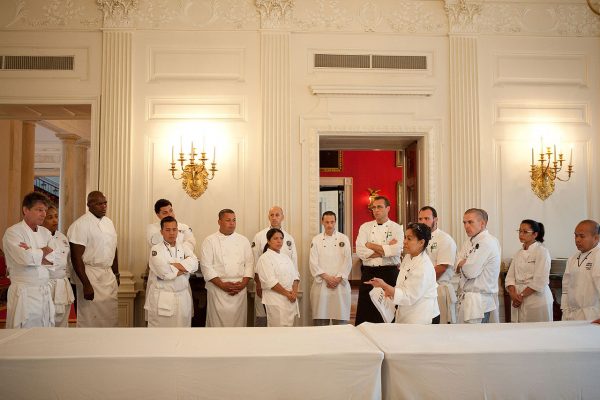
Cristeta Comerford, The White House Executive Chef
By Excel V. Dyquiangco
Her memory dates back to the constant smell of food, remembering how her grandparents who used to own a rice paddy, a fishpond, and livestock in Manila would just bring everything to her plate. Each bit and piece was just right there in the backyard, says White House Executive Chef Cristeta Comerford.
“If you wanted to have chicken for dinner, you had to catch your own chicken and give it to grandma so she could pluck it for you,” she exclaims. “Since I grew up in a big family, there’s always food in the house. Cooking at home was like cooking for banquets. It just never stops. Then with my parents coming from two different regions of the Philippines, we were exposed to different cuisines indicative of the two regions. We became a family of cooks.”
In her early twenties, she decided to leave for the United States to carry on what she started in the country. From her first job as a chef in the kitchen of an airport hotel to a rotating chef in Vienna, Austria for six months, she has grown remarkably in her career – not just trying out different recipes but accommodating the culture and history of everyone she has the privilege of cooking for.
In 1998, her world expanded when she was asked to work in the White House under the Administration of Bill Clinton.
Chef Cristeta “Cris” Comerford prepares a meal inside the White House kitchen in this July 17, 2002 photo. Mrs. Laura Bush announced on August 14, 2005 that Comerford has been named the White House Executive Chef. Comerford is the first woman to serve in the job. White House Photo by Tina Hager
In an interview with Real Simple, she says, “When opportunity knocks, you’ve got to open the door and grab it. The sous chef at the White House was leaving to open a restaurant. Walter Scheib, the chef at the time, said, ‘Hey Cris, are you interested?’ At that time, I had my own restaurant in D.C., The Colonnade, but I knew this would be a great opportunity and honor. So I took the position. That was back in ‘98.”
In 2005, she was appointed to the position of Executive Chef by former First Lady Laura Bush and was reappointed to the same position by Former First Lady Michelle Obama.
Her Journey inside the White House
Her responsibilities as Executive Chef range from taking care of the First Family to executing and designing menus for official receptions, state dinners, and social events, among others. The position also gives her the opportunity to belong to an elite gastronomic society called Le Club des Chefs des Chefs of which only the personal or executive chef of a Head of State fit in.
President Barack Obama fist bumps Executive Pastry Chef Susie Morrison after sampling pies with First Lady Michelle Obama, ABC News Anchor Robin Roberts and Executive Chef Cris Comerford during an interview about Thanksgiving in the White House Kitchen, Nov. 19, 2014 (Official White House Photo by Pete Souza). This official White House photograph is being made available only for publication by news organizations and/or for personal use printing by the subject(s) of the photograph. The photograph may not be manipulated in any way and may not be used in commercial or political materials, advertisements, emails, products, promotions that in any way suggests approval or endorsement of the President, the First Family, or the White House.
Working for three administrations now, she shares that each family has different likes and dislikes. But their similarities prevail: all adore healthy foods. For the Obamas, she says it was utilizing whatever they grow in their garden, using items that they have and using natural-fed and grass-fed chickens and beef.
Her most memorable event to date: “For example, it could be a dinner for just the two of them – the President and the First Lady. Just seeing the two of them eat is cool. For me, that is more memorable,” she says.
In spite of her hectic schedule, however, Chef Comerford still treasures her family above all. In an interview with Asia Society, she shares, “I really owe a lot in my career to my husband, John. When I did get the job, he looked at me and said, ‘Cris, you know this job is going to take a lot from you, but I’m going to make it easy.’ And so he took a step back.”
She adds that she is also very protective of Saturday because it is only the day of the week reserved for family. “My daughter Danielle and I try out different recipes. She loves to bake.”
Her future projects include putting up a bed and breakfast when she and her husband retire and helping the underprivileged kids in the community by teaching them how to cook.
POWER TO THE PINOY: Is there a point to Pinoy Pride?
By Lalaine Chu-Benitez
In a time of rampant fake news, internet trolls, a community bitterly divided by warring political factions for all the world to see; when words like “bobo,” “dutertards” and “yellowtards” are hurled from one kabayan to another because “it’s a democracy and one can say what one wants to say”; while high and mighty foreigners take it upon themselves to lecture our government on how to manage our sovereign nation’s affairs – may silbi pa ba ang Pinoy pride?
Some would ask, what Pinoy pride? Why do you have to call somebody’s achievement your own? Porke’t Filipino? Why do you need to claim every American Idol contestant or Hollywood celeb with a drop of Filipino blood as one of us, if they were not even born in the Philippines? Why even boast of Manny Pacquiao’s and Lea Salonga’s triumphs when you had nothing to do with it?
Perception is reality. Perception is reality. Perception is reality.
And so if we should not celebrate the wins of our own compatriots, what is there to define us? What value do you think are our people accorded if what is mostly known about us is derogatory? A decade ago, the most common words associated with Filipinos were “Sick Man of Asia”, Ondoy, rape, domestic helper abuse. Now it is EJKs, Abu Sayyaf, “hopeless and helpless,” among others. The law of propaganda attributed to Nazi Joseph Goebbels says – “Repeat a lie often enough and it becomes the truth.” This works for us the same way – “Repeat a negative often enough, and it becomes the ONLY truth.”
One could argue that there is a measure of verity in all that. However, that is only one part of the whole. The other side is that –
We have a lot to be proud about.
There is no denying that our country and our people are blessed. We have been bestowed a myriad of assets from places of natural beauty, to talented compatriots making a mark whether they are based back home or elsewhere, Filipino brands and businesses that have given the world a little taste of our culture, and common values that have endeared our people to others – our friendliness, hospitality, our resilience, our orientation to service.
We are in this together.
If we cannot see the positives ourselves, how else can we contribute to the promotion, let alone the upliftment of our own people? Surely, you don’t think someone else is going to take it upon themselves to promote our community? On the contrary, each of us have a role to play in this equation, as de facto ambassadors of goodwill for our country and our people. Because remember, whether we like it or not, we are all in this together. We are the summary of our individual efforts and our own collective drive. We might as well use the cards that are stacked in our favor for our own betterment and advancement.
Let Pinoy pride inspire and motivate.
Pinoy pride is about empowering people. It is not a license to be lazy while resting on somebody else’s laurels. There is nothing wrong about thriving on reflected glory. What is wrong is wasting the positive impact or utilizing it for something negative. Pinoy pride also does not exclusively reside in the Philippines or within the “purong Filipino.” It is in the hearts of all Pinoys and Pinoy+ scattered beyond the motherland, who feel connected despite the distance.
We Filipinos need to start looking kindly, more positively and progressively at ourselves and each other, and utilize the successes of our kababayans to help us forge onwards.
So claim it, claim them all. Take that Pinoy pride and use it to fuel your confidence and aspirations. We have all to gain from being “Taas Noo, Filipino.”
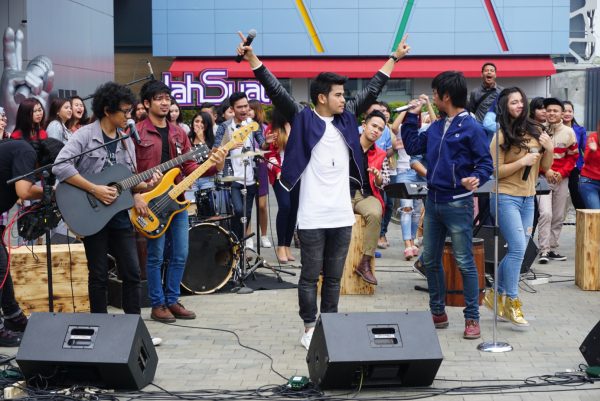
Once clad in tattered and nasty clothes while mopping the floors of provincial buses coming in for their final stop in his hometown of Bolinao in Pangasinan, a young Leo Consul had always dreamt of living the good life.
“I would wait, along with my friends, for those buses to come until midnight just so we could clean them and get a 10-peso cleaning fee,” he says.
He remembers that when he would go hungry, he scavenged some leftovers found in the trash bin because he was famished and didn’t have money to buy decent food. He recalls. “Leftover burgers, chicken, cold fries, name it – these helped us made it through those painful nights. Coping with this kind of life wasn’t easy. I had to remind myself over and over again that I couldn’t just quit and let these things happen again in the future.”
Photo by Rudy Hary
Handling Criticisms and Rejections
His dream, though, of escaping such an impoverished state never left him. Although he never imagined becoming a TV actor or host, in college, he decided to audition at ABS-CBN Baguio since he had some previous hosting experiences before. The program was looking for local hosts for their travelogue show and he eventually landed a spot. That piqued his interest about this business. “I remember our boss telling me that they chose me because of my skills and not necessarily because of my looks, I swallowed it with pride. I wanted to prove them that I do belong in this business. I believe my talents brought me to where I am now. I believe I belong in the business where I can make use of these God-given talents.”
His stint was short-lived, however, as he had to focus on his education first. While taking up his last semester at UP Diliman, he auditioned for StarStruck only to find himself queuing up at 3 in the morning and going home at 7pm as a failure. He also auditioned for Pinoy Dream Academy but unfortunately, didn’t make it, obviously.
“It was horrible!” he says. “It was hours and hours of thirst and hunger as I queued in to meet up the judges, along with those thousand hopefuls, only to be crushed at the end of the day.”
Growing with Indonesian Actors
When Leo learned that Eat Bulaga was opening its own version in Indonesia, he – once again – auditioned as one of the hosts. He got the part. “I was one of the Sugod-Bahay gang, Indo version,” he says. “I got to meet people up-close and personal from all walks of life. It was the ultimate validation that Indonesians really accepted me as a foreign artist who eventually became a household name. When I was starting, I didn’t have the car to bring me to our locations so I had to take public transportation. I would hear people say what I was doing riding the bus. I just brushed those off my shoulders. I didn’t let those comments get to me. Instead, I used them as my motivation.”
Although EBI helped him with his career as a TV host, what catapulted his career was his soap opera. Now more than five years later as an actor and a host in Indonesia, he still enjoys every minute of working in front of the cameras. He says that working with Indonesian actors is quite easy too. “Learning the language was quite easy,” he says. “I didn’t have formal lessons. I learned from conversing with locals most of the time. My love for languages also played a great role.”
Photo by Rudy HaryPhoto by Rudy Hary
For those who want to follow in his path, he shares some advice, “Don’t ever give up on your dreams! If they didn’t happen today, they will tomorrow! And if it didn’t happen tomorrow, there’s always another day! Point is, you don’t just give up just because you failed once. There are going to be a lot of hurdles along the way but you should use those dreams as your strength to jump over those hurdles.”
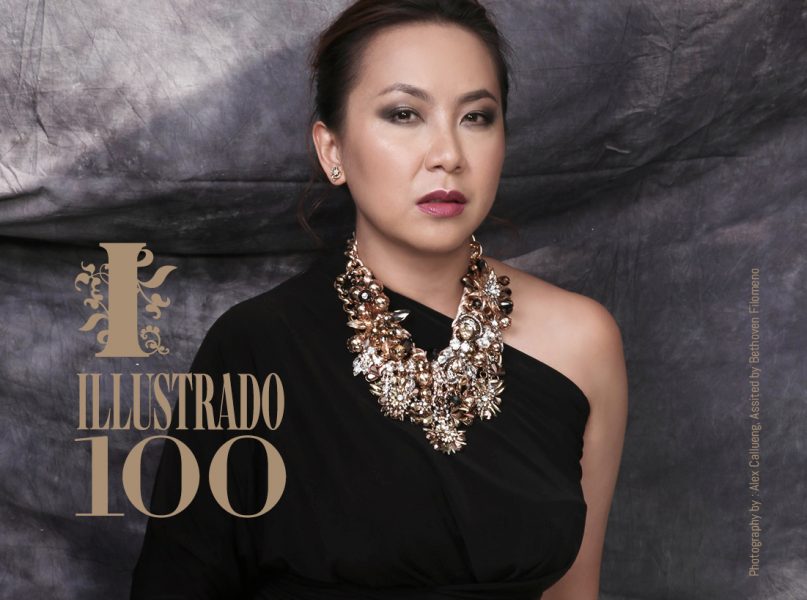
Dr. Becky Desiderio – Illustrado Most Influential Filipinos in the Gulf – Photo by Alex Callueng, Asst Photog – Bethoven Filomeno
Dr. Becky Desiderio
CEO of The Medical City, Dubai
Photo by Alex Callueng; Photography Assistant – Bethoven Filomeno for #illustrado100
As the CEO of The Medical City Dubai, Dr. Becky spearheaded the launch of the first ever Filipino healthcare corporation in The Middle East. Her list of responsibilities includes positioning The Philippines as a medical tourism destination, and promoting The Medical City as one of Asia’s most trusted names in quality, world-class medical treatments. She says, “I am essentially a health ambassador not just for my organization, but also for my country.”
Through Dr. Becky’s tireless efforts, The Medical City has become a major force in the region’s healthcare industry. She attests: “We participated in several international medical conferences and events, and facilitated agreements with private enterprises, medical insurance firms and health maintenance organizations all over the GCC.”
Above and beyond her role as a healthcare professional and The Medical City’s primary representation in the Gulf region, Dr. Becky hopes to be recognized as a Missionary Doctor. “Working in such an influential position, I want to use my work as a way of channeling blessings to others.”
ACKNOWLEDGEMENTS:
Special thanks to Illustrado 100 Most Influential Filipinos in the Gulf 2016 sponsors – Giordano, Nikon, Liali Jewellery, Lulu, Mitsubishi and Western Union.
Photo by Rozen Antonio; HMUA – Val Montuerto for #illustrado100
Very few talk about the Filipino’s pioneering spirit. And yet here we are, 11 million of us scattered all over the globe, in once strange lands we now call our home, over a century since the first known big wave of Overseas Filipinos moved to the United States of America to tend to the pineapple farms of Hawaii.
Here we thrive, and here we have made our mark.
Make no mistake. We not only have our smiles, our agreeableness, our music and our beauty queens to give to the world. The Filipino can and has mustered to do so much more. We have achieved and excelled, made our presence felt, and created value wherever it is in the world we have made our second home.
We may be diminutive in physique and mild in our manners, but we have the spirit of giants – of the Davids who can beat the Goliaths of this world with a slingshot bearing talent, deftness and grit. We have the ability and the chutzpah – nay, the cojones, to step out of our comfort zones and stake our claim on our own spot under the sun.
And we continue to do so, every single day in the offices where we work, in the markets where we compete, in the streets where we hustle, or the WWW where we push for our voices to be heard. And yet there is still work to be done and mountains to be conquered, but boy, oh boy, isn’t it nice to be coming from a place of pride, knowing that we Filipinos can do whatever we have set our hearts and minds on, because we have what it takes to succeed?
In keeping with the advocacy we started a decade ago, Illustrado 100 is our way of re-affirming our commitment to uplift the Filipino. This special issue is dedicated to celebrating the best and the brightest in our community, showing the world what we are capable of, while inspiring our compatriots to reach for the sky.
Whether they are trailblazers who are breaking new ground in the process paving the way for others; thoughtleaders who are at the top of their field of endeavor; or tastemakers who are able to imprint on the community’s zeitgeist, they all share the same gift of influence. They are able to shape, not only our collective consciousness, but also the way our community moves forward in this region.
Whatever fields these Filipinos excel in, they are at the forefront. They pave the way. They represent the Filipino.
Special thanks to all our supporters and collaborators who have contributed to make this issue possible, especially to photographer Alex Callueng, assistant photographer Beethoven Filomeno who have lent their talent and hardwork to capture most of the brilliant personalities in this issue. Our gratitude also goes out to photographer Rozen Antonio, HMUA Val Montuerto and the stylists @TheMetroSapiens for capturing the essence of Team Illustrado.
To all of you who believe in honest to goodness pure unadulterated Filipino pride, “Taas noo, Filipino!”
ACKNOWLEDGEMENTS:
Special thanks to Illustrado 100 Most Influential Filipinos in the Gulf 2016 sponsors – Giordano, Nikon, Liali Jewellery, Lulu, Mitsubishi and Western Union.
…………………
LALAINE CHU-BENITEZ
Editor-in-Chief “almost superwoman” Lalaine has been driving Illustrado’s mission to uplift Filipinos in the region for almost a decade now. A former corporate dynamo living in Dubai for over 20 years, her natural knack for marketing and mass communications makes her a formidable authority in any dialogue regarding the re-branding of the Filipino image on a global scale.
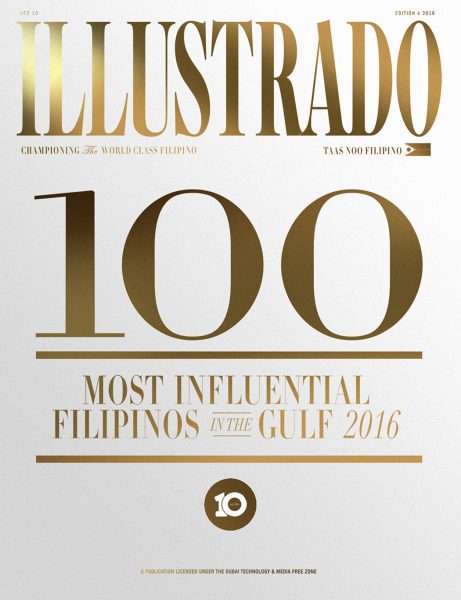
ILLUSTRADO Magazine 100 Most Influential Filipinos in The Gulf
In continued pursuit of our advocacy towards championing the image of Filipinos abroad, which started 10 years ago, we are proud to release the list of the 100 Most Influential Filipinos in the Gulf (MIFG) for the second consecutive year.
Since our launch in 2006, #TeamIllustrado has been shining the light on Filipino excellence by providing a platform for cultivating and celebrating the talent and spirit of entrepreneurs, professionals, writers, artists, designers, and content creators in the Middle East and beyond. Lalaine Chu-Benitez, our Editor-in-Chief, shares: “The reason why we are so proud of Illustrado is because in addition to producing appealing and relevant content, we are in a unique position to see the impact that our fellow Filipinos make in their respective fields and recognize them all in one place. Sharing their stories gives us a sense of pride, and we hope to extend that feeling to our readers. We want to continue feeding the aspirations of our community – making sure that our ‘kababayans’ understand our innate potential, our uniqueness and our ability to stand out in the cut-throat global arena.”
First published in 2015 on the occasion of the magazine’s 100th issue, Illustrado’s 100 MIFG is a special edition devoted to the brightest, most influential and most successful Filipinos in the Gulf region. Each very special and exceptional in their own craft, these 100 Filipinos are recognized for their tireless efforts in being paragons of excellence and serving as inspiration to others.
This yearender issue, features a new set of trailblazers, tastemakers and thought leaders who exemplify how great it is to be a Filipino; the ones who break the glass ceiling; the innovators who have taken their game to a much greater level; the ones whose services to the people are unmatched; the breed of artists who go beyond boundaries to create, curate and cultivate talent, style and diversity; as well as those who are at the pulse of moulding our community’s cultural zeitgeist.
More than just their achievements and the awards that some of them may have received through the years, Illustrado’s list of Filipinos have something in common: they wield influence. “They are able to shape, not only our collective consciousness, but also the way our community moves forward in this region. Whatever fields these Filipinos excel in, they are at the forefront. They pave the way. They represent the Filipino,“ Lalaine adds. “We salute all the Filipinos out there. Taas noo, Filipino!”
TRAILBLAZERS:
Ambassador Constancio Vingno Jr. – UAE, Consul General Paul Raymund Cortes, Ambassador Renato Pedro Villa – Kuwait, Ambassador Alfonso Ver – Bahrain, Ambassador Narciso Castaneda – Oman, Ambassador Elmer Cato – Oman, Labor Attache Ofelia Domingo, Philippine Commercial Attache Eric Elnar – Dubai, Philippine Ambassador Spouse Yoko Ramos Vingno, Yasmin Balajadia-Cortes and the Filipino Ladies Association for Growth, Captain Frank Desiderio, Nic Nadal, Mike Fillion, Mercedes Cabral, Bong Guerrero, Michael Cinco, Ezra Santos, Furne One, Yen AB, Ivy Grace Paredes, Atty. Barney Almazar, Dr. Becky Desiderio, Philippine Business Council Abu Dhabi & Dubai, LSE School of Entrepreneurship, Jovy Tuano, Teng Roma, Iman & Luchie Suguitan, Charles Marelid, Renee & Bea Arcena, Antonino Benitez, Colin Torres, Jacob Alacala and John Ray Cerna.
THOUGHT LEADERS:
Dr. Rex Bernard Bacarra, Susan Villanueva, Dr. Rommel Pilapil, Froilan Malit, Rose Tacorda, Leon Salinel, Danelle Ruth Palang, Ishwar Chugani, Vagelyn Federico, Wafa Qasimieh, Mary Jane Alvaro, Mariecar Jara, Maxxy Santiago, Abdul Hannan Tago, Rachel Salinel, Art Los Banos, Roxanne Magbanua, Pentaglobal Team, Desiree Vlekken, Mario Cardenas, Chris Calumberan, Eros Goze, Jef Anog, Alex Calueng, Rozen Antonio, Milo Torres, Hyku Desesto, Patrick Fronda, Flor Pesigan, Cesar & Lou Parroco, Sahron Roy Tamano, Rica Rodriguez, Divine Masinsin and Aldrin dela Vega.
TASTEMAKERS:
Izhcka Zeta, Harvey Cenit, Phio Enaje, Michael Amazona Delmar, Ann Llagas, Jesse Tabla, Bobby Caparas, Val Montuerto, Bluebird, Louie Da Costa, Chikay, Christopher Transmano, Twisted Martinez, Cromwell Ojeda, WyWy, Pauline Moreno, Andrew Deej, Team Soniq, Lakshmi Ramirez, Rollan Rodriguez, Cholo Juan, Nathaniel Alapide, Rosan Katlea Reodica, Danabelle Gutierrez, Kristine Abante, Kenneth Surat, Ion Gonzaga, Paul Ramos, Ryle Tuviera, Bettina Micu, Jhoysi Caasi, Kier Pascual, Nina Carpio, Tracy Ley Orencio, Louise Monique, Junie Sorsano, Ric Mondejar, Boyet Sanchez, Herald Herrea, Jerome Rafael, Millete Suan, Patrick Caldito and Debbie Fortes.
Don’t miss the special issue of Illustrado Magazine, available in newsstands and bookstores across the UAE. For more Illustrado and Illustrado Go> online visit www.illustradolife.com, become a fan on Facebook Illustrado Magazine and on Instagram @illustradomagazine.
To an optimist, the glass is half full. To a pessimist, the glass is half empty. But to an Engineer, the glass is always twice as big as it needs to be.
As an Electrical Engineer in a consulting firm, I review, analyze, and recognize technical problems in all electrical design and material submittals pertaining to construction. My role is multi-layered, and is at the core of an integrated building services design. Our skills include power system planning, power distribution, lighting design, life safety system, vertical transportation and construction coordination.
MY WORK DAY
My typical day consists of managing the timely review of drawing and material submittals, plus handling the daily work inspection requests on the projects. Effective communication is crucial in my role. Most days, I have at least an hour of meetings plus an hour or two of answering emails. The rest of my time is spent investigating design problems. This requires collaboration with other engineers and architects.
CAREER ADVICE
Believe in yourself. Every trial comes with its own reward. Be happy with what you have in life and make it a habit to share your blessings. Be an active contributor to the betterment of the world.
JOYCE ALCANTARA
Senior Officer-Customer Relation- ETA Star Property Developers
Dubai, UAE
MY JOB
I am currently working as a Senior Customer Relations Officer in one of the private Real Estate Developers in Dubai for almost two years. Part of my job is to interact with our investors, basically after sales, liaising with investors on project updates, handover of their properties etc. I am a people person and it has been my forte to be in the field of customer service, my job is indeed very interesting as you will get to know different kinds of people and being able to respond to various complains and yet know how to maintain the composure and professionalism.
MY CAREER JOURNEY
This is not my first job in Dubai. I have been working here for almost 12 years. I started my career in the hotel industry in one of the five star hotels, from reservations agent to Sales Executive for five years. Then I realized, its time to move out of my comfort zone and try a different field for a change, hence I shifted to the property industry and joined as a Customer Relations Executive in one of the private developers in Dubai and eventually I got another opportunity to excel and joined in another private developer as a Senior Customer Relations Officer till date. The journey of my career has not been easy, it takes a lot of patience and determination to be able to stay in this very competitive city.
CAREER ADVICE
The most important lesson I had learned is, to be humble and to believe in yourself that anything is possible and to keep on taking risks in life so that you can tell yourself that it’s better to try than never.




 How is living in the Philippines different from living in your home country? Do you get homesick?